


TMR Mixing Time: How Long to Mix and Why It Changes Your Feed and Cattle
A TMR mixer only earns its keep if the ration comes out uniform. Mix too little and the cattle sort the good stuff; mix too long and you chew the fiber to dust and sour the rumen. This guide explains what mixing time actually does to your feed, and how that changes results for cattle at each stage of the feedlot.
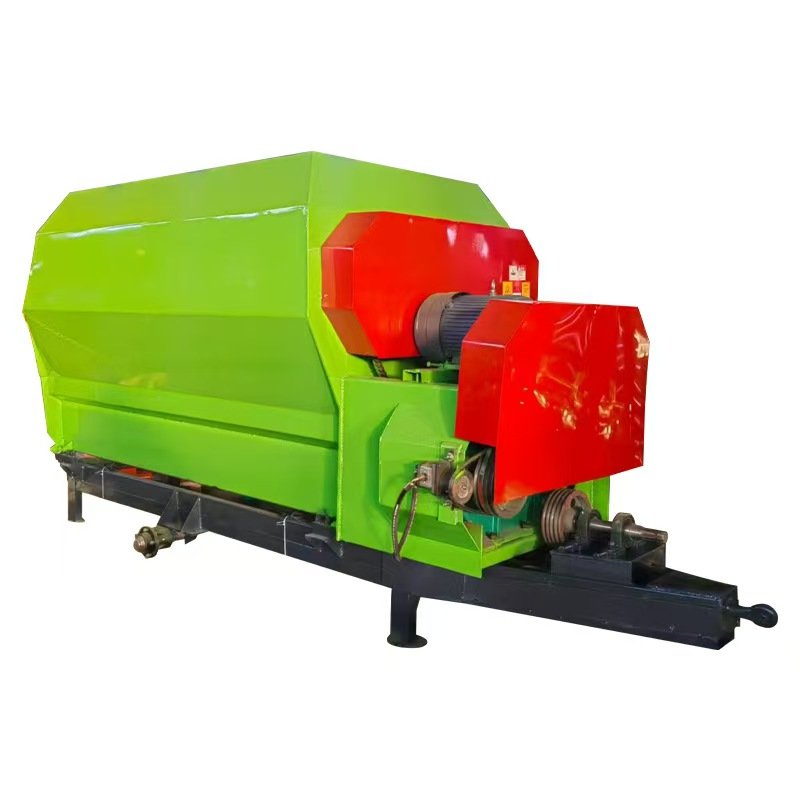
Total mixed ration means exactly that - every mouthful should carry the same balance of forage, grain, protein and minerals. The mixer's job is to get there and stop. On a horizontal TMR mixer a full load-mix-discharge cycle runs about 15-20 minutes, but the active blending phase is shorter: once the batch is loaded, an even blend usually forms in roughly 5-10 minutes of rotation. The mistake most farms make is treating the timer as the goal instead of the mix.
Cattle do not eat a formula - they eat what lands in front of them. Uniformity is what turns a good ration into good performance, and mixing time is the dial that controls it.
Pair this with the buyer view. For machine selection read How to Choose a Horizontal TMR Feed Mixer, and the Peru market guide if you are buying in Latin America.
What Actually Happens in the Tub
Three things happen in order, and mixing time only governs the middle one:
- Load in the right order. Put coarse forage in first (hay, silage, straw), then concentrates and by-products, then minerals, buffer and liquid additives last. Adding fine powders early makes them stick to the tub wall; saving them for the end lets them coat the mix instead.
- Blend. The rotors cut, flip and rub the load until particles are spread evenly. This is the phase where time matters.
- Discharge. The hydraulic side door empties fast and clean so less feed hits the floor.
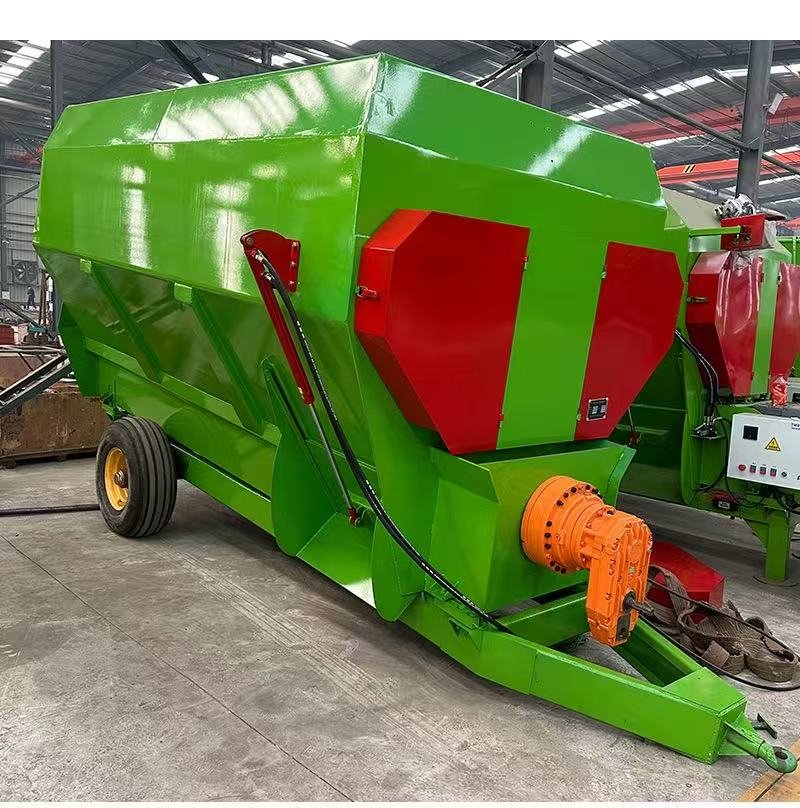
On a properly loaded batch the rotors reach an even distribution in minutes. The goal is a ration where a sample from the top, the middle and the discharge end all look and test the same - not a batch that has simply spent more time turning.
That distinction is the whole point of this article: uniform, not long.
Under-Mixing: Too Short
If you stop the rotors before the load is even, the ingredients are still layered by weight and size:
- Separation. Wet and dry, heavy and light materials drift apart instead of binding into one ration.
- Sorting. Cattle eat the concentrated, tasty parts first and leave the forage. They re-formulate your carefully balanced ration into a worse one, animal by animal.
- Uneven intake. Boss animals get the rich loads, subordinates get the leftovers. The group performs like a ragged lineup, not a herd.
- Rumen pH swings. Concentrate-heavy mouthfuls drop pH; repeated acidotic episodes raise laminitis and founder risk and drag down gain.
- Waste. Refusals climb, so your cost per kg of gain quietly rises even though the feed bill looks the same.
Over-Mixing: Too Long
Running the mixer longer does not make the ration better - past the point of uniformity it makes it worse:
- Fiber cut too short. Effective fiber (eNDF) drops, so cattle chew and cud less, produce less salivary bicarbonate, and the rumen pH falls. You get the same acidosis risk as under-mixing, arrived at from the other direction.
- Heat and oxidation. Long agitation warms the mass. Heat oxidizes vitamins and fats and lowers feed value that you already paid for.
- Dust and smearing. The ration turns fine and dusty, which can lower intake; churned fats can smear and coat fiber, reducing digestibility.
The Sweet Spot
The target is a uniform blend with a proper spread of particle lengths: enough long material to keep the rumen working, enough fine material for density and intake. A common field check is the Penn State Particle Size Separator. A typical dairy TMR lands roughly 2-8% on the top (19 mm) screen, 30-50% on the middle (8 mm) screen, and 40-60% in the pan; beef finishing rations run slightly longer on the top screen. Ask your nutritionist for the exact split for your ration.
As a uniformity benchmark, samples taken from different spots in the batch should show a coefficient of variation under about 10% for key nutrients. If your variation is wide, fix the load order and capacity before adding time.
| Mixing time | What the feed looks like | Result in the animal |
|---|---|---|
| Too short | Layered, uneven, sortable | Sorting, pH swings, acidosis risk, more waste |
| Just right | Uniform, mixed particle lengths | Steady intake, stable rumen, good conversion |
| Too long | Over-processed, dusty, fine | Low effective fiber, SARA risk, oxidized nutrients |
Effect on Fattening Cattle by Stage
The same mixing fault hurts different animals in different ways. Here is what good versus poor mixing does across the feedlot:
| Stage (live weight) | What good mixing delivers | What poor mixing costs |
|---|---|---|
| Starter / backgrounding (about 200-350 kg) | Even intake supports rumen development and steady early gain on a still-maturing digestive system | Sorting and pH swings hit immature rumens hardest - stalled gain and digestive upset |
| Mid-fattening (about 350-550 kg) | Uniform energy and protein keep average daily gain on track and feed conversion tight | Day-to-day intake swings cause uneven gain and poorer feed efficiency across the group |
| Finishing (about 550 kg to slaughter) | Balanced fiber and energy support fat deposition, marbling and a clean finish | Over-mixing lowers effective fiber (SARA, lower efficiency, gut health and liver-abscess risk); under-mixing causes sorting and uneven grade |
Numbers above are typical live-weight bands for grain-fed beef. Your herd, breed and target grade set the exact thresholds - use them as a checklist, not a substitute for your nutritionist's ration.
Practical Checklist
- Load in order: forage first, concentrates in the middle, minerals and additives last.
- Stay within rated capacity. Do not overload the tub - it is the top cause of a poor mix.
- Mix to uniform, not to a timer. Check visually or with a particle separator; 5-10 minutes of rotation is usually enough once loaded.
- Keep the cycle about 15-20 minutes end to end, and stop agitation the moment the batch is even.
- Read the bunk. Sorting, refusals and low cud-chewing rate are early signals of a mixing problem, not a palatability one.
- Re-check when the ration changes - new forage, a new concentrate batch, or a move to the next growth stage all shift the right mix time.
Frequently Asked Questions
How long should I mix a TMR?
Once the batch is loaded, a uniform blend usually forms in about 5-10 minutes of rotation on a horizontal mixer, inside a total load-mix-discharge cycle of roughly 15-20 minutes. Stop when the mix is even; extra time past that point only damages fiber and feed value.
What happens if I under-mix the TMR?
Ingredients stay separated, cattle sort the concentrates and leave the forage, intake and nutrients become uneven, rumen pH swings and acidosis risk rises, and refusals and waste go up. You pay for a balanced ration and the herd eats an unbalanced one.
Can you over-mix a TMR?
Yes. Too long cuts the fiber too short, lowers effective fiber and raises subacute ruminal acidosis risk, generates heat that oxidizes vitamins and fats, and makes the feed dusty. More time is not better once the mix is uniform.
What is the right particle size for TMR?
A mix of lengths: enough long particles for effective fiber and cudding, enough fine material for density and intake. A typical dairy TMR measured on the Penn State separator lands about 2-8% on the top screen, 30-50% on the middle, and 40-60% in the pan; beef finishing runs slightly longer. Ask your nutritionist for your exact target.
Does mixing time affect beef weight gain?
Yes. A consistent, uniform ration keeps intake and rumen pH steady, which supports feed conversion and daily gain. Poor mixing causes sorting and pH swings that lower gain and finish quality, especially in finishing cattle.
How do I check my mix is uniform?
Take samples from several spots in the batch and compare them with a Penn State Particle Size Separator, or confirm that key ingredients show a coefficient of variation under about 10% across samples. Also watch the bunk: sorting, refusals and little cud-chewing signal a mixing problem.
Related Reading
Want a Mixer That Hits Uniform Fast?
Send us your herd size and ration. We will size a 2-24 m3 horizontal TMR mixer and quote - built to blend evenly without over-processing your fiber.
Request a Quote View All Models