


How a Round Silage Baler Works
A round silage baler picks up loose forage, rolls it into a dense round bale, and wraps it in plastic so it ferments into silage instead of rotting. The Sunto YK-5552A does all three - bale, wrap and eject - in one self-propelled pass, no tractor required.
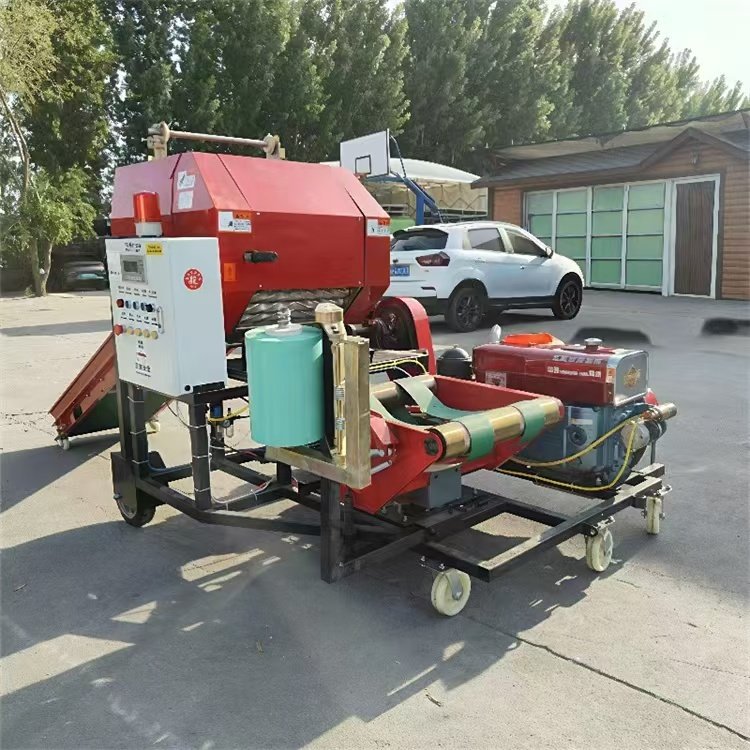
Round baling looks simple from the outside, but the value is in the sequence: gather, form, seal, eject. Get that sequence right and you turn crop residues and forage into sealed, storable feed within minutes of cutting. This article walks the full working process of the Sunto YK-5552A round silage baler, the numbers that matter (bales per hour and weight), the parts that wear, the labor it saves, and the payoff that shows up long after the bales are stacked.
Choosing a baler? Read the How to Choose guide for diesel vs electric vs PTO, or open the full product page for the complete spec sheet.
The Working Process, Step by Step
The YK-5552A runs a continuous one-pass cycle. Material enters at the front and leaves the back as a sealed bale:
- Pickup and feed. Loose crop - corn stalks, wheat or rice straw, hay or green forage - is gathered at the inlet and drawn into the machine.
- Conveyor metering. A belt conveyor moves the material into the forming chamber and meters the flow so each bale is filled evenly.
- Rolling and forming. Inside the chamber the crop is rolled into a tight cylindrical bale of 550 x 520 mm.
- Film wrapping. The integrated wrapper applies plastic film (net or rope, dual-use) so oxygen stays out and anaerobic fermentation starts.
- Ejection. The finished, sealed bale is ejected ready to stack and store - the next cycle begins immediately.
Because wrapping happens in the same pass as forming, the bale is sealed within minutes of being rolled. Excluding air early is what protects feed value and stops spoilage.
Capacity and Weight
The numbers that decide whether a machine fits your daily volume and your field conditions:
| Spec | YK-5552A | What it means for you |
|---|---|---|
| Bale size (dia x width) | 550 x 520 mm | Compact bales - small enough to shift without a forklift or heavy machinery. |
| Throughput | 45-60 bales / hour | Steady daily output for small-to-medium livestock operations. |
| Machine weight | 750 kg | Light enough to tow between fields, stable in work. |
| Bale weight | 60-80 kg | Per-bale weight confirmed by the factory; varies slightly with crop and moisture. |
| Engine | 17 HP diesel | Self-propelled - drives baling and wrapping with no tractor. |
| Control | Belt conveyor + PLC | Automates forming, wrapping and ejection - less manual handling. |
At 45-60 bales per hour, a single machine turns a morning of loose forage into a tidy stack of sealed feed. The 750 kg machine weight keeps it nimble between plots while staying planted during operation.
The Wear Parts to Watch
Like any field machine, the baler has parts that wear and consumables that you replace on a schedule. Knowing them ahead of time keeps harvest uninterrupted:
- Conveyor belt. Runs continuously moving crop into the chamber. Inspect tension and surface; replace when cracked, glazed or slipping.
- Film cutter blade. The automatic cutter trims the wrapping film. Swap the blade when cuts turn ragged or film tears.
- Bearings. The YK-5552A uses externally mounted bearings, so you service them without a full teardown. Grease on schedule and replace if they run hot or noisy.
- Wrapping film, net and rope. The recurring consumable cost, not a "part" - keep a spare roll on the machine during peak season.
- Solid tires. Wear slowly, but check condition and swap if cut or damaged; solid tires avoid puncture downtime in the field.
- PLC sensors and wrapper rollers. Keep them clean - the sensors drive the automatic wrap-and-eject cycle.
- Air compressor. Included with the machine; check for leaks and drain moisture so the cycle stays consistent.
Maintenance cadence: check fuel, engine oil and the air filter before each season; verify belt tension regularly; run a full lubrication pass every 40-50 working hours; store the machine under cover. The Sunto Service team supplies the parts list and the maintenance checklist.
Labor Time Saved
The biggest operational win is not speed alone - it is how few people the job now needs:
- One operator, full cycle. The YK-5552A bales, wraps and ejects in a single self-propelled pass, so one person runs the whole job.
- Versus a 2-3 person crew. Separate baler-plus-wrapper or manual handling typically ties up two or three people - one to drive, one to wrap, one to stack.
- At 45-60 bales/hour. A single worker produces what a small manual crew used to manage across a long day, during the narrow harvest window.
- Compact bales, no heavy machinery. At 550 x 520 mm and 60-80 kg each, the bales stay small enough to shift without a forklift or extra crew - a two-person lift, not a tractor job.
The freed 1-2 people go back to feeding, irrigation or other field work exactly when labor is scarcest - at harvest.
The Payoff You Feel Later
The bales are the visible output. The return that matters shows up weeks and months later, across the herd:
- Better silage quality. Sealing in the same pass shuts out oxygen fast, so less of the crop spoils and more feed value is retained.
- Feed all year. Sealed bales store for months, so herds eat consistent silage through the dry season instead of depending on fresh harvest.
- Less waste, lower cost. Uniform, sealed bales mean less rejected feed - lower feed cost per animal over the season.
- Freed labor, redeployed. The 1-2 people saved at baling time go to higher-value work during peak season.
- Steadier herd performance. Consistent, well-preserved silage supports steadier intake and better gain or milk - the same logic behind a balanced TMR ration.
- Easy storage and transport. Small, uniform bales stack neatly and move without heavy handling gear.
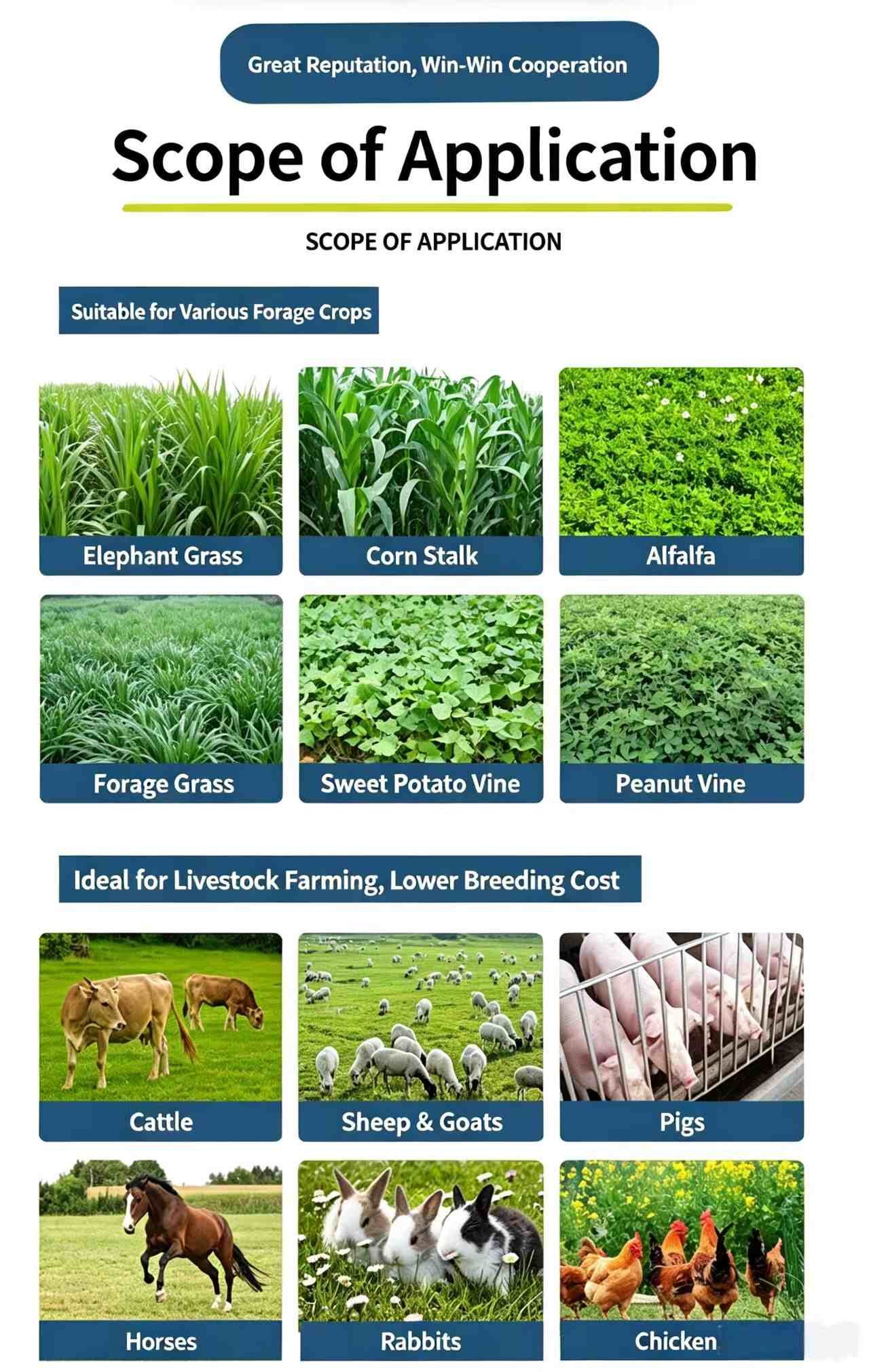
Balancing the ration is only half the story - the feed has to be preserved well first. Round baling done in one sealed pass is what keeps that feed worth feeding months later.
For coarser material, pairing the baler with a chaff cutter improves bale uniformity before rolling.
Frequently Asked Questions
How does a round silage baler work step by step?
It gathers loose forage at the inlet, a belt conveyor meters it into the forming chamber, the chamber rolls it into a 550 x 520 mm cylindrical bale, an integrated wrapper seals it in plastic film, and the finished bale is ejected - all in one continuous pass.
How many bales per hour does the YK-5552A produce?
About 45-60 bales per hour, which gives steady daily output for small-to-medium livestock operations and lets one operator cover a large volume during the harvest window.
What is the machine weight and bale size?
The machine weighs 750 kg and forms bales of 550 x 520 mm. Each bale weighs 60-80 kg; the compact size keeps them movable without heavy machinery or a forklift - a small bale a crew can shift by hand or with a simple bale handler.
What are the wear parts on a round silage baler?
The main wear items are the conveyor belt, the automatic film cutter blade, the externally mounted bearings, the solid tires, the PLC sensors and wrapper rollers, and the air compressor. Wrapping film, net and rope are the recurring consumables to keep in stock.
How much labor does a round baler save?
The YK-5552A runs the full bale-wrap-eject cycle with one operator, replacing the 2-3 person crew a separate baler-and-wrapper setup usually needs. That frees one or two people for other work during peak harvest.
What is the payoff of round baling beyond the bales?
Sealing in the same pass preserves silage quality, lets you feed sealed bales year-round, cuts feed waste and cost, frees labor, and supports steadier herd gain or milk - benefits that show up long after baling is done.
Related Reading
Want the YK-5552A on Your Farm?
Send your crops, field size and daily volume. We will size the right setup and quote - self-propelled, 45-60 bales/hour, built to bale, wrap and eject in one pass.
Request a Quote View All Models