


Why Vertical TMR Mixers Are Gaining Popularity
Walk any large dairy or feedlot and you will see more vertical TMR mixers than a few years ago. The shift is not fashion - it is a response to forage-heavy rations, labor pressure and the quiet performance gains a well-mixed ration delivers. Here is what vertical brings, how it stacks up against horizontal, and the payoff your herd feels but never shows.

A vertical TMR mixer uses a single tall auger that lifts, folds and tumbles the load inside a cylindrical tub. A horizontal mixer uses one or two rotors lying flat in a low, wide tub. Both turn separate ingredients into one total mixed ration - but they suit different farms, and the vertical design has been winning more floor space on bigger operations.
This article is not a verdict that one is always better. Sunto builds both, because the right answer depends on your forage, your herd and your site. It is a clear look at why vertical is trending, where it wins, and what the cattle gain that you cannot see from the feed lane.
Comparing machines? Read the full buyer view: Horizontal TMR Feed Mixer and Vertical TMR Feed Mixer, or the How to Choose guide.
Why Vertical Is Gaining Ground
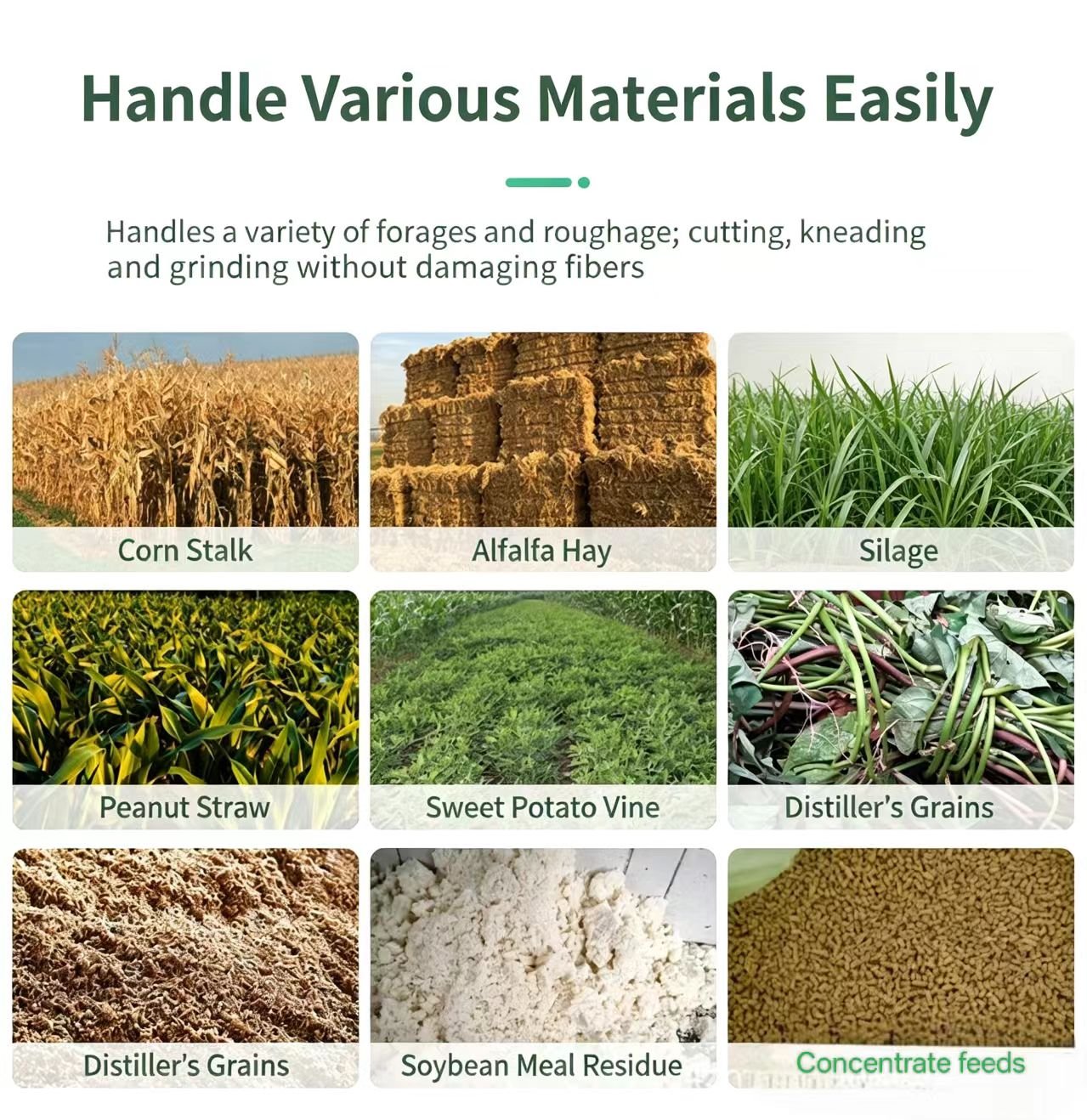
- Forage-first rations. As more farms push roughage levels up for rumen health and cost, the vertical auger's gentle lift-and-tumble handles long hay and whole bales without shredding fiber to dust.
- Footprint and height. A vertical tub is narrow and tall, which fits tighter feed lanes and lets the machine sit closer to the bunk without a wide swing radius.
- Scales to big volumes. Vertical designs reach the large capacities (well into the 20-30 m3 range) that big dairies and feedlots run several times a day.
- Fewer moving parts. One auger and a gearbox mean fewer wear items than a two-shaft horizontal unit, which simplifies service for a busy crew.
- Lower power per m3 at scale. On the largest batches the vertical drive often draws less power per cubic metre than an equivalent horizontal, trimming the electricity or tractor load.
Vertical vs Horizontal
Neither is "the best" in the abstract. They trade strengths:
| Criterion | Vertical TMR | Horizontal TMR |
|---|---|---|
| Design | Single tall auger in a cylindrical tub | One or two horizontal rotors in a low, wide tub |
| Footprint | Narrow and tall | Low and wide |
| Long forage / bales | Handles long material gently | Low tub, side port takes whole bales |
| Fiber care | Lifts and tumbles, less breakage | Cuts, flips and rubs; fast, even mix |
| Typical capacity | About 5-30 m3 | About 2-24 m3 |
| Power at scale | Often lower per m3 on big batches | Flexible PTO or electric versions |
| Maintenance | Fewer moving parts, simpler | Robust; sealed gearbox on large units |
| Best fit | Large herds, high-forage, fibrous rations | Mixed farms, fixed dairy, wet rations |
The Hidden Payoff for the Herd
The benefits above are visible on the farm. The ones that matter most to the cattle are the ones you never see at mixing time - they show up weeks later as health and performance:
- Stable rumen pH. A uniform ration means no concentrate-heavy mouthfuls, so fermentation stays even and pH stops swinging.
- More cudding, more buffer. Proper fiber length keeps cattle chewing cud, which pumps salivary bicarbonate into the rumen - the animal's own natural acid buffer.
- Lower acidosis risk. Steady pH cuts the chance of sub-acute ruminal acidosis, the silent yield and health thief in fed cattle.
- Steadier intake. Cattle eat more consistently day to day, which steadies gain and milk without drama.
- Better feed conversion. Less sorting and waste means more of every kilo of feed becomes product - lower cost per kg of gain or litre of milk.
- Health you can't photograph. Fewer lameness events, fewer liver abscesses, fewer digestive upsets - all downstream of a ration that is actually uniform.
None of these appear on the mixer's hour meter. They arrive as quieter feed lanes, steadier production records and a lower vet bill - the kind of return that only shows up across a season.
Which Should You Choose?
Match the machine to the farm, not to the trend:
- Pick vertical if you run a large herd, feed high levels of long forage or whole bales, need big daily volume, and want simpler service.
- Pick horizontal if your operation is smaller to mid-size, you value a low loading height and a wide capacity range from 2 m3 up, or you mix wetter rations in a fixed dairy.
- Either way, the mixer only pays off if the ration is uniform - so loading order, rated capacity and mixing time matter more than the auger shape.
Want the numbers behind a decision? Our How to Choose guide walks capacity, drive and shaft by herd size, and the Peru market guide covers buying and import in Latin America.
Both mixer types are built in Sunto's own workshops with R&D, production, QC, shipping and after-sales under one roof.
Frequently Asked Questions
Why are vertical TMR mixers becoming more popular?
Because forage-heavy rations, tight feed lanes and large daily volumes favor the vertical auger's gentle handling of long material, narrow footprint and simpler service. Big dairies and feedlots especially benefit as capacity needs grow.
Is a vertical TMR mixer better than a horizontal one?
Neither is universally better. Vertical suits large, forage-heavy operations and scales to big volumes with fewer moving parts; horizontal suits smaller to mid farms, low loading height and wet rations. The right choice depends on your herd, forage and site.
Does a vertical mixer handle long forage and bales better?
Generally yes. The vertical auger lifts and tumbles the load rather than cutting it hard, so long hay and whole bales are mixed with less fiber breakage - which helps rumen function.
What hidden benefit does a good TMR mixer give the cattle?
A uniform ration keeps rumen pH steady, supports cudding and natural buffering, lowers acidosis risk, steadies intake and feed conversion, and reduces lameness and digestive problems - gains you see in performance, not at the mixer.
Which capacity range do vertical mixers cover?
Vertical TMR mixers typically cover about 5-30 m3, reaching the large batches that big dairies and feedlots run several times a day. Smaller herds often start with a horizontal unit from 2 m3 upward.
Is a vertical mixer easier to maintain?
Often yes. With one auger and a gearbox there are fewer wear items than a two-shaft horizontal unit, which makes service simpler for a busy farm crew - though both types need routine blade and reducer care.
Related Reading
Not Sure Vertical or Horizontal Fits Your Farm?
Send your herd size, forage type and power supply. We will size the right 2-30 m3 TMR mixer and quote - vertical or horizontal, built to mix uniformly.
Request a Quote View All Models