


Round Silage Baler in Colombia: What It Does and How Long Wrapped Bales Last
Colombia has too much grass in the rainy season and not enough in the dry season. A round silage baler turns that surplus into sealed 60-80 kg bales you can feed months later. Here is how long they really keep, and the minimum wrapping needed for about one year.
Why Colombian Farms Need Wrapped Bales
Colombian cattle production is pasture-based, so it follows the weather. Colombian agricultural research describes this as seasonal forage availability: in the dry season both the quantity and the nutritional quality of pasture fall, animal growth and milk output drop, and in the rainy season there is a forage surplus that is usually left in the field until it is too mature to be worth much. The practical answer is to conserve the surplus and feed it later.
That gap is not theoretical. In the eastern plains (Meta, Casanare, Vichada) the dry period can run for around four months, roughly January to April. In the Caribbean lowlands (Cordoba, Cesar, Magdalena, Sucre, Atlantico, La Guajira) the same pattern drives public programs that distribute hay and silage to keep herds alive through the dry months. In the highland dairy areas of Cundinamarca, Boyaca, northern Antioquia and Narino, the same logic protects milk yield when pasture growth slows.
A round silage baler wrapper does four jobs in one pass, which is why it fits small and mid-size Colombian farms better than a bunker silo:
- It captures the rainy-season surplus while the grass is still green and nutritious, instead of watching it mature and lose value.
- It seals each bale individually, so you open one at a time. A large pit, once opened, has to be used up quickly.
- It makes feed you can move. A 60-80 kg bale can be handled by a small crew or a light loader, which matters on farms far from a supplier.
- It cuts the dry-season feed bill. Conserved own forage replaces purchased concentrate and emergency feed during the four lean months.
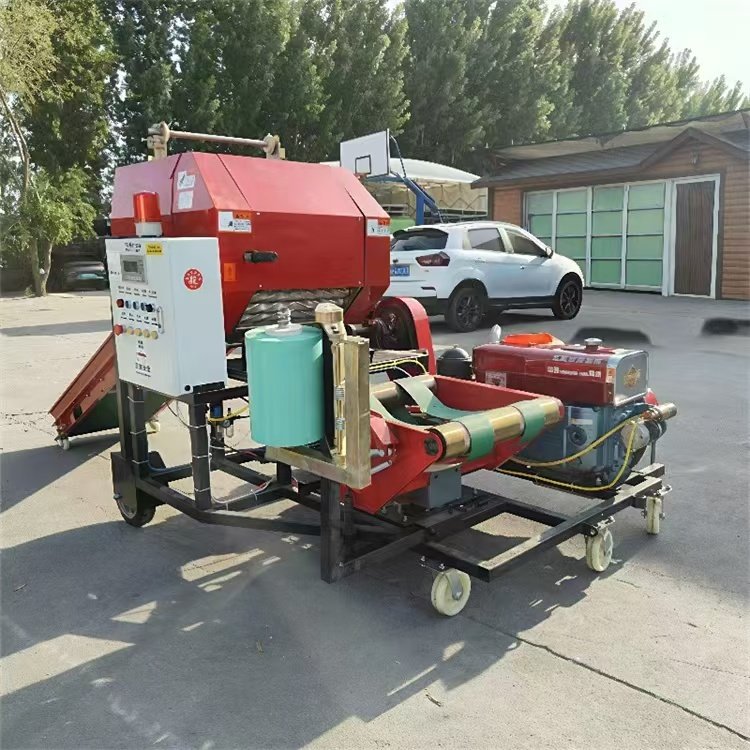
The Sunto YK-5552A makes 550 x 520 mm bales of 60-80 kg at 45-60 bales per hour, runs on its own 17HP diesel engine, and bales and wraps in one pass. That combination suits a farm that needs its own feed reserve but has no large silage pit, no big tractor fleet and no three-phase power at the field.
| Region | Dry-season problem | What wrapped bales change |
|---|---|---|
| Caribbean lowlands | Long dry period, pasture loses protein, herd loses weight | Silage made from wet-season grass or forage sorghum covers the gap |
| Eastern Llanos | Around 4 months of drought, few alternative crops | Sealed bales stored on the farm, fed as a daily supplement |
| Highland dairy belt | Slower pasture growth, milk yield drops | Consistent fermented feed keeps the ration stable |
Background: seasonal forage availability and silage as a dry-season supplement are documented by FAO AGRIS / Agrosavia and in the Agrosavia journal on forage conservation in tropical cattle systems.
So, How Many Years Do Wrapped Bales Keep?
Plan for one year, not several. A well-made, well-wrapped bale stored outdoors normally keeps its quality for about 9-12 months. With more film layers, UV-stabilised film, shade and careful handling, 18-24 months is achievable. Beyond that, film degrades under tropical UV, oxygen slowly gets in, and feed value and palatability decline even when the bale looks fine from the outside.
So the honest answer to "how many years" is: one full dry season is the reliable target, roughly two years is the upper end under good management, and "several years" is not a plan to build a herd on. In Colombia, one year is also exactly what the calendar needs - make bales in the rains, feed them through the next dry season, make new ones the following year.
| Storage plan | Realistic window | What it takes |
|---|---|---|
| Feed this season | 3-6 months | Sound bale, sealed on the day of baling, basic film coverage |
| One dry season | About 12 months | At least 3 film layers plus 1.5 turns of net wrap; 4-6 layers strongly advised outdoors |
| Drought reserve | 18-24 months | 6-8 layers of UV-rated film, shade, drained ground, no punctures |
| Several years | Not recommended | Only under cover with heavy film and regular checks; quality still declines |
Five things that decide the real shelf life
- Bale density. A tight, even bale holds its shape and leaves less trapped air, so fermentation starts faster.
- Wrapping speed. Wrap within about 2 hours of baling. Waiting overnight lets the outer layer spoil before it is sealed.
- Film layers and UV rating. This is the oxygen barrier. More layers and a proper UV-stabilised silage film extend the barrier life.
- Physical damage. Birds, rodents, stones, and bale spears puncture the seal. Patch any hole at once with silage repair tape.
- Storage site. Level, well-drained ground, away from trees and sharp debris, ideally shaded. Direct tropical sun ages film much faster.
Wrapping for One Year: 3 Layers of Film + 1.5 Turns of Net
For bales you intend to keep for about a year, the minimum setup we recommend is at least three layers of silage stretch film over one and a half turns of forage net wrap. The two materials do completely different jobs, and neither replaces the other.
The net holds the shape, the film keeps the air out
Net wrap goes on first. It binds the bale, keeps the shoulders covered and gives a smooth, firm surface. It is not a seal - air passes straight through it. Its job is to stop coarse stems pushing out and piercing the film from inside, and to keep the bale round so the film sits flat. One and a half turns is the working minimum for dense, high-moisture silage; if the crop is stemmy, the bales will be moved several times, or the ground is rough, use two turns.
Stretch film goes on second. Applied at the right pre-stretch, its layers stick together into an oxygen barrier, which is what lets the forage ferment instead of rotting. Layer count is the single setting that decides how long that barrier survives.
One-year wrapping checklist
| Step | Setting | Why |
|---|---|---|
| 1. Net wrap | At least 1.5 turns, edge to edge including the shoulders | Holds bale shape, gives the film a smooth surface |
| 2. Film layers | Minimum 3 layers; 4-6 advised for tropical outdoor storage | Builds the oxygen barrier and UV margin |
| 3. Film spec | 25 micron UV-stabilised silage film, about 55-70% pre-stretch | Correct tack and layer bonding without tearing the barrier |
| 4. Timing | Wrap within 2 hours of baling | Stops aerobic spoilage of the outer layer |
| 5. Handling | Squeeze grips, not bale spears; patch holes immediately | Keeps the seal intact for the whole storage period |
The same logic applies to the machine you buy: a wrapper that lets you set and verify the layer count and net turns is worth more than one with a fixed, unknown setting. If you are still comparing machines, see How to Choose a Round Silage Baler and the two buying mistakes that cost the most later.
What One Year of Bales Looks Like on a Colombian Herd
As a rough planning figure, a 450 kg Zebu-type animal eats around 9 kg of silage a day and a 600 kg Holstein around 12 kg if silage is the whole ration. On grazing farms silage is normally a supplement on top of pasture, so real intake is lower. At 60-80 kg per bale, one bale covers several animals for a day of supplementary feeding.
That is the real advantage of the small round bale in Colombia: you can match the feed to the herd one bale at a time, with no open pit, no big loader and no daily waste. Count the dry-season days, multiply by the number of animals and the daily supplement, then add a margin for spoilage - that is your bale target for the rainy season.
Where to go next: for the baling and wrapping sequence in detail, read How a Round Silage Baler Works. Our Sunto Service team can supply the film and net specifications, wear-parts list and a wrapper setting sheet for your crop.
Frequently Asked Questions
How long do wrapped silage bales last in Colombia?
Plan for one year. A well-wrapped bale stored outdoors normally keeps good quality for about 9-12 months, which covers one dry season. With more film layers, UV-stabilised film and shade, 18-24 months is possible. Several years is not a reliable target in a tropical climate, because sunlight degrades the film and feed value declines over time.
How many layers of film do I need for one year of storage?
At least three layers is the minimum setup, applied over one and a half turns of net wrap. Three layers is the floor, not the safe number: industry guidance commonly starts at four layers of 25 micron film and recommends four to six for hot, high-UV outdoor storage. For a full 12 months in Colombia, set 4 layers as the working baseline and 6 for bales kept in full sun or moved often.
Why do I need 1.5 turns of net wrap before the film?
Net wrap holds the bale's shape, covers the shoulders and gives the film a smooth, firm surface, so coarse stems do not push through and pierce the film from inside. It does not seal the bale - air passes through it. Only the stretch film creates the oxygen barrier needed for fermentation. One and a half turns is the working minimum for dense silage; use two for stemmy crops or rough handling.
Can wrapped bales be stored outdoors in a tropical climate?
Yes, if the film is UV-stabilised, the layer count is high enough and the site is level and well drained. Keep bales off sharp stones, away from tree lines, use squeeze grips instead of bale spears, check for bird or rodent damage weekly and patch any hole immediately with silage repair tape. Shade or a simple cover can add months to the effective barrier life.
What baler suits a small Colombian cattle farm?
A compact baler-wrapper that makes 60-80 kg bales is usually the best fit, because one person or a small crew can handle each bale and you open only what you need. The Sunto YK-5552A runs on a 17HP diesel engine, makes 45-60 bales per hour and bales and wraps in one pass, so it does not need a large tractor fleet or a silage pit.
Related Reading
Need a Wrapping Setup for Your Dry Season?
Tell us your herd size, forage crop and how many months you need to store. We will send the recommended film and net settings, the machine spec and the wear-parts list for your farm in Colombia.
Ask for a Setup View All Models