


One Hydraulic Baler, Eight Materials: Wet & Dry Baling Without Clogging
A square silage baler machine is usually bought for one crop. The Sunto 9YF-70 works as a multi-material baler: the same hydraulic silage baler presses wet forage and dry biomass into 350 × 350 × 700 mm, 50–70 kg bales at 80–100 bales per hour. One setting cannot handle both — moisture, chop length and spring-back change with every material. See the Sunto 9YF-70 square silage baler machine for full specifications.
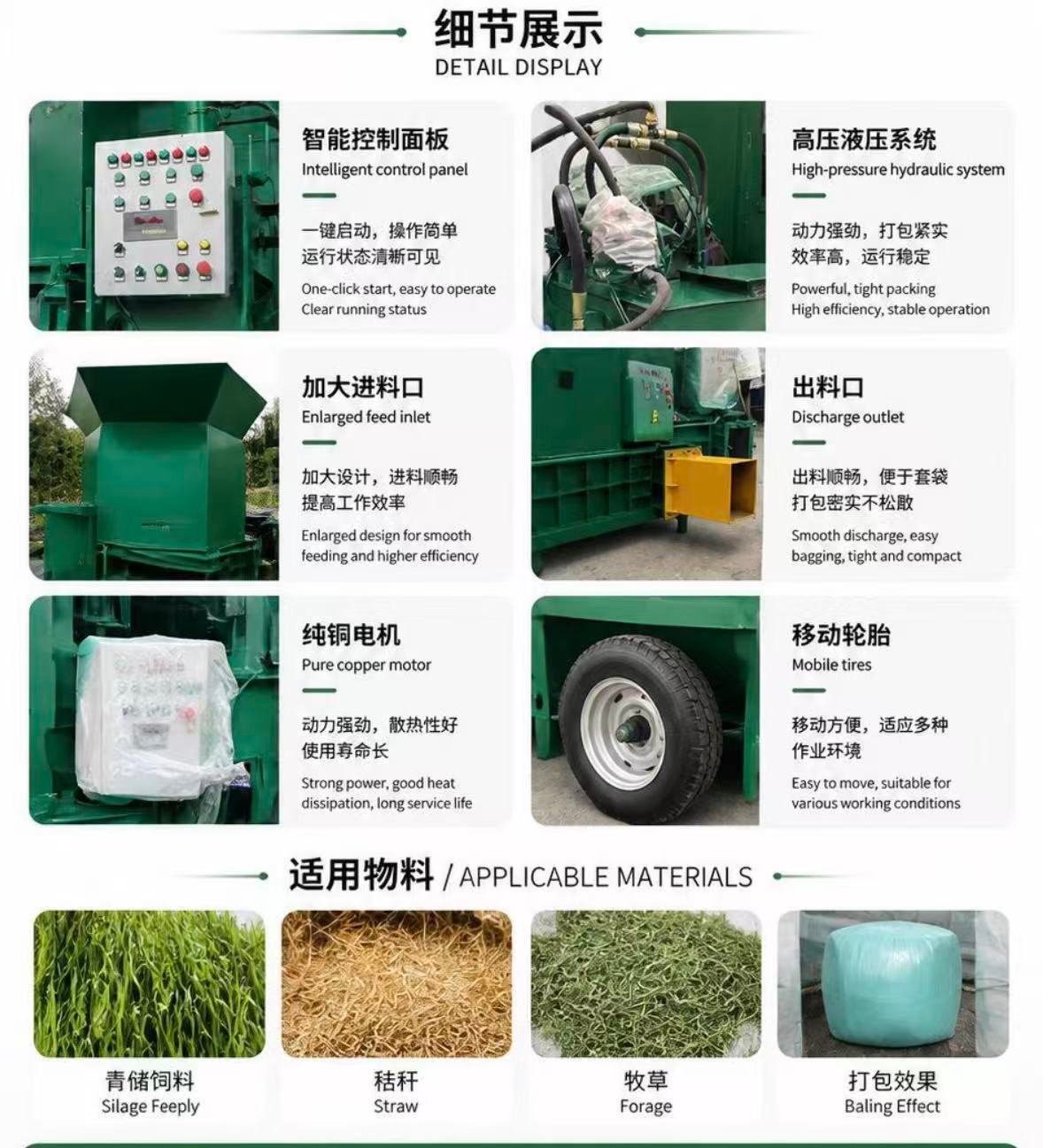
Three material groups, three starting setups
| Group | Examples | Main risk | Start with |
|---|---|---|---|
| Wet forage (60–70% moisture) | Corn stalks, forage grass, alfalfa, peanut vine | Effluent, bridging | Chop to 1–3 cm with a chaff cutter; moderate pressure |
| Dry stalk (12–18%) | Wheat straw, rice straw, hay | Spring-back, light bales | Longer hold time, small feed increments |
| Dry by-products (below 15%) | Rice husk, wood shavings, garlic skin, coconut fiber | Dust, discharge plugging | Metered feed, clear the outlet every cycle |
Baler settings for high moisture forage are mostly about chop length and gradual pressure ramping; dry materials need dwell time instead. Treat these ranges as starting points and verify each batch with a moisture meter.
Eight materials, two markets
Feed side: corn stalks, forage grass, alfalfa, peanut vine, straw. Non-feed side: rice husk, wood shavings, garlic skin, coconut fiber. A hydraulic baler for rice husk, a wood shavings baling machine and a coconut fiber baling machine are the same asset with different settings — opening bedding, mushroom substrate and biomass fuel buyers. Our Kenya output and payback case shows why year-round utilisation, not peak capacity, decides the return.
How to prevent clogging in a hydraulic baler
Baling wet and dry material without clogging takes five habits: chop before compressing; meter the feed; raise pressure in small steps; hold before release on springy material; clear the discharge each cycle. Never force a plug by adding pressure. Cleaning a baler between feed and biomass batches means emptying the hopper, brushing out dust, and using separate, dated bags. Check hoses, oil level and the radiator daily — see the 9YF-70 FAQ. For fibrous by-products, choosing a chaff cutter with the right blade setting matters more than any pressure adjustment.
FAQ
Can one wet and dry baler really handle both?
Yes — reset pressure, feed rate and hold time for each material group. Check the full specifications for bale size and drive options.
What causes blockages with rice husk or coconut fiber?
Overfilling and long fibres. Meter the feed and clear the outlet every cycle.
When is a square baler the wrong choice?
If you need long-stem wrapped bales made in the field, a round silage baler fits better.
Need a settings sheet for a specific material?
Tell us the crop, moisture content and target bale weight — the factory can confirm the configuration before shipping.
Request a quote