


How a Hammer Mill Grinder Works
A hammer mill grinder shreds grain, straw and other dry material into uniform powder by spinning hardened hammers against a sizing screen. The Sunto 9FQ-600 does it with a 30HP motor, interchangeable 1/10/20mm sieves and a cyclone dust collector - then rolls to the next job on its wheeled base.
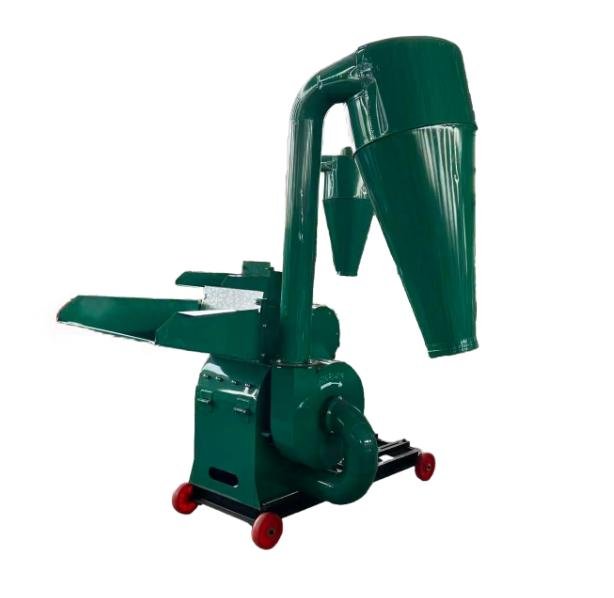
A hammer mill is the workhorse behind most animal feed. Before grain, corn stalks or straw become pellets or a balanced ration, they have to be broken down into a consistent fine or coarse powder - and that is exactly what this machine does. This article covers the Sunto 9FQ-600 hammer mill grinder from three angles: how it works (the principle), what it actually does for you (the function), and where it fits on a farm or in a feed line (the uses).
Not sure which grinder to buy? Read the How to Choose a Hammer Mill guide, or open the full product page for the complete spec sheet.
The Working Principle
The 9FQ-600 follows a simple, proven mechanism: feed in, hammer, screen, collect. A thickened and widened inlet keeps material flowing, and a high-speed rotor does the crushing:
- Feeding. Material is poured into a thickened, widened inlet so bulky grain, stalks or straw enter steadily without bridging or jamming.
- Hammering. Inside the grinding chamber, a rotor spins manganese steel hammers at high speed. The hardened hammers strike the material repeatedly and shatter it on impact.
- Sizing. The broken particles are flung against an interchangeable sieve. Only pieces small enough to pass the screen holes fall through - 1mm, 10mm or 20mm, depending on the sieve fitted.
- Air transfer. An enlarged fan draws the ground powder through the chamber and carries it toward collection.
- Dust collection. A cyclone dust collector captures the fine powder and drops it into a bag or bin, keeping dust out of the air and the workplace.
- Move and repeat. A mobile wheeled base lets you roll the whole unit to the next batch or work site - no fixed installation needed.
The principle is impact plus screen control: the hammers do the breaking, the sieve controls the final size, and the cyclone keeps the output clean. That combination is why a hammer mill stays the standard for feed grinding.
What It Does for You (Function)
Beyond "it grinds", the 9FQ-600 earns its place through four concrete functions:
- Adjustable particle size. Swap the sieve and you change the output: a 1mm screen for fine powder, 10mm for medium grind, 20mm for coarse. One machine covers many recipes.
- Uniform, mix-ready powder. Even particle size means the powder blends evenly later - critical before pelleting or mixing a TMR ration.
- Dust control. The cyclone collector captures fine dust at the source, so the work area stays cleaner and the operator breathes easier than with an open grinder.
- Steady throughput. A 30HP three-phase motor drives the rotor continuously, so a full hopper keeps producing without stalling on dry grain or straw.
| Sieve fitted | Output particle size | Typical use |
|---|---|---|
| 1 mm | Fine powder | Young livestock feed, fine pelleting |
| 10 mm | Medium grind | General mixed feed, poultry and pigs |
| 20 mm | Coarse grind | Roughage pre-processing, cattle and sheep |
The interchangeable sieves are the real lever: change one part and the same machine serves a chick starter line, a pig-finishing mix or a coarse cattle ration. That flexibility is the function most buyers undervalue until they run more than one recipe.
Where It Is Used (Applications)
The 9FQ-600 handles a wide range of dry, brittle materials, which is why it shows up across the feed chain:
Materials it grinds
- Cereals: corn (maize), wheat, rice, soybean.
- Fiber and crop residue: straw, corn stalks, dried forage.
- Other dry goods: coffee beans, chili, and similar brittle crops for feed or processing.
Where it runs
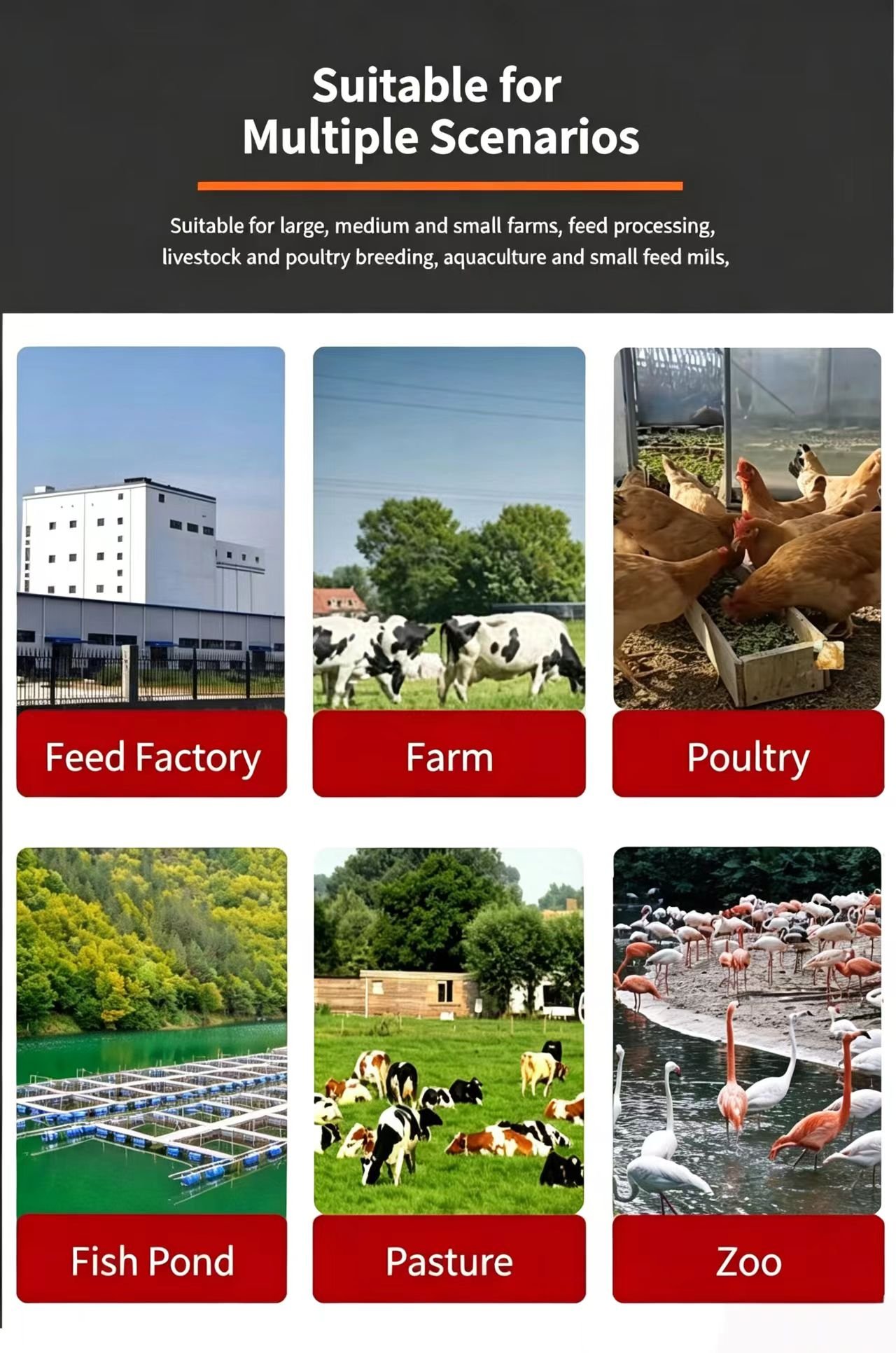
- Feed factories and small feed mills. The core grinding step before pelleting or blending.
- Farms and pastures. On-site grinding so animals eat fresh-milled, not pre-bagged, feed.
- Poultry and livestock houses. Daily rations for chickens, pigs, cattle and sheep.
- Fish ponds and aquaculture. Fine powder for floating or sinking feed.
- Zoos and specialty keepers. Small-batch custom feeds.
Grinding is rarely the last step. Pair the mill with a feed pellet machine to press the powder into durable pellets, or with a chaff cutter upstream to pre-size coarse stalks before milling.
For a complete feed line, the ground powder also feeds directly into a horizontal TMR mixer for a balanced ration.
Frequently Asked Questions
What is the working principle of a hammer mill grinder?
It feeds dry material into a chamber where high-speed manganese steel hammers shatter it on impact. The broken pieces are thrown against a sizing sieve; only particles small enough to pass the screen holes fall through, and a cyclone collector gathers the powder while an enlarged fan moves it along.
How does a hammer mill control particle size?
By changing the sieve. The 9FQ-600 uses interchangeable 1mm, 10mm and 20mm screens: 1mm gives fine powder for young stock and pelleting, 10mm a medium grind for poultry and pigs, and 20mm a coarse grind for cattle and sheep roughage.
What materials can the 9FQ-600 hammer mill grind?
Cereals such as corn, wheat, rice and soybean; fiber and crop residue like straw and corn stalks; and other dry brittle goods including coffee and chili. It is built for dry material, not wet or oily feed.
What is the function of the cyclone dust collector?
The cyclone captures the fine powder at the source and drops it into a bag or bin, keeping airborne dust down in the work area and giving you a cleaner, easier-to-handle final product rather than a dusty cloud.
Where is a hammer mill grinder used?
Across the feed chain: feed factories and small feed mills, farms and pastures, poultry and livestock houses, fish ponds and aquaculture, and even zoos for custom small-batch feeds. It is the grinding step before pelleting or mixing.
How is the 9FQ-600 powered and moved?
It runs on a 30HP three-phase motor for steady throughput, and sits on a mobile wheeled base so you can roll it between batches or work sites without fixed installation.
Related Reading
Want the 9FQ-600 in Your Feed Line?
Send your material, target particle size and daily volume. We will size the right sieve setup and quote - 30HP three-phase, 1/10/20mm screens, cyclone dust control, on a mobile wheeled base.
Request a Quote View All Models