


Animal Feed Processing Equipment: The Complete Guide
Every machine in a feed line, what it actually does, and how to combine them into a working setup for poultry, dairy, fish or a small commercial mill.
Feed is the single biggest cost on any livestock operation - commonly 60 to 70 percent of production cost, and higher in poultry. That is why more farms are processing their own feed instead of buying it in bags. But a feed line is a sequence, not a single machine: skip a step and the next one underperforms.
This is the hub page for our feed equipment guides. It maps the four core steps, links to each machine we build for those steps, and gives three worked combinations - a poultry farm, a dairy unit and a small commercial mill. Each section links to a deeper guide if you want the detail.
The Feed Line in Four Steps
Roughage has to be chopped before it will pass through anything. Grinding sets particle size, which decides how well starch gelatinises in the pellet die - a 2 to 3 mm grind is the usual target for poultry and cattle rations. Mixing distributes the premix evenly; uneven mixing is the most common cause of uneven growth in a flock. Pelleting then locks the ration into a durable form that animals cannot sort through, which is where the feed conversion gain actually comes from.
The Equipment: What Each Machine Does
Four machines cover the core of almost every on-farm and small commercial feed operation. Click through for full specifications.
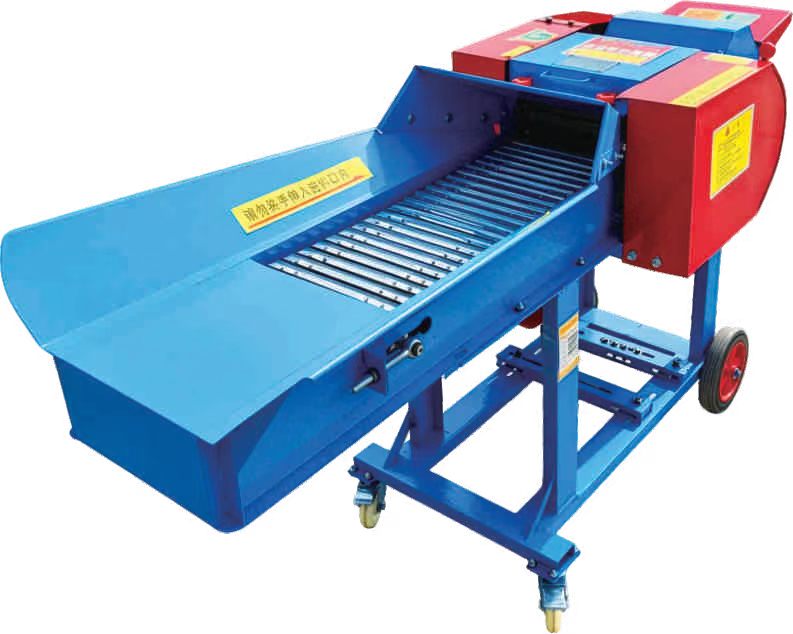
Chaff Cutter
9ZR series / 2,000 - 6,000 kg/hChops Napier grass, maize stover, straw and hay to a set length. The necessary first step before forage can be mixed or pelleted.
View Chaff Cutter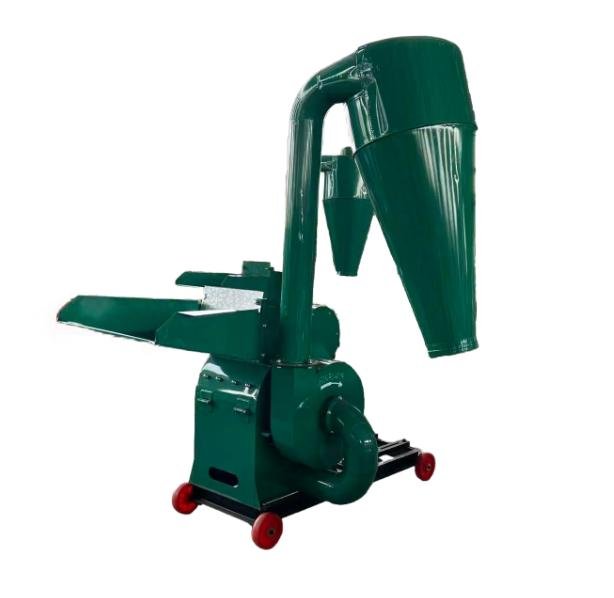
Feed Hammer Mill Grinder
9FQ series / 200 - 3,000 kg/hReduces maize, sorghum, soybean meal and straw to a consistent 1-10 mm powder. Manganese steel hammers, adjustable sieve, diesel, gasoline or electric drive.
View Hammer Mill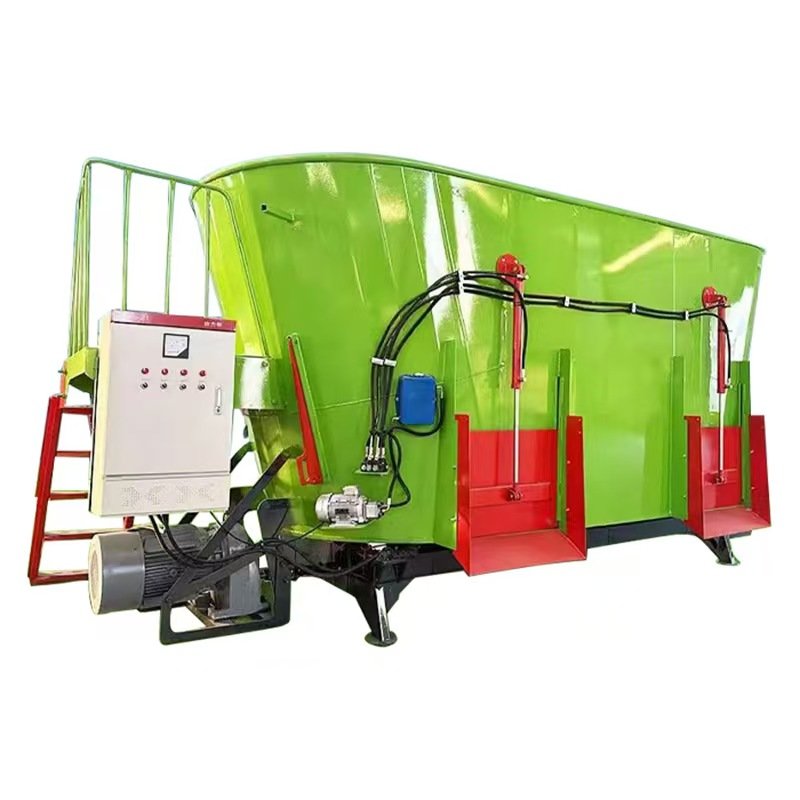
Vertical TMR Feed Mixer
7 - 30 m3 / Tractor or electric driveBlends ground grain, protein, chopped roughage and premix into a uniform ration. Electronic weighing, hydraulic discharge, PTO or electric motor.
View TMR Mixer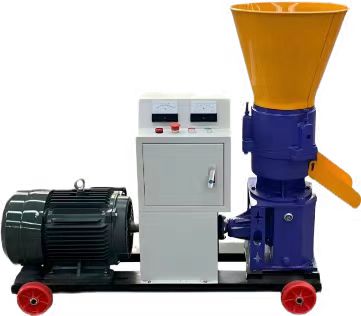
Feed Pellet Machine
100 - 500 kg/h / Flat diePresses mash into durable pellets for poultry, cattle, sheep and fish. Hardened die and rollers, 2-6 mm die options, cuts waste and selective feeding.
View Pellet MachineBrowse the Full Catalogue
Tractors, balers, dryers and every feed machine we build, with specifications and package sizes.
Open Product CatalogueThree Worked Setups
Capacity figures assume maize-based rations and a 2-3 mm grind. Add roughly 20 percent headroom when you size your own line.
A. Poultry farm, 1,000 to 5,000 birds
| Step | Machine | Size |
|---|---|---|
| Grind | Feed hammer mill | 9FQ-400 to 9FQ-500, 500-2,000 kg/h |
| Mix | Vertical feed mixer | 7-12 m3 |
| Pellet | Flat die pellet mill | 150-300 kg/h, 2-4.5 mm die |
B. Dairy unit, 30 to 150 head
| Step | Machine | Size |
|---|---|---|
| Chop | Chaff cutter | 9ZR series, 2,000-6,000 kg/h |
| Grind | Feed hammer mill | 9FQ-400 to 9FQ-500 |
| Mix | Vertical TMR mixer | 7-15 m3 with weighing |
| Pellet concentrate | Flat die pellet mill | 4-6 mm die for forage blends |
C. Small commercial mill, 2 to 5 tonnes per day
| Step | Machine | Size |
|---|---|---|
| Grind | Feed hammer mill | 9FQ-600, up to 3,000 kg/h |
| Mix | Vertical mixer | 15-30 m3 |
| Pellet | Pellet line | Ring die class, with cooler |
Rule of thumb: the pellet mill should sit slightly below the grinder capacity. If your grinder makes 1,000 kg/h, a 800-1,000 kg/h pellet line keeps both machines running without a buffer silo.
Buying Checklist
- Sequence before specification. A pellet mill without a grinder will not make good pellets. Budget for the whole line, not one machine.
- Moisture. Above about 14 percent, screens blind and dies block. Dry grain before grinding, or buy it dry.
- Power. Confirm what you actually have on site - single phase 240 V, three phase 415 V, or none. Diesel drive exists for a reason.
- Spares in the first crate. Hammers, screens, dies, rollers and bearings. Waiting six weeks for a die stops the line.
- Import paperwork. Kenya requires KEBS pre-export verification; Nigeria requires SONCAP plus Form M and PAAR. Start before the vessel sails.
- Standards if you sell feed. If you plan to sell commercially, check your national standards authority requirements for feed quality and labelling.
Frequently Asked Questions
Do I need all four machines?
Not always. A poultry farm on bought-in meal needs grinding, mixing and pelleting. Dairy adds chopping for forage. Start with the steps your ration actually requires, then extend the line.
Which machine should I buy first?
A hammer mill. It is the step that unlocks everything else - you can grind and sell mash while you save for the pellet mill, and no pellet line works properly without a consistent grind.
How much capacity do I need?
Work from daily feed requirement, not from machine price. A layer eats roughly 110 to 120 grams a day: 1,000 birds is about 115 kg per day, 5,000 birds about 575 kg. Add 20 percent headroom.
Flat die or ring die pellet mill?
Flat die up to roughly 500 kg/h for on-farm and small commercial use - simpler and cheaper to maintain. Ring die for continuous commercial output above that, usually with a conditioner and cooler.
Can I make fish feed with a pellet mill?
Sinking fish feed, yes. Floating feed requires an extruder, not a pellet press - the starch has to be cooked and expanded. Tell us which one you need before ordering.
Go Deeper: Our Feed Equipment Guides
Planning a Feed Line?
Tell us your animals, daily tonnage, raw materials and power supply. We will spec the full sequence and quote factory-direct.
Get a Line Recommendation