


How to Choose a Hammer Mill for Animal Feed Production
Material, daily output, screen size and maintenance: the four decisions that decide whether your feed mill makes money or burns electricity.
Grinding is the first step of any feed line, and it is the step that quietly decides your feed conversion ratio. Grind too coarse and animals cannot digest the starch; grind too fine and you pay for electricity you do not need, plus you create dust the animals refuse to eat. A hammer mill for animal feed sits at the centre of that trade-off.
Most small and mid-size feed producers buy a feed grinder hammer mill by price and horsepower alone, then spend the next two years fighting vibration, worn hammers and inconsistent particle size. This guide walks through the four specifications that actually matter, the mistakes that cost the most, and how the mill plugs into a complete grinding, mixing and pelleting line.
1. Start With the Material You Grind
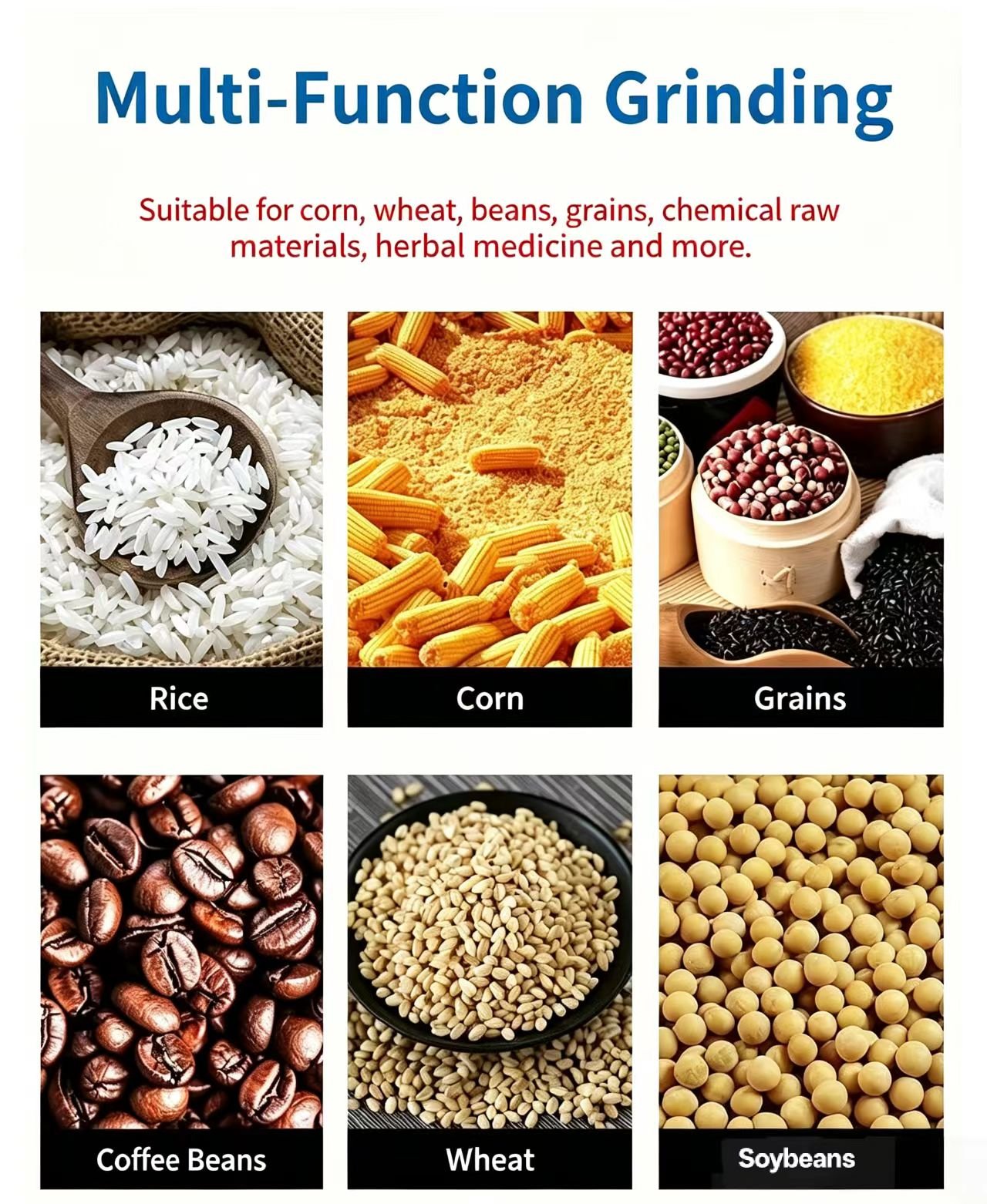
The same feed grinder hammer mill will behave completely differently on maize and on maize cobs. Material hardness and fibre content decide hammer wear, screen choice and how much power you really need.
- Maize and corn: the easiest and most common feed grain. Soft starch, low fibre. A 2-3 mm screen gives a good balance of digestibility and throughput.
- Sorghum and millet: harder and smaller than maize. They need roughly 10-20% more power for the same output and they wear hammers faster. Use hardened manganese steel hammers.
- Soybean meal and cake: already coarse-ground by the oil mill. Many producers run it through a 3-4 mm screen or bypass it straight to the mixer.
- Straw, hay and corn cobs: high fibre, low bulk density. These need a coarse 6-10 mm screen, a strong air assist and a sharp set of hammers. Pre-cut long stalks first with a chaff cutter so the mill is not fighting whole stems.
Rule of thumb: fibrous material eats power and hammers. Grain eats screen area. If your ration is more than 30% roughage, size the motor one step up from the capacity table below.
2. Size the Mill by Daily Output, Not by Price
Capacity is where most buyers get it wrong. A mill rated at 500 kg/h produces 500 kg/h on maize with a 3 mm screen - not on straw, and not on a 1 mm screen. Work backwards from your daily tonnage, add 20% headroom for maintenance days and future growth, then pick the motor.
| Daily feed needed | Suggested model | Motor | Capacity on maize |
|---|---|---|---|
| 0.5 - 2 t/day | 9FQ-350 | 4 HP, single phase | 200 - 300 kg/h |
| 2 - 5 t/day | 9FQ-400 | 10 HP, three phase | 500 - 600 kg/h |
| 5 - 10 t/day | 9FQ-420 | 15 HP, three phase | 1000 - 1500 kg/h |
| 10 - 20 t/day | 9FQ-500 | 20 HP, three phase | 1500 - 2000 kg/h |
| 20 - 30 t/day and up | 9FQ-600 | 30 HP, three phase | 3000 kg/h |
See the full specification table, package sizes and drive options on the Sunto feed hammer mill page. Every model can also be supplied with a diesel or gasoline engine where three-phase power is not available.
3. Screen Size Decides Particle Size
The screen is the cheapest part of the machine and the one that controls your finished feed. Hammers break the grain; the screen decides when a particle is allowed to leave the chamber.
| Screen hole | Resulting particle size | Best for |
|---|---|---|
| 1 - 1.5 mm | Fine powder | Chick starter, fish and shrimp feed |
| 2 - 3 mm | Medium grind | Broiler and layer feed, pig feed |
| 3 - 4 mm | Coarse grind | Cattle and sheep rations |
| 6 - 10 mm | Cracked / chopped | Corn cobs, straw, hay, dry grass |
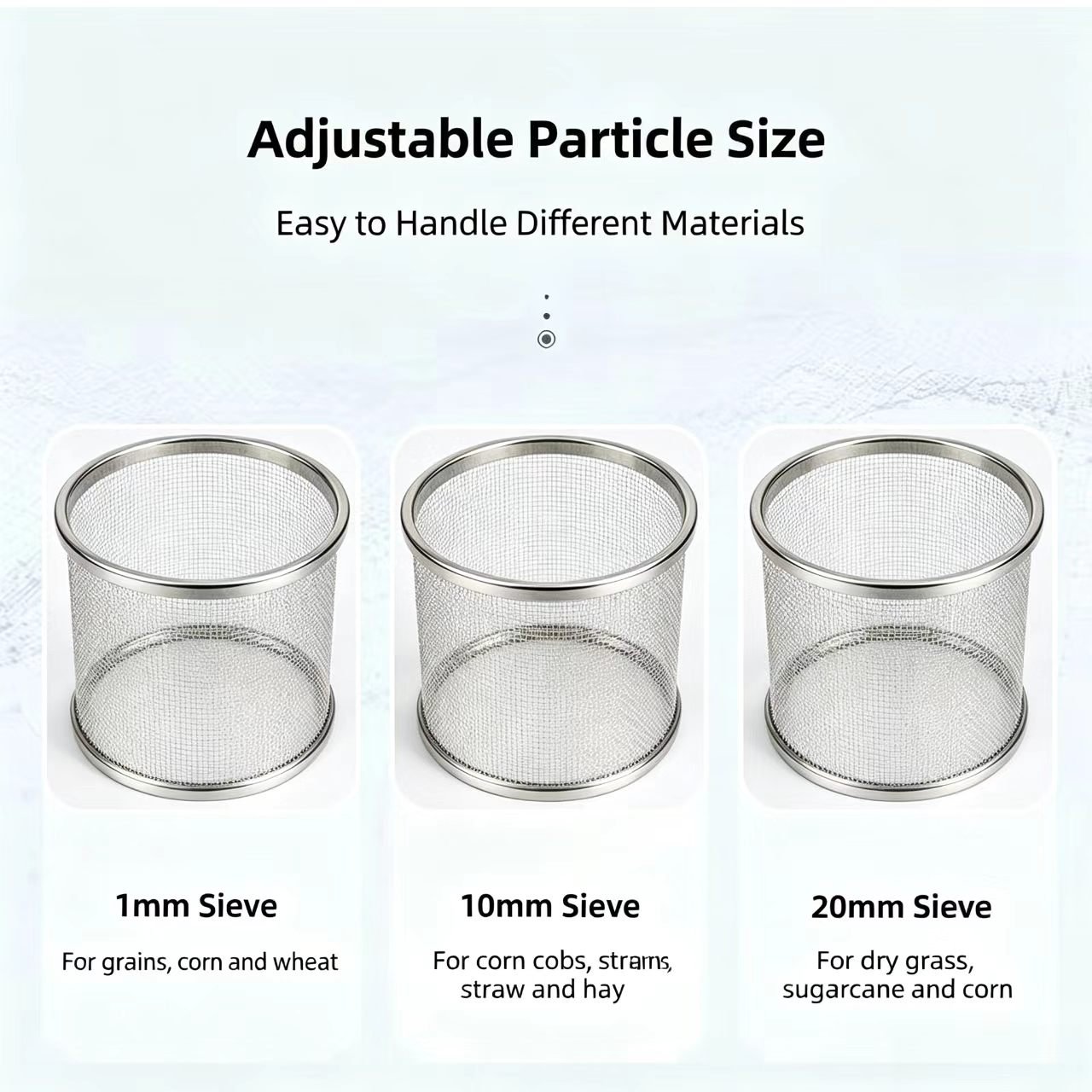
Two costs sit on either side of the ideal setting. Grinding finer than you need raises kWh per ton sharply and shortens screen life. Grinding too coarse lowers starch availability, weakens pellets and hurts intake. If you pellet the feed afterwards, a medium 2-3 mm grind usually gives the best pellet durability, because the steam in the conditioner can gelatinise the starch properly.
4. Check Maintenance Before You Check the Price
Hammers and screens are consumables. On a mill running six hours a day, budget for a hammer set and at least one screen per season. Ask four questions before buying:
- Can the hammers be turned or reversed? Reversible hammers give two working edges and roughly double service life.
- How long does a screen change take? A swing-open or front-access chamber means minutes instead of an hour.
- Are the hammers and screens standard parts? Proprietary sizes lock you into one supplier and one price.
- Is there a dust collector? Dust costs you product, damages bearings and is a health hazard in a closed feed room.
In the enquiries we handle for Africa, the Middle East and South America, spare parts availability decides the order more often than price does. A mill that waits six weeks for a screen is a mill that stops your feed line. Ask what arrives in the first crate: a spare hammer set, at least one spare screen and a set of bearings.
Sunto 9FQ mills use reversible manganese steel hammers, a front-access screen and a cyclone dust collector as standard, and spares ship with the machine.
The Three Mistakes That Cost the Most
Buying on price and ignoring bearings and rotor balance
A rotor that is not dynamically balanced, or a shaft running on undersized bearings, will vibrate from day one. Vibration loosens bolts, cracks the chamber and destroys bearings within months - and no amount of cheap purchase price compensates for a mill that is down during your busiest season.
Undersizing the motor
A motor that sits at 95% load all day runs hot and trips on every tough batch. Above 10 HP we recommend three-phase power: it starts under load more reliably and costs less per ton ground.
Grinding wet grain
Above about 14% moisture, material smears instead of breaking, screens blind over and capacity collapses. Dry first with a mobile grain dryer if you buy grain straight from the field.
How the Hammer Mill Fits Into a Complete Feed Line
A hammer mill is step one of three. Grinding on its own does not make feed - it makes powder, and animals need a balanced, formed ration.
- Step 1 - Grinding: the hammer mill reduces grain and roughage to a consistent particle size.
- Step 2 - Mixing: a mixer blends the ground material with protein, premix and molasses so every mouthful is balanced. Our vertical TMR feed mixer handles this for cattle operations.
- Step 3 - Pelleting: a feed pellet mill presses the mash into pellets, which improves feed conversion and cuts waste and segregation.
Sizing tip: the pellet mill should sit slightly below the hammer mill capacity. If your mill produces 1000 kg/h, a 800-1000 kg/h pellet line keeps both machines running without a buffer silo.
Frequently Asked Questions
Can a hammer mill grind corn cobs?
Yes, with the right setup. Corn cobs are fibrous and bulky, so use a coarse 6-10 mm screen, sharp hammers and expect roughly half the throughput you get on shelled maize. Cut or crack whole cobs before feeding them in. Many producers grind cobs together with grain as a roughage source for cattle.
What screen size should I use for chicken feed?
Use 1-1.5 mm for chick starter, and 2-3 mm for broiler grower and layer feed. A medium grind improves pellet durability and reduces selective feeding, where birds pick out the coarse particles and leave the fines.
How often should hammer mill hammers be changed?
For a mill running six hours a day on maize, expect to turn or replace hammers every 300-500 working hours. Grinding sorghum, cobs or straw shortens that to roughly 150-250 hours. Replace the whole set at once and keep the rotor balanced - mixing worn and new hammers is the fastest way to create vibration.
Can one hammer mill handle both grain and straw?
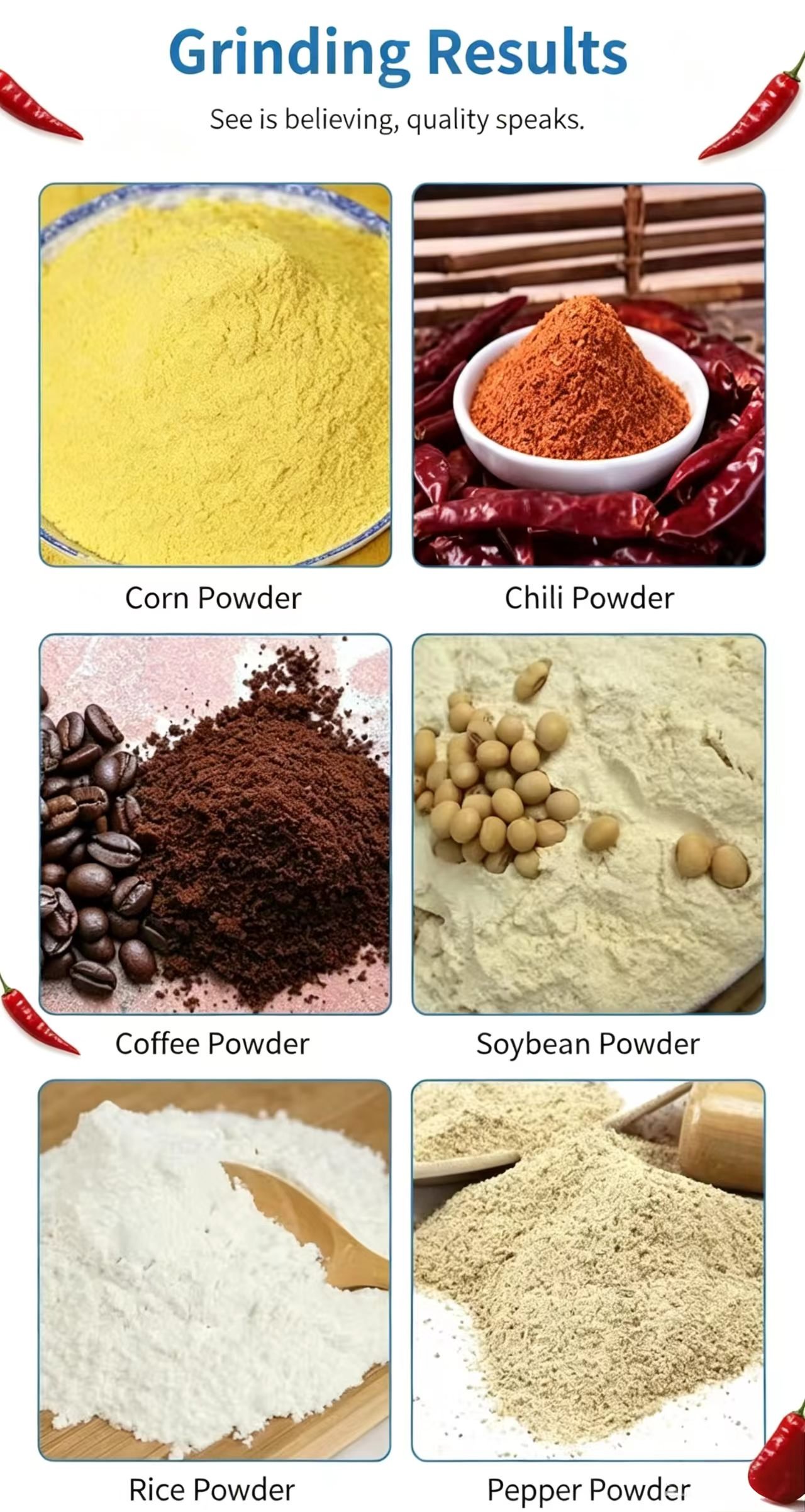
Yes. These are the so-called multi-function mills: you change the screen, not the machine. Keep one screen set for grain and one for roughage, and accept that roughage throughput will be much lower than the grain figure on the nameplate.
How much motor power do I need per ton of feed?
As a planning figure, allow 10-15 HP per tonne per hour on maize with a 2-3 mm screen, and 20-30 HP per tonne per hour if your ration is mostly roughage. Always add about 20% headroom.
Related Reading
Not Sure Which Model Fits Your Farm?
Tell us your daily tonnage, your main raw material and your power supply. We will recommend a model and quote factory-direct, usually within one working day.
Get a Free Recommendation