


Vertical vs Horizontal TMR Feed Mixer: Working Principle, Differences & Effect
Both blend a total mixed ration — but they do it in completely different ways. Here is how each works, where they differ, and which one protects your feed quality and your budget.
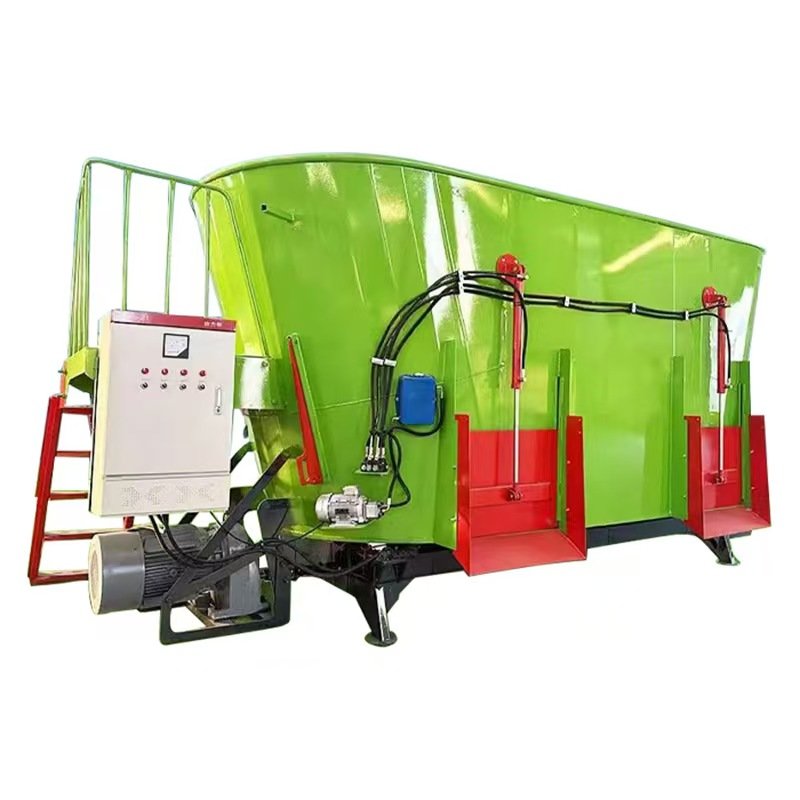
Un Vertical TMR alimentar mixer has become the default choice for dairy and beef farms that feed whole bales and long forage. But most buyers still ask the same question before they buy: should I get a vertical or a horizontal feed mixer? Both produce a total mixed ration (TMR) — one uniform mix of silage, hay, straw and concentrates — yet they reach that result through opposite mechanics. That difference quietly shows up in your feed uniformity, your power bill and your labor. This guide explains the working principle of each, the real-world differences, and the effect on your herd and your bottom line.
1. Why the Mixer Type Decides Your Feed Quality
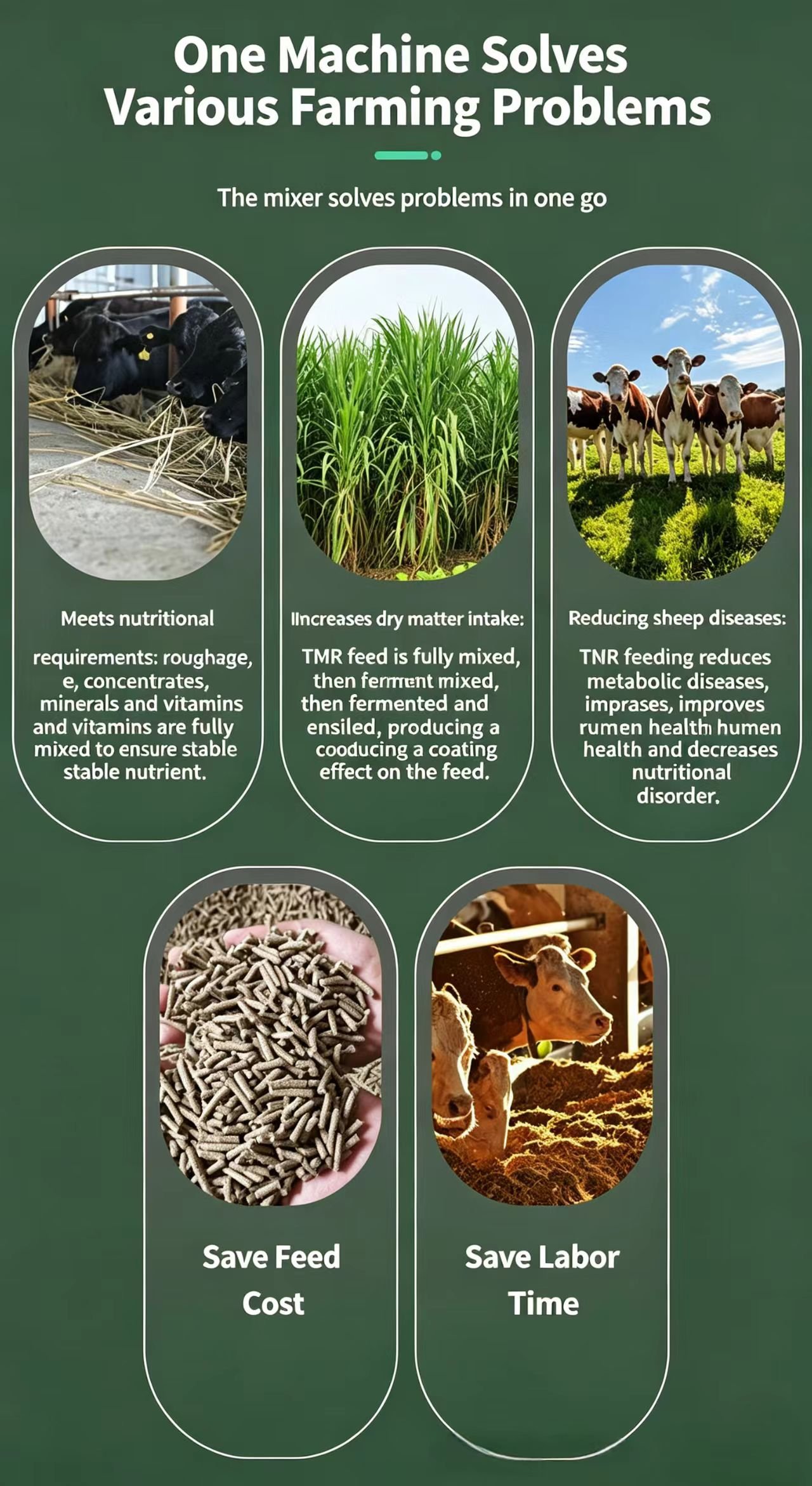
A TMR feeder exists to stop animals from sorting their feed — picking out the tasty grain and leaving the fiber behind. When every bite is the same, rumen pH stays stable, dry-matter intake rises and metabolic disease drops. The machine you choose controls three things that matter most: how evenly the mix is made, how much the fiber is damaged in the process, and how much work it takes to run. Before comparing vertical vs horizontal, keep the job in mind — cut, knead and blend coarse forage into a consistent ration without turning good fiber into dust.
2. How a Vertical TMR Feed Mixer Works
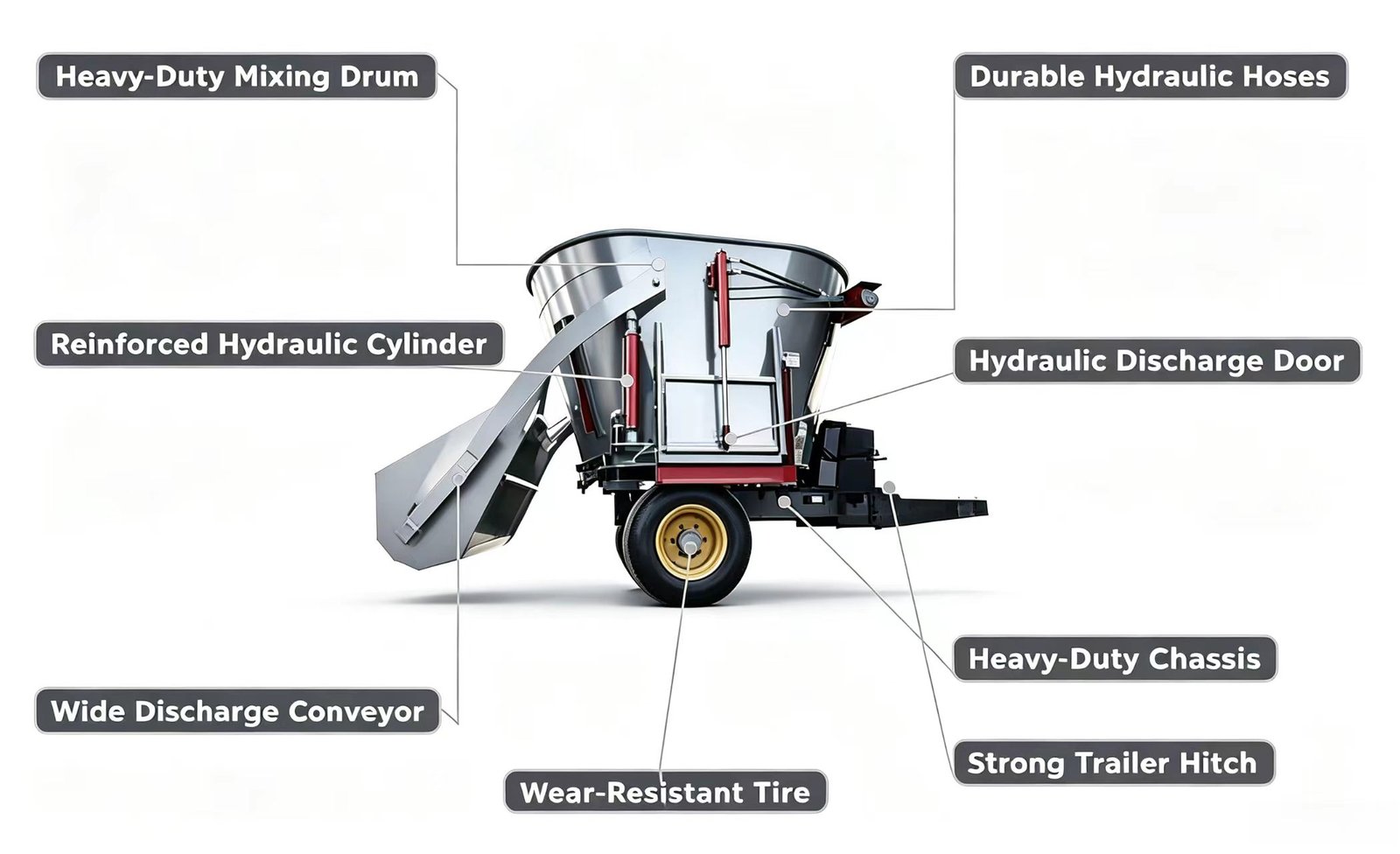
The Sunto vertical TMR mixer uses one or two vertical augers (large screw conveyors) inside a tall tub. Loading is from the top with a tractor loader or by dropping in whole round bales — no pre-chopping required. Inside the tub the cycle is simple and repeatable:
Load
Drop whole bales or loose forage into the tub from the top.
Lift
The vertical auger screws material from the bottom upward.
Cut
Stationary or rotating knives trim the forage as it passes.
Drop
Cut material falls back by gravity and is lifted again.
Descarga
Hydraulic doors release the finished TMR onto the lane.
After a few short cycles — typically 3 to 8 minutes — the whole batch is a uniform TMR. Because the action is a gentle vertical lift plus a single cut, fiber stays long and the mix stays cool.
3. How a Horizontal Feed Mixer Works
Un horizontal mixer (often called a ribbon or paddle blender) replaces the vertical tub with a long horizontal trough. A central shaft carries ribbon flights or paddles that rotate and tumble the material sideways along the box. There is no vertical lift and no aggressive cutting — it is gentle, continuous tumbling. Loading is usually from the top or a side auger, and the mix discharges from a bottom gate. Horizontal machines are common in feed factories and poultry operations where the feed is already fine, dry and ground.
Vertical — auger lift & cut
Horizontal — ribbon tumble
4. Vertical vs Horizontal — The Real Differences
The mechanics translate directly into day-to-day differences. Here is the side-by-side:
| Factor | Vertical TMR Mixer | Horizontal Mixer |
|---|---|---|
| Mixing action | Vertical auger lifts material, knives cut, gravity drops it back | Horizontal ribbon/paddle shaft tumbles material along a trough |
| Best feed type | Whole round bales, long fiber, silage, coarse roughage | Fine ground meal, concentrates, liquid & mineral mixes |
| Mixing time | Short — about 3–8 minutes per batch | Longer — about 8–15 minutes, risk of over-mixing |
| Fiber length | Preserves long fiber — better rumen health | Tends to shorten fiber the longer it runs |
| Loading | Top-load whole bales with a loader, one operator | Usually needs pre-chopped feed; harder with big bales |
| Power per m³ | Lower | Higher |
| Purchase cost | Lower — simpler machine | Higher — gearbox, ribbon, heavier build |
| Maintenance | Fewer moving parts; auger & knife wear | Gearbox, ribbon/paddle and trough wear |
| Typical use | Dairy/beef cattle, sheep, large-bale farms | Poultry, feed plants, fine uniform rations |
5. Effect Differences That Hit Your Bottom Line
The table above is theory — here is what it means in the barn.
Mixing uniformity
Both designs reach an acceptable coefficient of variation for farm use. Horizontal machines can edge slightly tighter uniformity for fine, free-flowing feeds, but for a TMR built on silage and long hay, a well-tuned vertical mixer is more than uniform enough. The gain from going horizontal rarely justifies the extra cost for cattle rations.
Nutrient preservation
This is where vertical wins for ruminants. The short cycle and single cut keep the mix cool and leave structural fiber intact. Over-mixing in a horizontal trough generates heat and shatters fiber into short particles — which lowers rumen effectiveness and can waste the very nutrient you paid for. Extension guidance on feed and forage management consistently stresses keeping fiber length for rumen function.
Labor and time
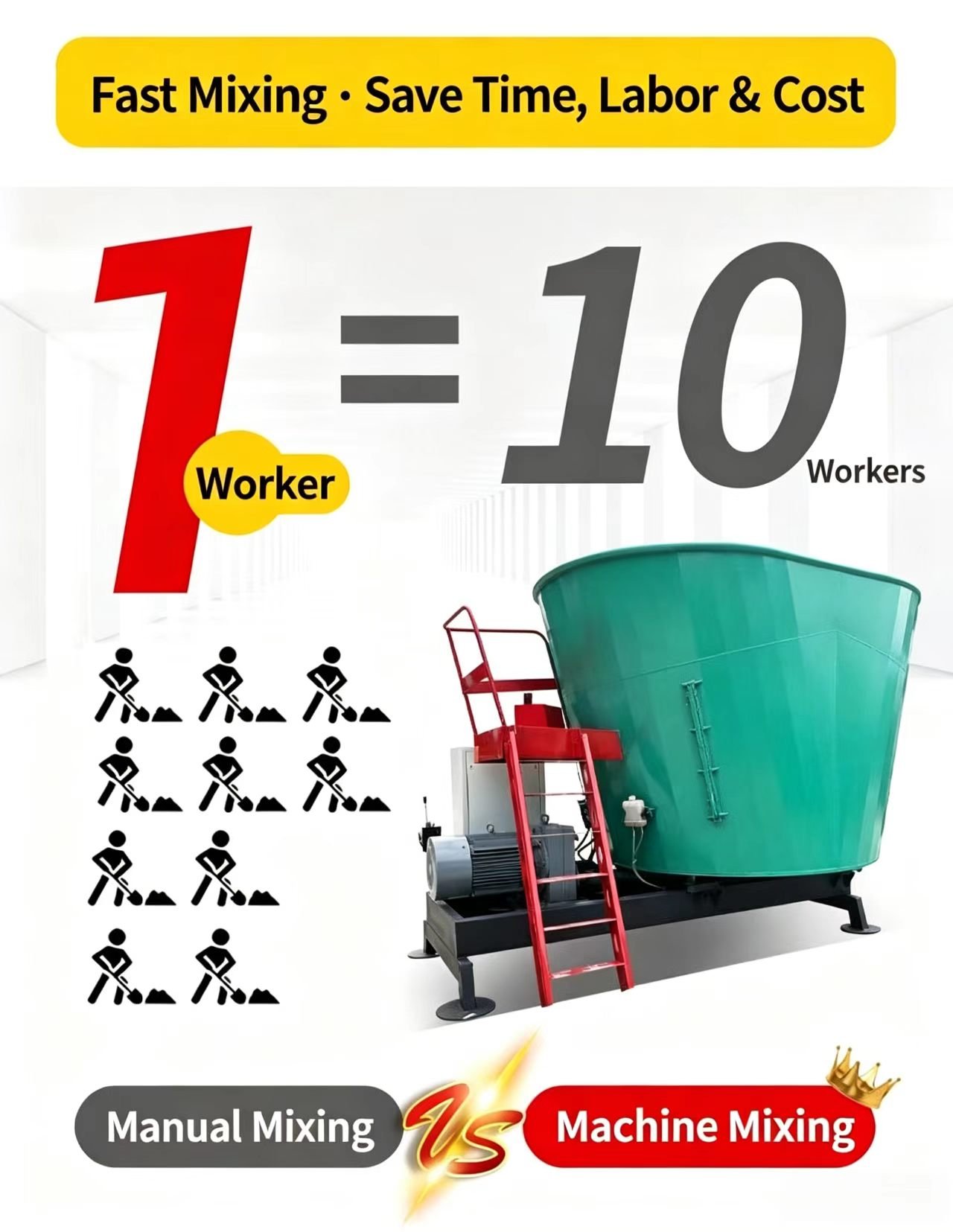
Because a vertical tub swallows whole round bales, one operator loads, mixes and feeds without pre-processing. That is a dramatic labor saving versus a horizontal setup that expects chopping first.
Cost over the life of the machine
Lower power per cubic meter, a simpler build and fewer wear parts all point the same way: a vertical TMR mixer is cheaper to buy and cheaper to keep running for a livestock farm. The saving compounds year after year.
6. Which Should You Choose?
Match the machine to what you actually feed:
Dairy & beef cattle
Vertical — bales & long fiber
Sheep & goats
Vertical — roughage + concentrate
Poultry & pigs
Horizontal — fine, uniform rations
Feed plants
Horizontal — tonnes per hour
Our take for most livestock farms
- Choose vertical if you feed cattle, sheep or goats on silage, hay, straw and whole bales, and you want one machine one person can run. This is the Sunto sweet spot — capacities from 5 m³ to 30 m³.
- Choose horizontal if you run a poultry house, a pig farm or a commercial feed plant where the ration is finely ground and needs the tightest possible uniformity at high volume.
- For a mixed small farm with a few cows plus some chickens, a vertical TMR mixer still covers the roughage-based ration; fine poultry feed is usually bought or pelleted separately.
7. Why Sunto Vertical TMR Mixers
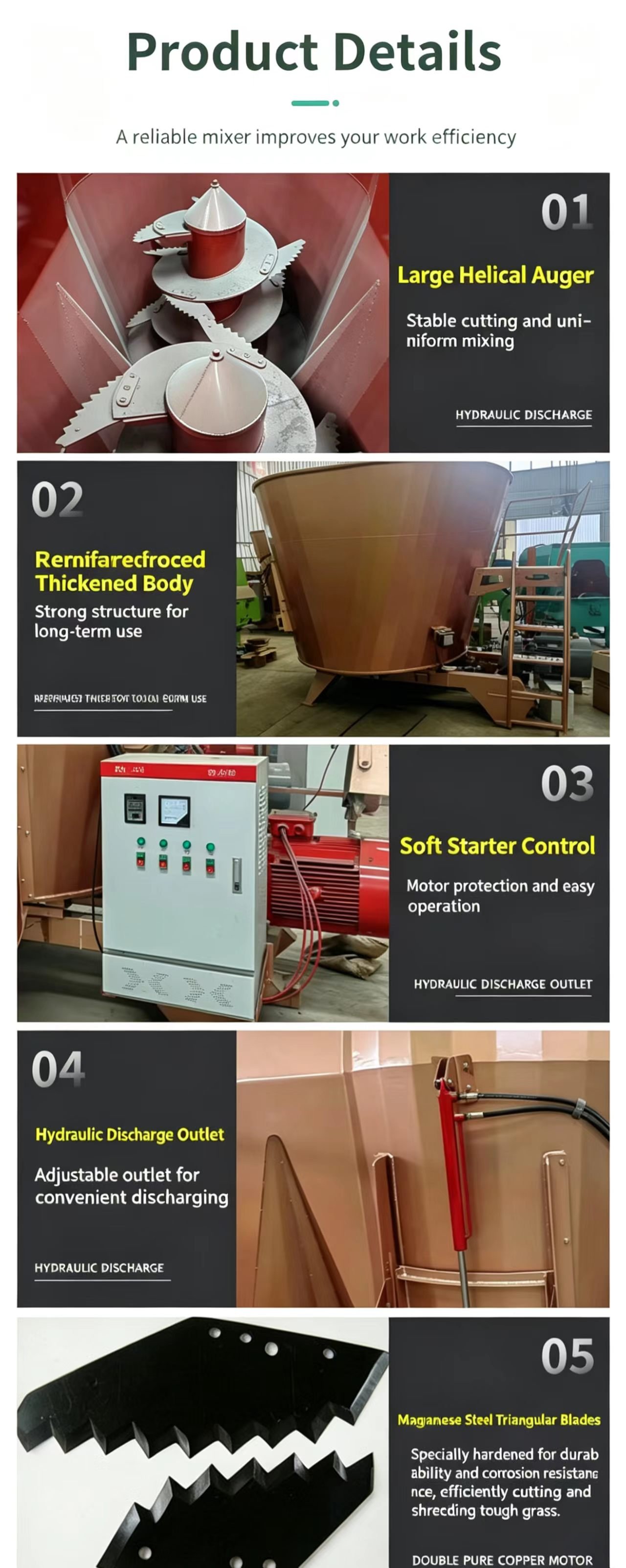
Our vertical line is built for exactly the strengths this guide describes: a reinforced alloy-steel tub, manganese-steel triangular blades for tough forage, hydraulic single or dual discharge, electronic weighing for accurate ration proportioning, and a copper-wire motor option that saves energy. Capacities run 5–30 m³, so a family dairy and a large feedlot both find a fit. Every unit is factory-tested before it leaves Zhengzhou.
Not Sure Vertical or Horizontal Fits Your Farm?
Cuéntenos sus animales, volumen diario y suministro de energía: nuestro equipo responde dentro de las 24 horas con especificaciones y una cotización directa de fábrica.
Contáctenos