


South America Dairy
TMR Feed Mixer for South American Dairy Farms: Cut Feed Cost, Raise Milk Yield
A regional guide to the vertical TMR mixer across South America - PTO vs electric, how to size by herd, what it saves, and a country-by-country look at where it fits.
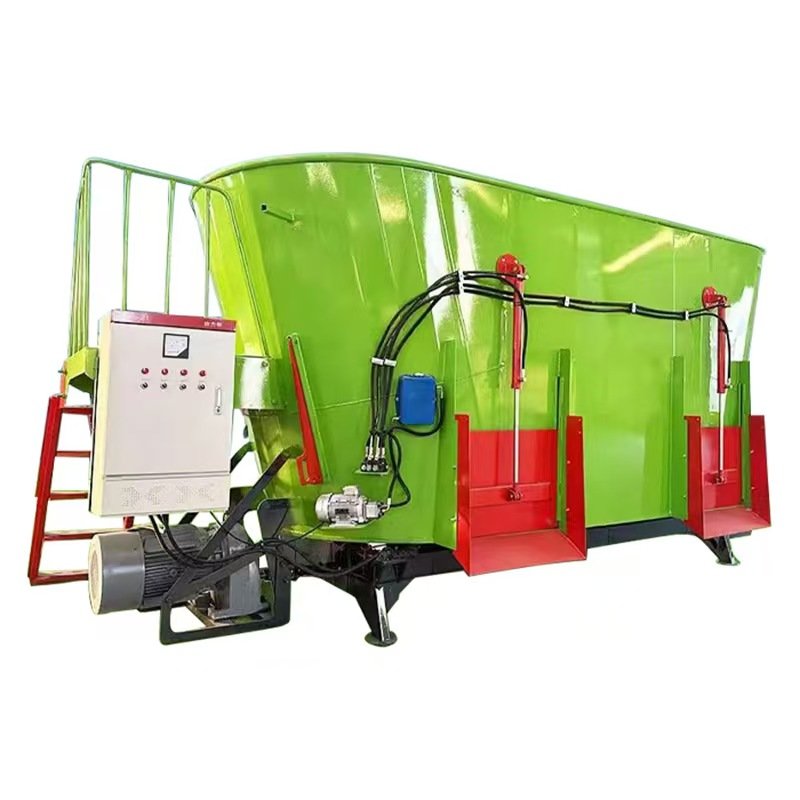
Why South American dairy farms are adopting TMR mixing
Feed is 60-70% of the cost of keeping dairy cattle, and across South America that feed is still mixed by hand on countless small and medium farms. Hand mixing is uneven - cows sort out the tasty bits, waste feed, and give inconsistent milk. Labour is also getting harder and more expensive to find.
A Total Mixed Ration (TMR) mixer fixes the ration quality problem and the labour problem at the same time. That is why adoption is climbing from the Andes to the Pampas.
What a TMR mixer actually fixes
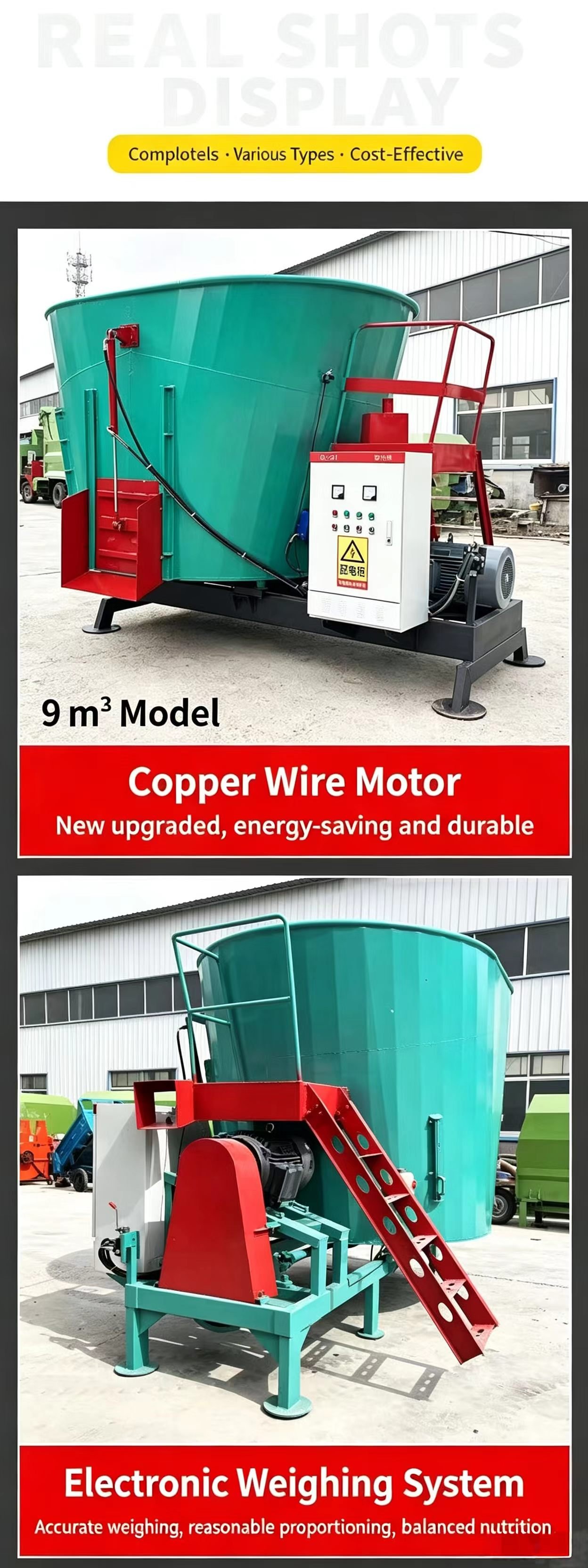
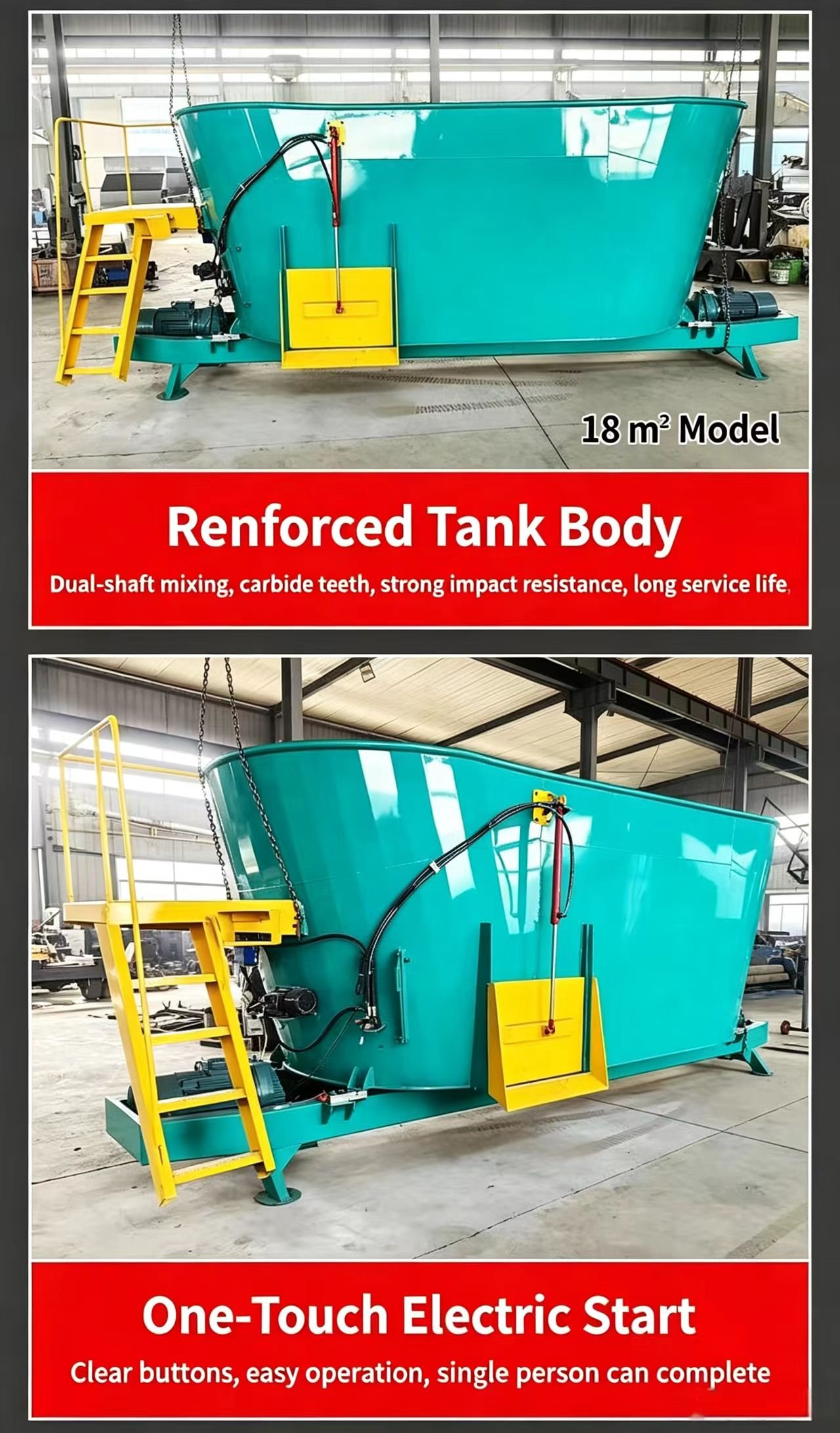
The vertical mixer uses a helical auger and weighted blades to cut and blend silage, hay, concentrates and minerals into one uniform ration. Electronic weighing lets you hit the exact recipe for each group of animals.
The payoff is practical: cows stop sorting, waste drops, and one batch replaces the work of 10 or more labourers. Steadier nutrition also means steadier milk and fewer health issues - the things that protect your margin through the dry season and price swings.
PTO trailer vs electric - which fits your farm
The Sunto vertical TMR mixer comes in two drive versions, both in the 5-30 m3 range:
- PTO tractor-drawn (trailer): pulls behind your existing tractor, no fixed power needed. This is often the practical pick across South America, where most farms already have a tractor but rural 3-phase power is patchy.
- Electric stationary: bolts into the yard, runs on 3-phase power. Best where you have stable electricity and a fixed feedline - common near towns and co-ops.
Neither is "better" in general - it depends on your power supply and whether the mixer stays put or moves between paddocks. (For the vertical-vs-horizontal mixer debate, see our vertical vs horizontal breakdown.)
Sizing by herd
Match the mixer volume to your daily feed volume, not just head count:
| Capacidad | Typical fit |
|---|---|
| 7-9 m3 | Small dairy and beef farms, roughly 50-200 head |
| 12-16 m3 | Medium farms and cooperative feed operations |
| 20-30 m3 | Large feedlots and high-volume dairy parlours |
The payoff
Numbers below are illustrative - replace them with your own farm figures:
| Source of saving | Illustrative effect |
|---|---|
| Labour | One batch replaces 10+ manual mixers |
| Feed waste | Sorting and spillage cut by 5-10% |
| Milk yield | Steadier ration, fewer health dips |
Most farms recover the machine within one or two production seasons once labour and waste savings compound. The exact payback depends on herd size, labour cost and how consistently the mixer is used.
Country by country across South America
Argentina: The largest dairy and beef herd in the region; Pampas feedlots run 20-30 m3 heavy-duty mixers, PTO or electric by yard.
Bolivia: Altiplano and valley smallholders are scaling dairy; a 7-9 m3 PTO unit pulls behind the tractor most farms already own.
Brazil: Huge dairy in Minas Gerais and the South; near towns with stable 3-phase, the electric stationary version suits fixed feedlines.
Chile: Tech-adopting medium dairy farms value electronic weighing for precise rations, and good roads make the trailer PTO unit easy to move.
Colombia: Andes and coffee-zone farms are fragmented; 7-12 m3 PTO mixers fit the plot sizes and the uneven grid.
Ecuador: Growing dairy cooperatives share one 12-16 m3 mixer between members to spread the cost.
Guyana: English-speaking and often reliable coastal 3-phase; the electric version works well, and we supply English manuals.
Paraguay: Extensive beef and dairy ranches favour large 20-30 m3 PTO mixers for low-labour, wide-area work.
Peru: Sierra small dairy plus larger coastal herds; 7-16 m3 covers both, with PTO where the grid is weak (priority market, port Callao).
Suriname: A small, bilingual niche dairy; a compact 5-9 m3 unit is enough for local herds.
Uruguay: High-productivity grass-fed beef and dairy; 12-30 m3 mixers feed feedlot and rotary-parlour circuits.
Venezuela: Large herds but a volatile economy; a rugged PTO mixer gives self-reliance, and local parts backup matters most.
Beyond South America, our priority Central American market Costa Rica follows the same PTO-first logic.
Shipping to South America
We deliver to the main gateways - Callao (Peru), Buenaventura (Colombia), Valparaiso and San Antonio (Chile), Guayaquil (Ecuador), Santos and Buenos Aires, Montevideo, and Asuncion via Argentina. A 20 ft or 40 ft container holds several mixers depending on size; we confirm the exact count per order.
Spanish operation manuals and videos are included, and we provide the commercial invoice, packing list and bill of lading each country needs for clearance.
Frequently asked
What tractor HP do I need for the PTO version?
It scales with mixer size - mid units typically need around 50-90 HP. We confirm the exact requirement once we know your model and local terrain.
Can the electric version run on my voltage?
Yes. We build for 220V or 380V 3-phase; tell us your local supply and we match the motor.
Does it mix wet silage and dry concentrates together?
Yes. The auger handles wet and dry materials in one pass for a uniform TMR.
Do you support Spanish and spare parts?
Spanish manuals and videos are standard, and we stock wear parts (blades, augers, seals) for fast reorder.
Related reading
Get a South America quote
Tell us your country, herd size, tractor HP or power supply, and target volume. We will recommend the right 5-30 m3 TMR mixer and quote landed cost to your nearest port, with Spanish support.
Contact Sunto