


How to Choose the Right Horizontal TMR Feed Mixer for Your Farm
A horizontal TMR (total mixed ration) feeder cuts, flips and blends hay, silage, straw and concentrates into one uniform ration. Pick the wrong capacity and you either short-feed part of the herd or waste power and money on an oversized unit. This guide walks you through six decisions - starting with herd size - using Sunto's 23-model range from 2 to 24 m3.
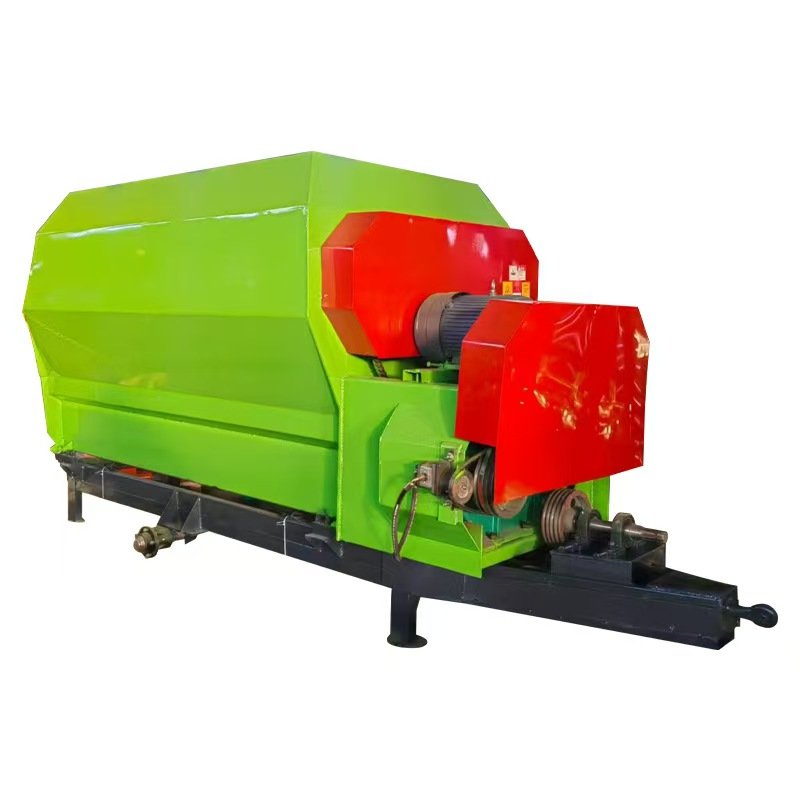
Step 1: Size the Tub to Your Herd
The single biggest factor in choosing a horizontal TMR mixer is how many animals you feed each day. A mixer that is too small forces you into extra batches; one that is too large wastes motor power and money on steel you do not need. Use the table below as your starting point.
| Tamaño del rebaño (bovinos) | Capacidad sugerida | Modelos Sunto |
|---|---|---|
| 30 - 40 | 2m3 | 2 m3 simple o doble eje |
| 40 - 70 | 3 - 4m3 | 3 m3 y 4 m3 de simple o doble eje |
| 80 - 120 | 5m3 | 5 m3 simple o doble eje |
| 130 - 200 | 7 - 9m3 | Accionamiento directo de doble eje de 7 m3 y 9 m3 |
| 400 | 12m3 | 12 m3 de accionamiento directo de simple o doble eje |
| 500 - 700 | 14 - 16m3 | 14 m3 y 16 m3 doble eje, arranque suave |
| 1000 | 24m3 | 24 m3 de accionamiento directo de doble eje, arranque suave |
For sheep and goats, plan roughly 10 sheep per 1 head of cattle in tub volume. A 2 m3 mixer that serves 30-40 cattle also covers 300-400 sheep; a 24 m3 unit serves up to 10,000 sheep.
Step 2: Pick the Drive - PTO Tractor or Electric Motor
Sunto horizontal mixers come in two power families, and both produce the same uniform ration. The difference is only where the power comes from.
Trailer version with PTO shaft
Hitched to your tractor and powered through the PTO shaft, this version moves between paddocks and feed bunks. Choose it when you already run a tractor and feed across a large farm or several lots.
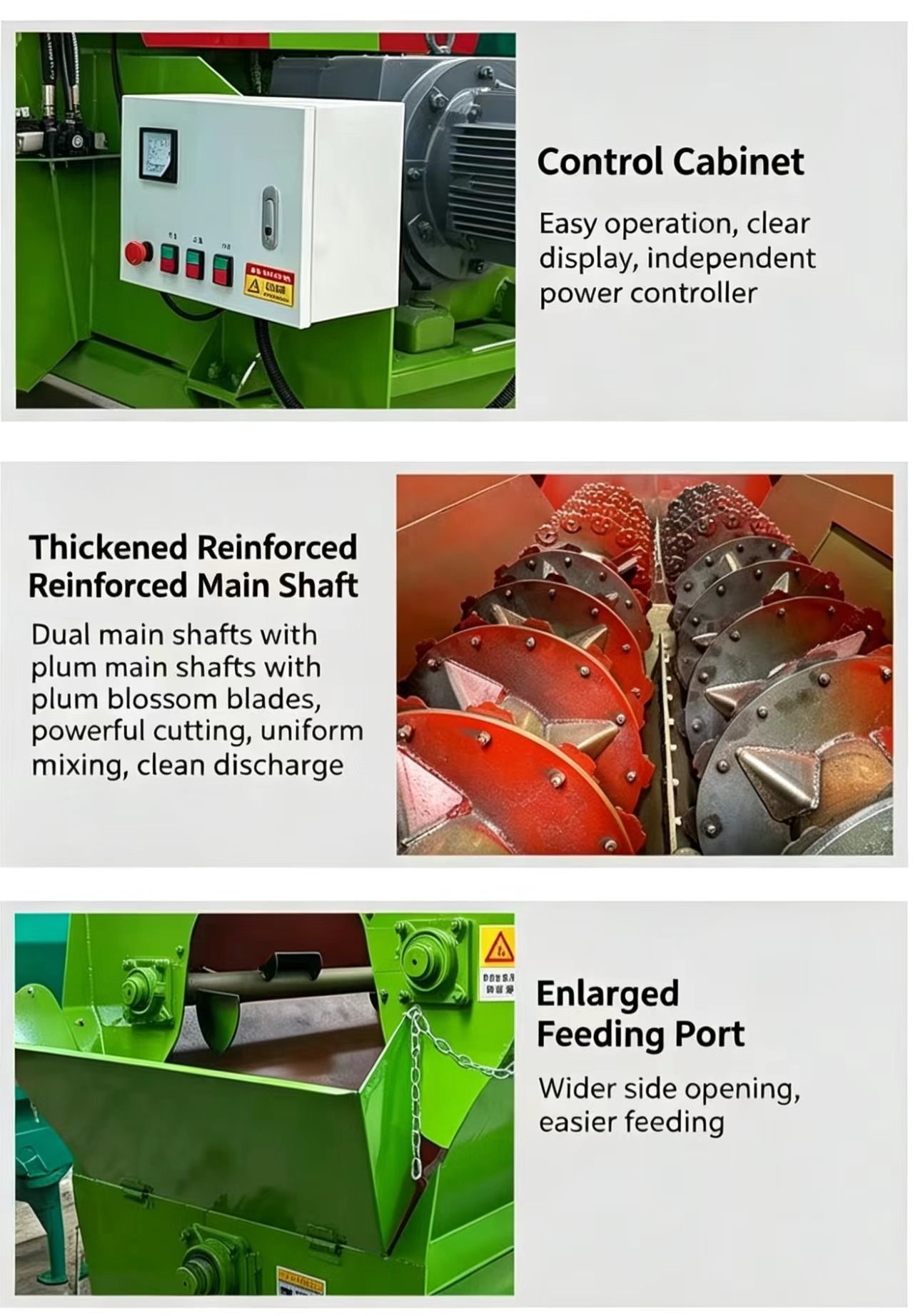
Stationary electric version with control cabinet
Powered by stable 3-phase electricity and managed from a control cabinet, this version lives in the dairy or feedlot. Choose it when you have reliable 3-phase power and a fixed mixing point - it runs quieter and frees your tractor for field work.
Step 3: Single Shaft or Double Shaft
The number of rotors decides how fast and how evenly the ration is mixed.
- Eje único - one horizontal rotor with plum-blossom blades. Enough for most herds up to about 9 m3, with a lower purchase price and simpler mechanics.
- Doble eje - two counter-rotating rotors that cut and rub the forage together. Mixes faster and more evenly, and handles long, fibrous material and large batches better. Recommended at 5 m3 and above, or whenever you mix several groups per day.
Step 4: Belt Drive or Direct-Drive Gearbox
The transmission links the motor to the shafts. Two proven options cover the whole 2-24 m3 range.
Belt drive (JZQ / ZQ reducer)
Lower purchase cost, and the belt is cheap and easy to replace in the field. A good match for lighter daily use on the smaller 2-5 m3 models.
Direct-drive gearbox (R-series industrial reducer)
Higher efficiency and a sealed unit built for heavy, all-day commercial use. This is the standard on 7 m3 and above. On the 14 m3, 16 m3 and 24 m3 dual-motor models, a soft start protects the motors from inrush current at switch-on.
Step 5: Must-Have Features You Should Not Skip
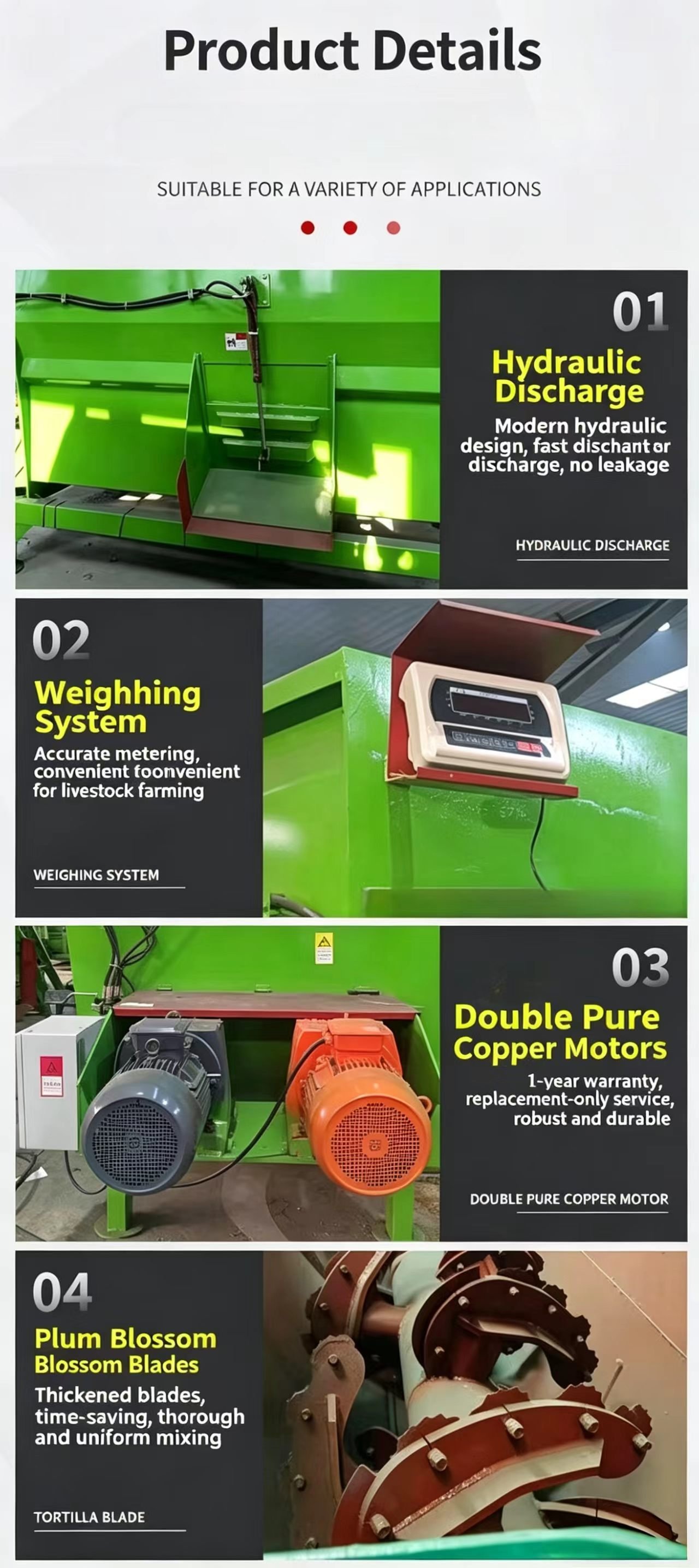
Capacity and drive get the mixer running, but these six build features decide whether it still runs well in year five. Do not trade them away for a lower quote.
- Sistema de pesaje electrónico - shows real-time batch weight, doses micro-ingredients accurately, and lets you lock the exact formula for each group of animals.
- Descarga lateral hidráulica - opens wide and unloads fast and clean, so less feed ends up on the floor.
- Dobles motores de cobre puro - strong, stable power for heavy wet rations, backed by a 1-year replacement warranty: if a motor fails, we replace it rather than repair it.
- Hojas de flor de ciruelo - corte, voltee y frote el forraje largo hasta obtener una mezcla uniforme en 15-20 minutos.
- Boca de carga lateral ampliada - takes whole bales and bulky forage without pre-chopping.
- Ejes principales reforzados y de mayor espesor - resist wear under daily load and extend machine life.
Step 6: Batch Time and Labor
One batch of wet or dry forage mixes in 15-20 minutes. That throughput is easy to plan around:
- A 5 m3 mixer feeding 100 cattle, one batch per group, two or three batches a day, covers the whole herd in under an hour of active mixing.
- Operator skill is low. The weighing screen and one-button discharge mean any farm worker can run the machine after a short demonstration.
- Fewer batches and clean discharge also mean less labor per ton of feed delivered to the bunk.
Quick Selection Table
If you only remember one thing from this guide, make it this table. Match your herd to a capacity, then pick drive and shaft to suit your site.
| Herd size | Capacidad | Drive | Shaft | Motor power |
|---|---|---|---|---|
| Up to 40 cattle | 2m3 | PTO or electric | Single | 7.5KW |
| 40 - 70 cattle | 3 - 4m3 | PTO or electric | Single / double | 7.5 - 11KW |
| 80 - 120 cattle | 5m3 | PTO or electric | Single / double | 11 - 15KW |
| 130 - 200 cattle | 7 - 9m3 | PTO or electric | Double | 18.5 - 22KW |
| 400 cattle | 12m3 | PTO or electric | Double | 22 - 30KW |
| 500 - 700 cattle | 14 - 16m3 | PTO or electric | Double | Dual 30KW (soft start) |
| 1000 cattle | 24m3 | PTO or electric | Double | Dual 37KW (soft start) |
Sunto Model Recommendations by Farm Type
Small farm / homestead
2 m3 single shaft belt (30-40 cattle) or 3 m3 single direct (40-50 cattle). Compact, low power, easy to move and store.
Medium dairy
5 m3 double shaft direct (80-120 cattle) or 7 m3 double direct (130-150 cattle). Fast, even mixing for several groups a day.
Large ranch
12 m3 double direct (400 cattle) up to 24 m3 double direct with soft start (1000 cattle). Built for all-day commercial use.
Every model is built in Sunto's own workshops with R&D, production, QC, shipping and after-sales under one roof. Browse the full line on the página de producto TMR horizontal o el products hub.
Preguntas Frecuentes
Ready to Size Your Horizontal TMR Mixer?
Envíenos el tamaño de su hato y la energía disponible. Le recomendaremos la mezcladora horizontal de ración TMR de 2 a 24 m3 adecuada y le enviaremos la cotización en 24 horas.
Solicitar Cotización Ver todos los modelos