


Why You Need a Chaff Cutter Before Using a Feed Pellet Machine
Many farmers buy a máquina de pellets de alimentación expecting to drop in corn stalks and straw and walk away with dense pellets. A few days later they call us with the same story: the die jams, the rollers wear out fast, and pellet quality is inconsistent. Nine times out of ten, the missing piece is not the pellet mill — it is a chaff Cortador doing the preprocessing first.
A pellet mill compresses fine, powdered feed into pellets. It is not built to swallow whole stalks. Long, fibrous crop residue has to be cut down to size before it ever reaches the pelleting chamber. That is exactly what a chaff cutter is for. Below we break down what each machine does, why the order matters, and how to pair them correctly.
What a Chaff Cutter Actually Does
The Sunto 9ZR series chaff cutter is engineered for high-volume fodder processing. Its job is simple but critical: take long, bulky crop residue and turn it into short, uniform pieces that downstream machines can handle.
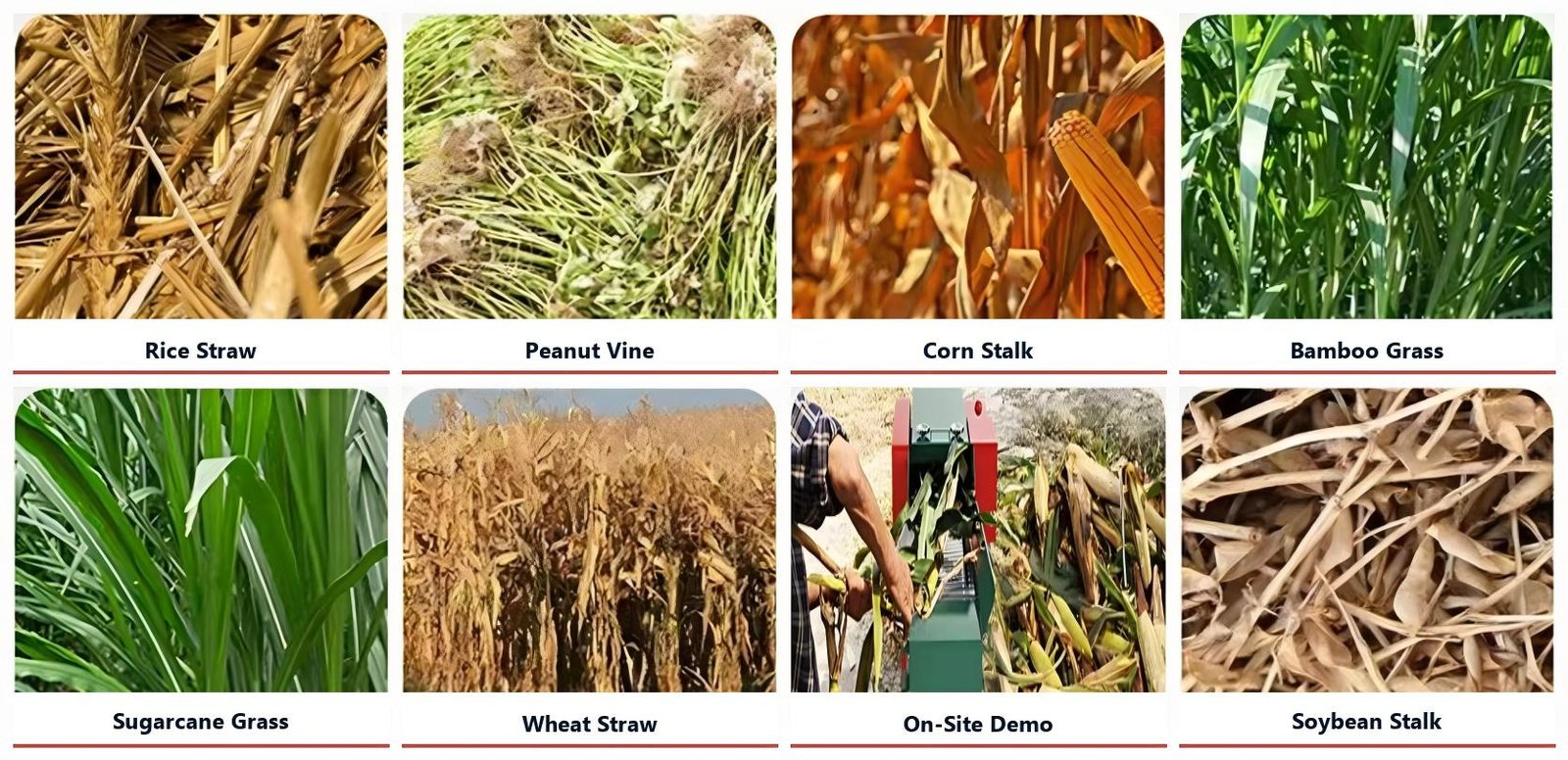
The 9ZR chaff cutter handles corn stalks, wheat straw, rice straw, sorghum, alfalfa, sweet potato vines, peanut vines and cotton stalks.
It processes a wide range of materials — corn stalks, wheat straw, rice straw, sorghum, alfalfa, sweet potato vines, peanut vines and cotton stalks. Key engineering points that matter for durability:
- 9CrSi alloy steel blades with heat-treated edge hardening — clean cuts, long service life.
- Pure copper core motor — lower heat, stable power under load, longer life than aluminum-wound alternatives.
- One-piece laser-cut kneading disc + hammer blade — kneads stalks into soft, digestible fibers that livestock eat more willingly.
- Gear-shift cutting length adjustable from 10 mm to 30 mm to match the animal being fed.
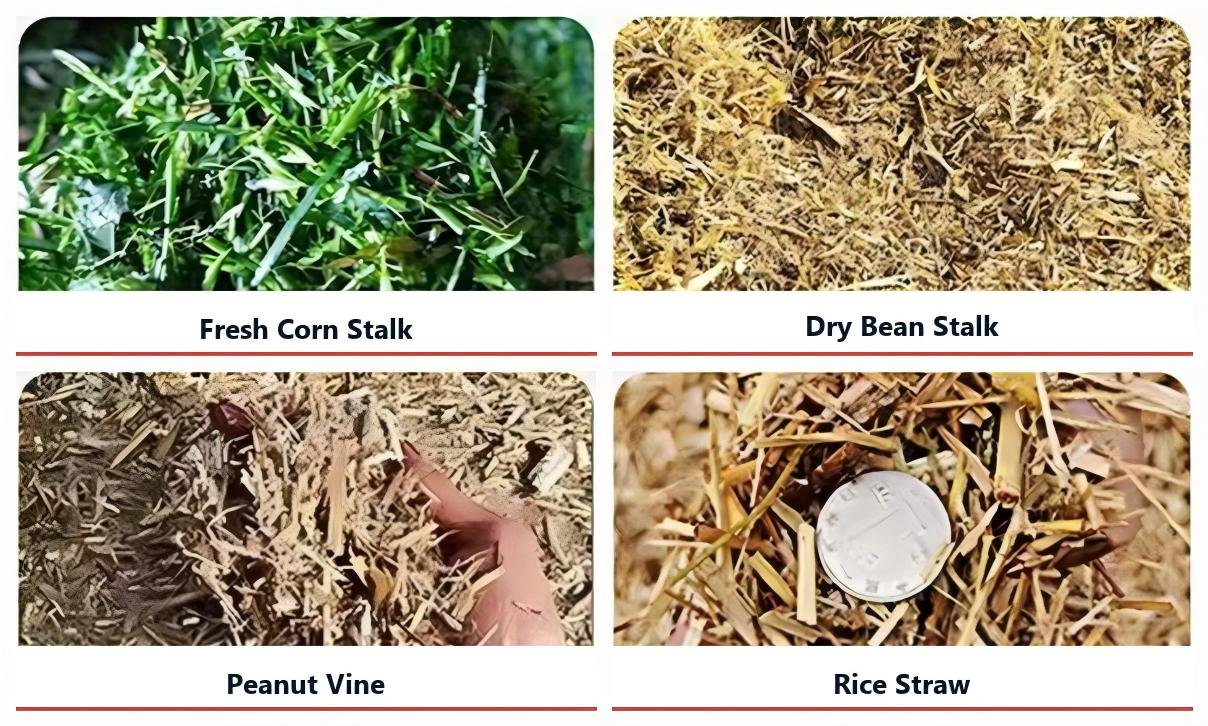
Output after chaff cutting: uniform-length, soft-textured chopped fodder ready for the next processing stage.
What a Feed Pellet Machine Needs to Work
The Sunto KLJ series flat die feed pellet machine compresses powdered feed — grain meal, soybean meal, grass meal and additives — into dense, uniform pellets at 80–1000 kg/h, with pellet size adjustable from 2–12 mm.
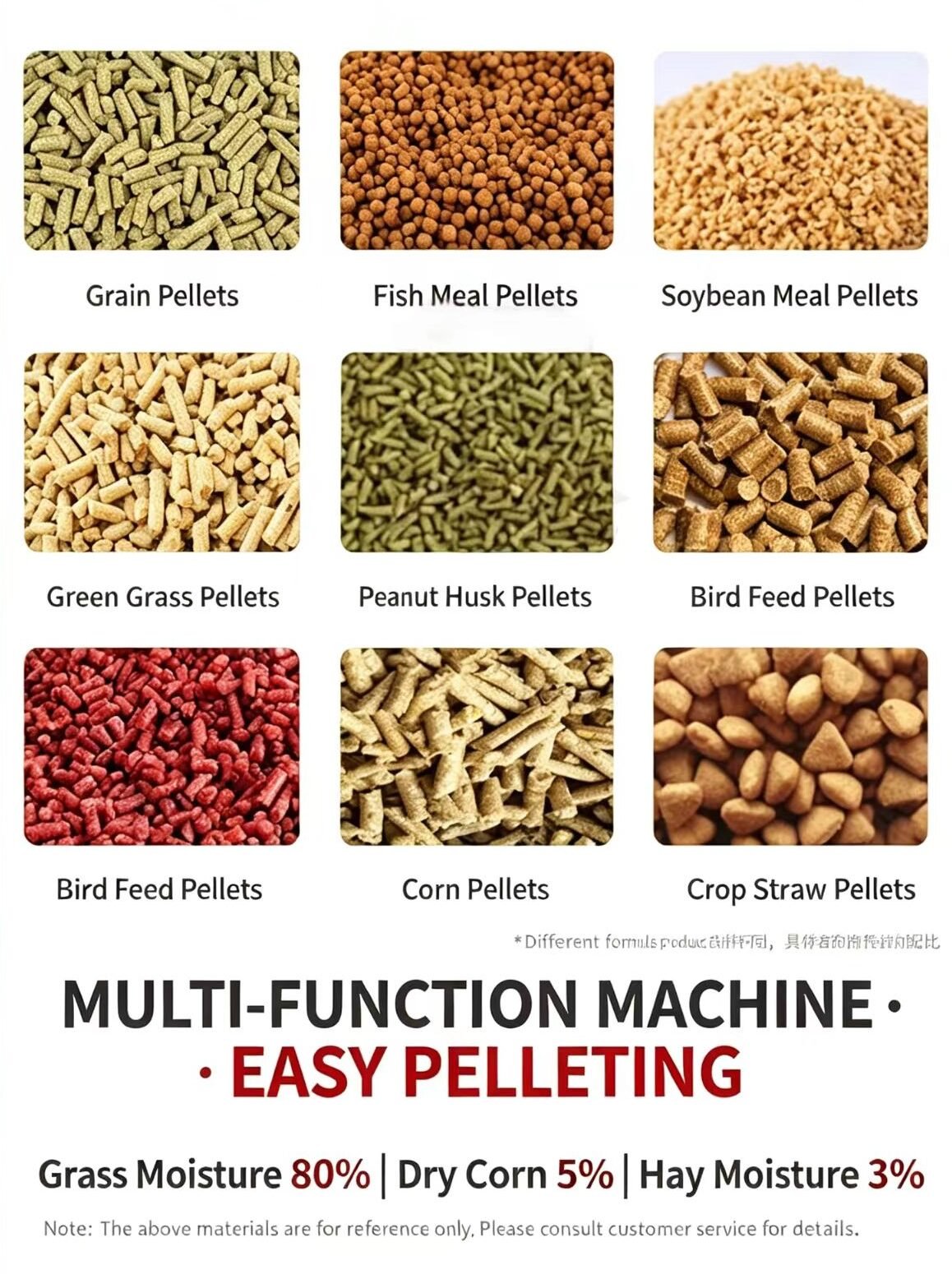
Inside the pellet mill, powdered feed is forced through the flat die and rollers, then cut to length at the outlet.
The flat die and rollers do the work. By swapping the die and roller you change pellet diameter for different animals — poultry 2–4.5 mm, pigs 2–4.5 mm, rabbits 3–4 mm, cattle & sheep 4–6 mm, fish 0.5–4 mm. But this mechanism assumes the raw material is already fine and free-flowing. Drop in a whole corn stalk and it will not pass through the die — it bridges, stalls the motor, and scores the die surface.
Why Chaff Cutting Has to Come First
Skipping the chaff cutter does not just slow you down — it damages equipment and ruins pellet quality. Here is what correct preprocessing delivers:
The Complete Feed Processing Line
For farms processing their own crop residue, the full chain looks like this:
- Cortar — the chaff Cortador reduces stalks and straw to 10–30 mm pieces (stage 1, essential).
- Moler — a hammer mill further reduces the chopped material to a fine powder suitable for pelleting.
- peletizar — the máquina de pellets de alimentación compresses the powder into uniform pellets.
- Cool & store — pellets are cooled and bagged for stable, long-term storage.
Remove stage 1 and the whole line backs up. The chaff cutter is the foundation that keeps everything downstream running.
How to Pair a Chaff Cutter with Your Pellet Mill
Match capacity so the chaff cutter can always stay ahead of the pellet mill's intake:
- Small farm / homestead: 9ZR-3 chaff cutter + KLJ small flat die pellet mill (electric).
- Medium farm: 9ZR-4 chaff cutter paired with a mid-capacity pellet mill.
- Commercial feed operation: 9ZR-5 chaff cutter feeding a high-throughput pellet line.
Rule of thumb: the chaff cutter's hourly capacity should exceed the pellet mill's raw-material demand, so the pellet mill never waits on feed. Both machines are built in our Zhengzhou factory and shipped worldwide to South America, Africa, the Middle East and Southeast Asia.
Preguntas Frecuentes
Can I put whole corn stalks directly into a pellet machine?
No. A pellet mill is designed for fine, powdered feed. Whole or long stalks will jam the die, stall the motor and wear out the rollers. Always chop them first with a chaff cutter, then grind to powder.
Is a chaff cutter the same as a hammer mill or grinder?
No. They are different stages. The chaff cutter cuts long stalks into short pieces (10–30 mm). The hammer mill then grinds those pieces into fine powder. Both may be needed before pelleting fibrous crop residue.
What cutting length should I use before pelleting?
Start with 10–30 mm on the chaff cutter, then reduce further with a hammer mill to a fine powder. The exact pellet-mill requirement depends on your die hole size and material.
Do I need a chaff cutter if I only buy ready-made feed powder?
If you purchase pre-ground feed powder, the pellet mill alone is enough. A chaff cutter is essential only when you process your own straw, corn stalks or other bulky crop residue on the farm.
Ready to Build Your Feed Processing Line?
Get factory-direct pricing on the Sunto 9ZR chaff cutter and KLJ feed pellet machine — engineered to work together.
Ver cortador de paja View Feed Pellet Machine