


How to Check Horizontal TMR Mixer Quality Before You Choose a Supplier
Two 12 m3 mixers can look identical in a quote and a photo. Five years later one is still mixing every morning and the other has been through two gearboxes, a shaft and a full set of blades. The difference is in five details most spec sheets leave out.
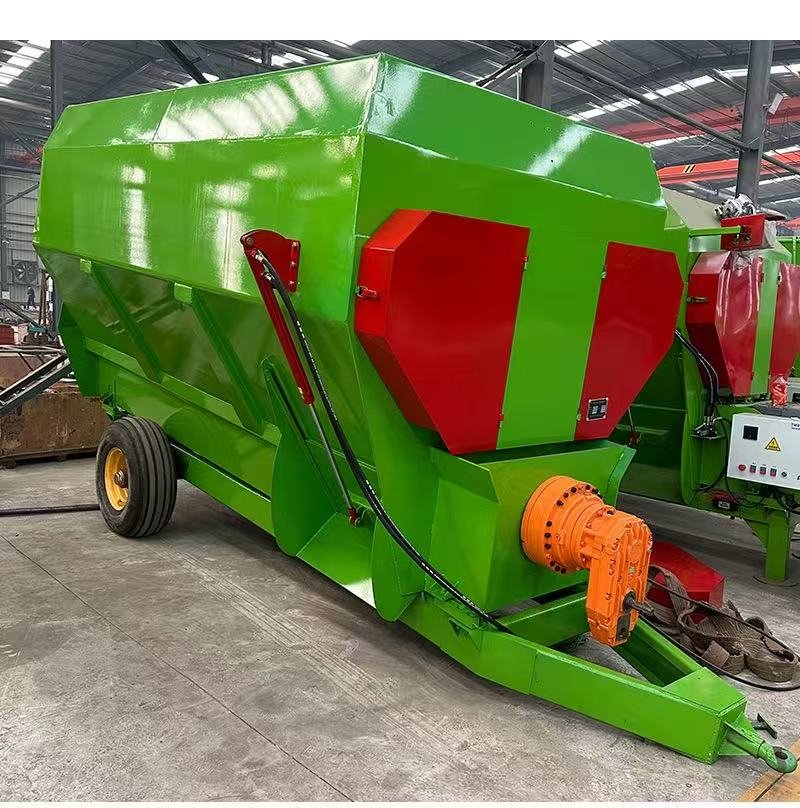
Send the same RFQ to five suppliers and you will get five near-identical quotations: 12 m3, two augers, 30HP, hydraulic discharge, electronic weighing, a similar FOB price, and the same green machine in the photos. On a spreadsheet they are the same product. Five or six years later they are not.
A horizontal TMR mixer is not a seasonal tool. On a dairy or feedlot it starts before dawn, runs one to three batches a day, every day, under shock loads from wet silage, dense hay and mineral premix. The parts that decide whether it is still working in year six are rarely the ones listed in the quotation: the grade of steel in the knives, the exact gearbox model, the shaft and bearing assembly, the plate thickness at the points that actually wear, and whether the supplier can still send a part and an answer.
This is a supplier-screening checklist, not a sizing guide. For capacity, PTO versus electric drive, single versus double shaft, and belt versus direct drive, use our Cómo elegir una mezcladora horizontal TMR guide. Here we cover the five checks to run before you accept a quote for a mezcladora horizontal de ración TMR.
Where this fits: still choosing between layouts? Read Mezcladora TMR vertical frente a horizontal. Importing into South America? The Peru import and buying guide covers power supply, customs and shipping on top of the build checks below. The same screening logic applied to a different machine is in Round Silage Baler Buying Mistakes.
Why 5-6 Years Is the Right Question
Most buyers ask what the warranty is. The answer is usually 12 months, and it tells you almost nothing about year four. A better question is: can this machine still mix a uniform ration on a normal morning five or six years from now, and who will help me keep it there?
Be careful with promises. No supplier can honestly guarantee 5-6 years of trouble-free operation in a contract - wear parts are consumable, feed recipes vary, and maintenance differs from farm to farm. What a supplier can do is show you the design margins, the material grades and the parts support that make five to six years realistic. If someone guarantees six years in one sentence with no conditions attached, that is a sales line, not an engineering answer.
| When | Well built and supported | Thin build, no support |
|---|---|---|
| Year 1 | Knives hold their edge, batch time stays stable, first service is a planned oil change | Knives dull early, batch time creeps up, ration uniformity starts to drift |
| Years 2-3 | Belts, bearings, seals and knives replaced on a known schedule with known part numbers | Shaft wobble, gearbox noise, cracks at welded ribs, ad-hoc repairs with no parts list |
| Years 4-6 | Wear parts swapped as planned, machine still on its original tub, shaft and gearbox | Gearbox or shaft replacement, worn tub floor, and a supplier who no longer replies |
The gap is not luck. It comes from decisions made before the machine is built, plus the boring discipline of having spares available. Both can be checked before you pay.
Check 1: Hojas - Alloy Manganese Steel or Ordinary Carbon Steel?
Knives are the only part designed to wear. They cut and pull long fibre, break open bales and push the whole load through the augers. Cheap blades do not fail dramatically - they just get dull. Batch time creeps from 8 minutes to 14, the ration gets less uniform, the motor draws more current, and the operator compensates by running longer. You pay for that in electricity, diesel and feed consistency for months before anyone thinks to check the knives.
What to ask for, in writing
- The exact steel grade. "High-strength steel" is not a grade. Common references in this class of machine are 65Mn alloy manganese steel or an equivalent heat-treated alloy steel, rather than plain carbon steel.
- Heat treatment and edge hardness. A hardened edge in the HRC 55-58 range is a typical industry reference, with a tougher core so the edge does not chip.
- Blade thickness and count. Around 8 mm is a common reference on larger mixers; ask for the number of knives per shaft too.
- How the knife is fixed. Bolted, replaceable segments are a serviceable design. Knives welded to the shaft or holder mean cutting and re-welding to change a worn set.
- Proof of the grade. A mill certificate, a hardness report, or at least the grade written on the quotation.
Wear studies on TMR mixer knives in abrasive silage conditions have found manganese spring steel such as 65Mn to outperform some harder but more brittle tool steels (Cr12MoV, 9SiCr) in this particular job. Harder is not automatically better: a very hard, brittle edge can chip on a stone or a frozen bale. What you want is a defined, heat-treated grade with a repeatable spec, and a supplier who will state it.
Red flags
- "High-strength alloy blade" or "imported steel" with no grade and no hardness figure.
- Blades welded in place, so a worn set becomes a cutting and re-welding job.
- No part number and no price for a replacement knife set.
- A quotation that lists blade count but nothing about material.
Blade grade is one of the questions buyers ask us most often; more of them are collected in the Sunto FAQ. If you are new to the machine, Noticias Sunto has separate articles on mixing principles, wear parts and drive options.
Check 2: Caja de cambios - Ask for the Model, Not the Adjective
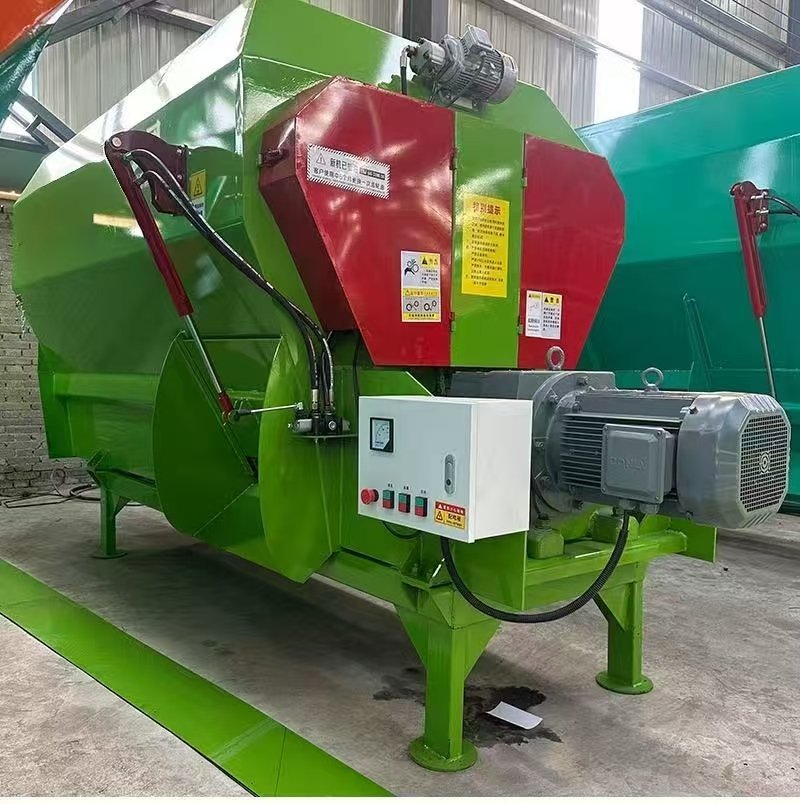
The gearbox takes motor or PTO speed down to the slow, high-torque rotation of the augers. It absorbs every shock load when a dense bale drops into a full tub. If it is undersized or unbranded, it is usually the first expensive failure, and it often takes the shaft seals with it.
"Heavy-duty gearbox" is not a specification. Our published mezcladora horizontal de ración TMR configurations name the actual units: JZQ350, ZQ350, JZQ400 and JZQ500 on belt-driven builds, and R97, R107, R137, R147 and R167 on direct-drive builds, matched to tub sizes from 2 to 24 m3. Whatever brand your supplier uses, they should be able to do the same - a model number, a rated output torque and a service factor for your capacity and duty cycle.
Five things to verify
- Model and brand on the nameplate, with a photo of the actual unit, not a catalog rendering.
- Rated output torque and service factor matched to a full tub under load, not to the empty running load.
- Oil type, first change interval and later intervals, plus how the housing is sealed against feed dust and wash-down water.
- Spare gear and seal sets: part numbers, prices and a realistic lead time to your country.
- Overload protection: belt slip, torque limiter or electronic overload cutoff, so one jam does not destroy the gearbox.
That last point matters as much as the brand name. A mid-range gearbox behind a belt that can slip often survives a jam better than an oversized unit bolted straight to a shaft with no overload protection. The choice between belt and direct drive is a sizing decision covered in the selection guide; here the point is simply to make the supplier name the hardware and the protection behind it.
Check 3: Mixing Shafts - The Part You Cannot Cheaply Replace
Knives are consumables. The shaft is structure. A bent or cracked shaft means stripping the tub, and on an imported machine the freight and downtime cost more than the part itself. Worse, a shaft problem rarely stays a shaft problem: it loads the bearings, the seals and the gearbox output, so one cheap component can cascade into three expensive ones.
Our published build spec lists thickened reinforced main shafts carrying plum blossom blades, in single or double-shaft layouts. That is a starting point, not the whole answer. Here is what to measure or request.
- Shaft diameter and construction. Solid or tubular, with a tape-measure photo at the bearing seat. Get the number in mm.
- Bearing housings and position. Brand and model, and whether the housings sit outside the tub so they can be greased and replaced without a full teardown.
- Sealing. How feed juice, silage acid and wash-down water are kept out of the bearings and the gearbox output seal.
- Blade holders and welds. Continuous seams, cleaned welds, no visible undercut, and knives bolted to holders rather than welded to the shaft.
- Rotation check. Run the empty machine and watch the shaft ends - no visible wobble, no rhythmic knock, no rubbing at the end plates.
The same principle as externally mounted bearings on a round baler applies here, and it is explained in detail in Round Silage Baler Buying Mistakes: if greasing a bearing needs a teardown, greasing gets skipped, and that bearing fails early. On a mixer the consequences travel further, because the shaft and gearbox are directly downstream.
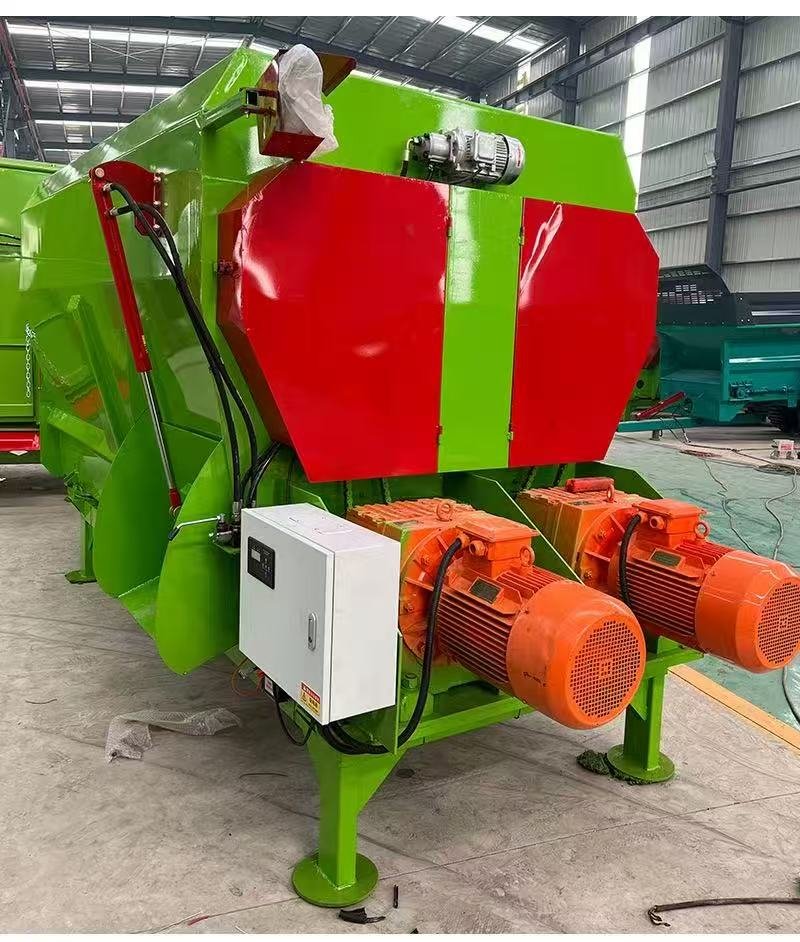
Ask whether a complete shaft assembly can be pulled and refitted without cutting the tub. On a machine expected to work for 5-6 years, serviceability is part of the design, not an optional extra.
Check 4: Steel Plate - Grade, Thickness by Location, and the Welding
"Thick steel plate" is probably the most repeated phrase in mixer quotations and the least useful one. The tub floor, the side walls, the auger flighting and the discharge door do not wear at the same rate. A supplier who quotes one number for the whole machine is either simplifying or hiding the thin part.
Ask which plate, where
- Grade. Q235B is a common general structural steel; Q345B or an equivalent higher-strength low-alloy plate gives more margin at the same thickness. Ask for a mill certificate, or at least the grade stated on the quotation.
- Thickness by location. Tub floor, lower side wall, upper side wall, end plates, auger flighting, discharge door and chassis. Ask for a simple drawing with measured values plus a caliper photo at the wear-prone points.
- Reinforcement. Ribs and stiffeners around gearbox mounts, bearing seats and the discharge opening - these carry the shock loads, not the flat sheet.
- Welding. Continuous seams at the floor and end plates, cleaned welds, no undercut, no stitch welds holding a load-bearing rib.
- Surface treatment. Primer and paint over prepared steel, not paint over mill scale and rust.
| Point | Why it wears | What a good answer looks like |
|---|---|---|
| Tub floor | Abrasive sliding of feed under the augers, plus moisture and silage acid | Thickest plate on the machine, graded steel, sometimes a replaceable wear liner |
| Lower side wall | Constant lateral pressure from a full load | Stated plate thickness plus external ribs, not just a heavier upper rim |
| End plates | Bearing and gearbox reaction loads, shaft alignment | Thicker plate with machined bearing seats and reinforced mounts |
| Discharge door | Impact, frequent movement, hydraulic cylinder load | Reinforced frame, continuous welds, replaceable wear edge |
| Chassis and legs | Torsion on uneven yards and trailer towing | Box sections, gussets at the leg roots, full-length welds |
Check 5: After-Sales - The Only Thing That Has to Last 5-6 Years
Every machine will need wear parts. The question is whether year four is a two-day parts order or a three-week shutdown. This is where the supplier, not the spec sheet, decides your 5-6 year outcome.
Minimum list to require before you pay
- A written wear-parts list with part numbers, prices and expected service intervals - knives, bearings, seals, belts, gearbox oil and hydraulic hoses.
- Stock status and lead time for those parts, quoted door to door to your country, not just "available".
- Manuals in a language your operators use, plus installation, daily greasing and blade-change videos.
- A named technical contact and a realistic reply time for remote diagnosis by photo, video call or fault description.
- Warranty scope in writing: what is covered, for how long, and what is excluded. On Sunto machines the double pure copper motors carry a 1-year replacement warranty; get the equivalent statement from any supplier in writing.
That last point is worth being blunt about. A 12-month warranty is not a 5-6 year guarantee, and anyone who writes "guaranteed 6 years" with no conditions is not being straight with you. Five to six years of normal operation is what a correctly specified machine, a kept lubrication schedule, available spares and a supplier who answers add up to. Those are four things you can check before you pay, and one of them is entirely about the supplier.
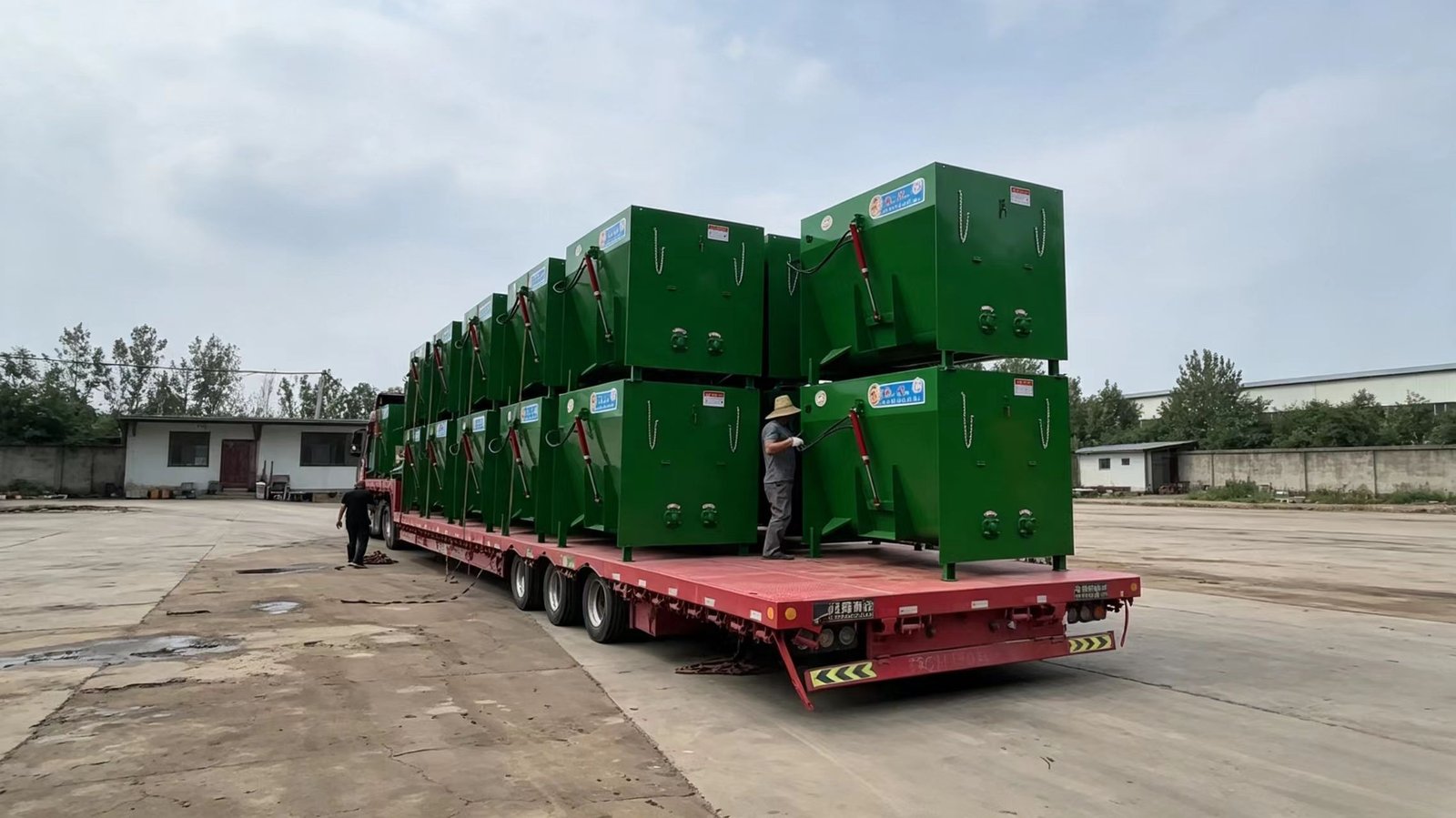
None of this means the most expensive machine is automatically the right one. It means the purchase price is the first line of a much longer bill. A supplier who can name the blade grade, show the gearbox nameplate, measure the plate and ship a bearing in a week is worth more than a discount you will spend twice over.
El 5-Check Scorecard
Put all suppliers on the same table. Score them on evidence you can file, not adjectives in a brochure.
| Check | What to request | Good answer | Red flag |
|---|---|---|---|
| 1. Blades | Steel grade, edge hardness, thickness, bolted or welded | Named heat-treated alloy manganese steel grade, HRC figure, bolted replaceable knives | "High-strength steel", no hardness, welded knives, no part number |
| 2. Gearbox | Model, torque, service factor, oil schedule, nameplate photo | Model number matched to tub size, spare gear sets listed, overload protection | "Heavy-duty gearbox", no model, no photo, no spares |
| 3. Shafts | Diameter, bearing brand and position, seals, blade holders | Measured diameter, external greased housings, bolted holders, no wobble | Buried bearings, welded knives, no measurement offered |
| 4. Plate | Grade plus measured thickness at 6-7 points, rib layout, weld photos | Grade on the quotation, drawing with numbers, caliper photo, continuous welds | One vague "thick plate" number, no drawing, paint over rust |
| 5. After-sales | Wear-parts list, lead time, manuals, video, warranty scope, contact | Written list with prices, stock and lead time, named contact, clear warranty scope | "Lifetime service" with no parts list, no documents, no named person |
A supplier who answers four of the five clearly, in writing, is a lower risk than one with a lower price and five vague answers. Keep the replies - if a claim ever comes up, those written answers are your reference point.
Un Copy-and-Paste RFQ Template
Send this as-is to any supplier, including us. It forces comparable answers instead of comparable adjectives.
1. Please state the blade steel grade, heat treatment, edge hardness, blade thickness and whether each knife is bolted or welded.
2. Please state the gearbox brand and model number, rated output torque, service factor, oil schedule and overload protection, and provide a photo of the actual nameplate.
3. Please state main shaft diameter and construction, bearing brand and housing position, seal type, and whether blades are bolted to replaceable holders.
4. Please state the steel grade and measured thickness of the tub floor, lower side wall, upper side wall, end plates, auger flighting and chassis; include a caliper photo.
5. Please send the wear-parts list with part numbers, prices, stock status and lead time, the manual and maintenance video list, the warranty scope in writing, and the name of the contact for remote support.
Ask for a live video walk-around of the finished machine with the tub empty and the guards open. Ten minutes of that answers more than ten pages of a catalog.
Qué We Can Show You
Our mezcladora horizontal de ración TMR line covers 2-24 m3 across 23 models, with PTO or electric drive, electronic weighing and hydraulic discharge. Published build details include thickened reinforced main shafts, plum blossom blades, JZQ350 / ZQ350 / JZQ400 / JZQ500 and R97 / R107 / R137 / R147 / R167 gearbox options, and double pure copper motors with a 1-year replacement warranty.
For any of the five checks above, ask us for the actual photos, measurements and written parts list for the machine quoted to you, in the language your team uses. If you are importing into South America, the Peru import and buying guide covers voltage, customs and shipping alongside these build checks.
Scope note: this article is a quality-verification checklist. It does not replace the Cómo elegir una mezcladora horizontal TMR sizing guide. Both are written for the English site; the Spanish /es/ version is generated by TranslatePress.
Preguntas Frecuentes
Are manganese steel blades really better than ordinary carbon steel blades on a TMR mixer?
In most TMR duty, yes. Heat-treated alloy manganese steel such as 65Mn keeps a cutting edge far longer than plain carbon steel under abrasive silage and long fibre, and wear studies in this application have found it more suitable than some harder but more brittle tool steels such as Cr12MoV or 9SiCr. The practical check is not the word "manganese" but a stated grade, heat treatment, edge hardness (an HRC 55-58 hardened edge is a common reference) and bolted replaceable knives.
What gearbox should a horizontal TMR mixer use?
There is no single right model - it depends on tub size and duty. Ask for the model number, rated output torque, service factor, oil schedule and overload protection. Sunto configurations name JZQ350, ZQ350, JZQ400 and JZQ500 on belt-driven builds and R97, R107, R137, R147 and R167 on direct-drive builds, matched to 2-24 m3. "Heavy-duty gearbox" with no model number is not an answer.
How do I check the mixing shaft quality before buying?
Ask for shaft diameter and construction with a tape-measure photo, the bearing brand and whether housings sit outside the tub for easy greasing, the seal arrangement, and whether knives are bolted to holders instead of welded to the shaft. Then watch the empty machine run: no visible wobble at the shaft ends, no rhythmic knock, no rubbing on the end plates. Ask too whether the shaft assembly can be pulled without cutting the tub.
What steel plate thickness should a horizontal TMR mixer have?
Do not accept one number for the whole machine. Ask for the grade (Q235B is common structural steel; Q345B or equivalent gives more margin) and the measured thickness at the tub floor, lower and upper side walls, end plates, auger flighting, discharge door and chassis, plus the rib layout and weld detail. A reinforced, well-welded floor at a slightly lower thickness often outlasts a thicker sheet with no ribs and poor seams.
Can a supplier guarantee 5-6 years of trouble-free operation?
Not honestly as a blanket promise - wear parts are consumable, feed and maintenance vary by farm. What a supplier can do is show the design and support that make 5-6 years realistic: graded blade steel, a gearbox matched to the load, a serviceable shaft, measured plate thickness, a written wear-parts list with prices and lead times, manuals and remote support, and a clear warranty scope. Verify those before you pay rather than trusting a one-line guarantee.
What after-sales support should I require before paying?
At minimum: a written wear-parts list with part numbers, prices and stock status; a realistic door-to-door lead time; manuals and maintenance videos in a language your operators use; a named technical contact for remote diagnosis; and the warranty scope in writing. On Sunto machines the double pure copper motors carry a 1-year replacement warranty, and the Servicio Sunto page sets out the parts and support terms.
Más lecturas relacionadas
Want the Five Answers in Writing?
Send us the RFQ questions above and we will reply with the blade spec, gearbox nameplate photo, shaft and plate measurements, and the wear-parts list for the model quoted to you. We would rather answer the hard questions up front than have you find out in year four.
Request the Spec Sheet Ver todos los modelos