


Why Feed Pellet Mill Prices Vary — and How Material Quality Affects Your Real Cost
Two machines can look identical on a listing yet cost three times as much. The gap is almost always in the steel. Here is what the material difference means for wear, downtime and the price you actually pay over three years.
If you have compared feed pellet mills online, you have seen the same puzzle: one 200 kg/h unit lists for a few hundred dollars, another for well over a thousand, and both claim "stainless steel" and "high output". The sticker price tells you almost nothing. What decides whether a machine earns its keep is the material under the paint — the plate thickness, the steel grade, and especially the alloy used for the flat die and rollers that do the actual pressing.
1. Why Two "Same-Spec" Machines Have Very Different Prices
A pellet mill's working parts are simple to describe but expensive to make well. Most of the price gap between a budget unit and a properly built one comes from a short list of choices a factory makes before the machine is welded:
| What drives the price | Budget build | Quality build (Sunto) |
|---|---|---|
| Main body / frame steel | Thin plate, bends under load | Thickened steel plate on a 45# steel frame |
| Flat die & roller material | Plain carbon steel, soft | 20CrMnti alloy steel, vacuum quenched |
| Heat treatment | None or surface-only | Vacuum quenching for deep, even hardness |
| Motor & gearbox | Unbranded, oversized claims | Rated motor + hardened gears |
| Welding & finish | Spot welds, sharp edges | Continuous welds, de-burred |
| Spares & after-sales | None, dies not interchangeable | Spare dies/rollers, 1-year support |
None of that shows in a product photo. It shows up at hour 300, when a soft die has already worn oval and a thin frame has started to flex. That is why the cheap machine is rarely the cheap choice.
2. The Heart of the Machine — Flat Die & Roller Material
The flat die and the pressure rollers are the only parts that touch your feed under force. They decide pellet shape, how long the machine runs between changes, and how much you spend on spares. This is where material grade matters most.
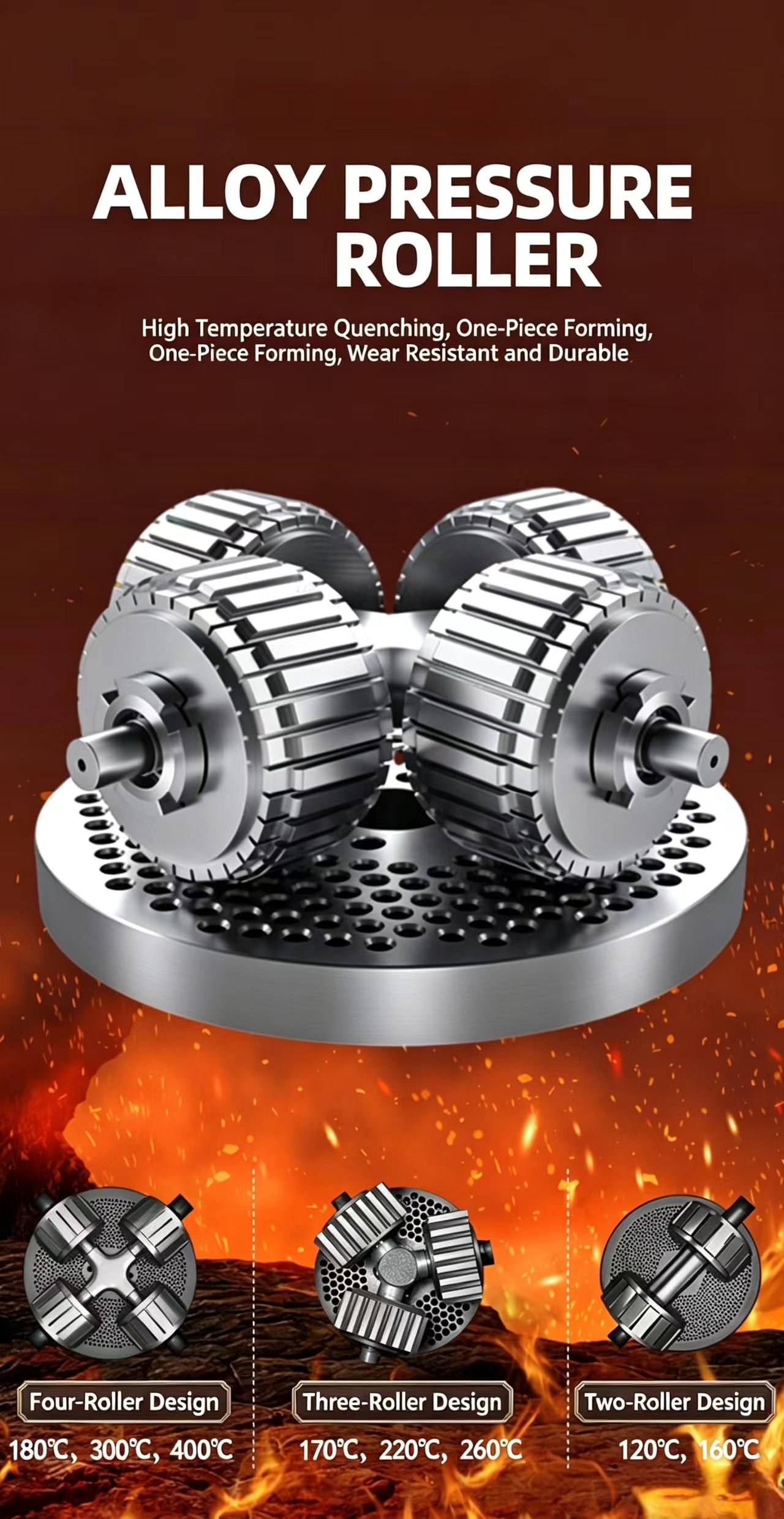
Sunto builds the flat die and rollers from 20CrMnti alloy steel and runs them through vacuum quenching. In plain terms: the alloy carries more carbon and chromium than ordinary steel, and the vacuum heat treatment hardens the part evenly and deeply without the surface cracks you get from open-flame hardening. The result is a die that stays round, holds its hole size, and resists the abrasive wear that ground maize, straw and mineral premix dish out every hour.
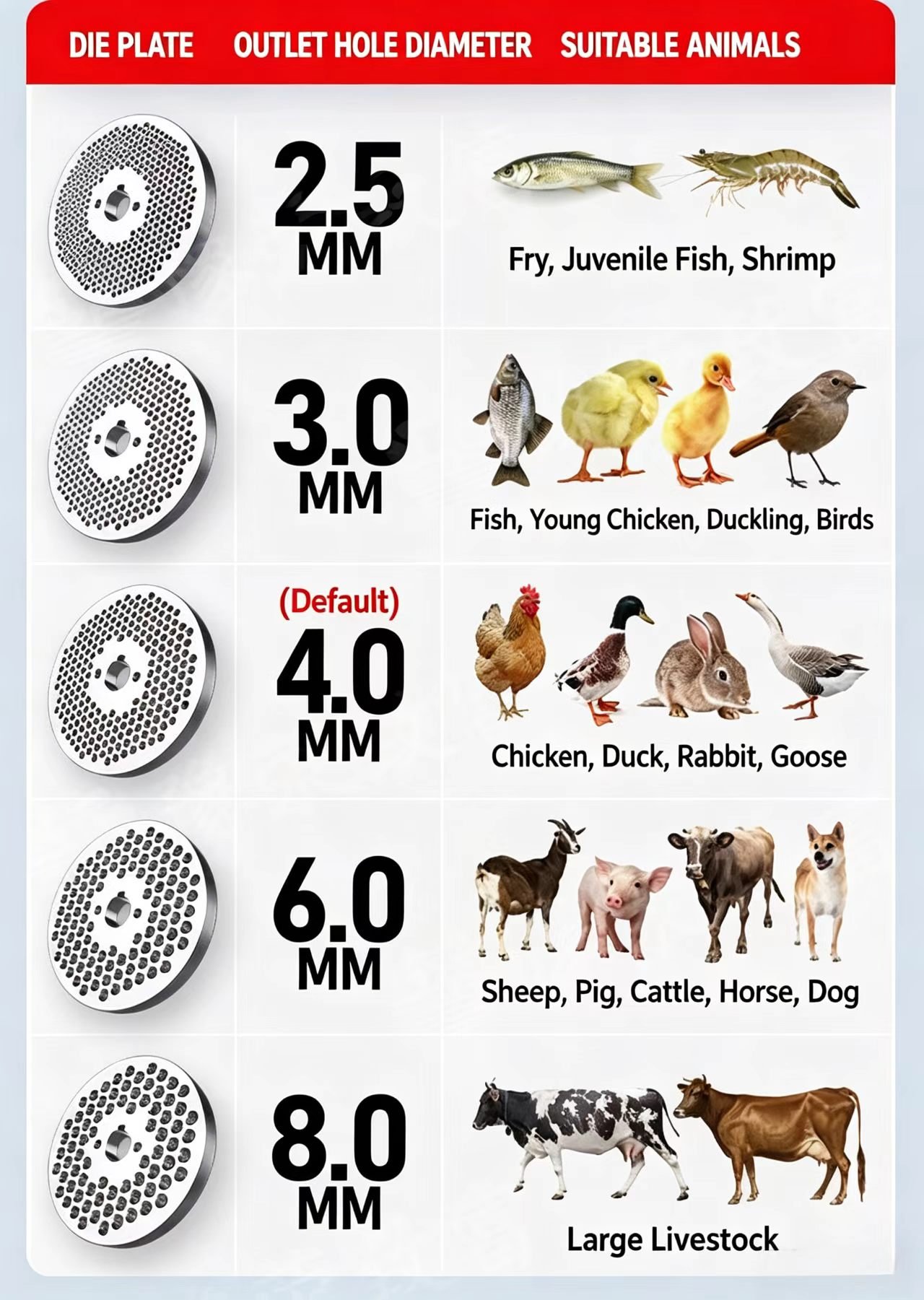
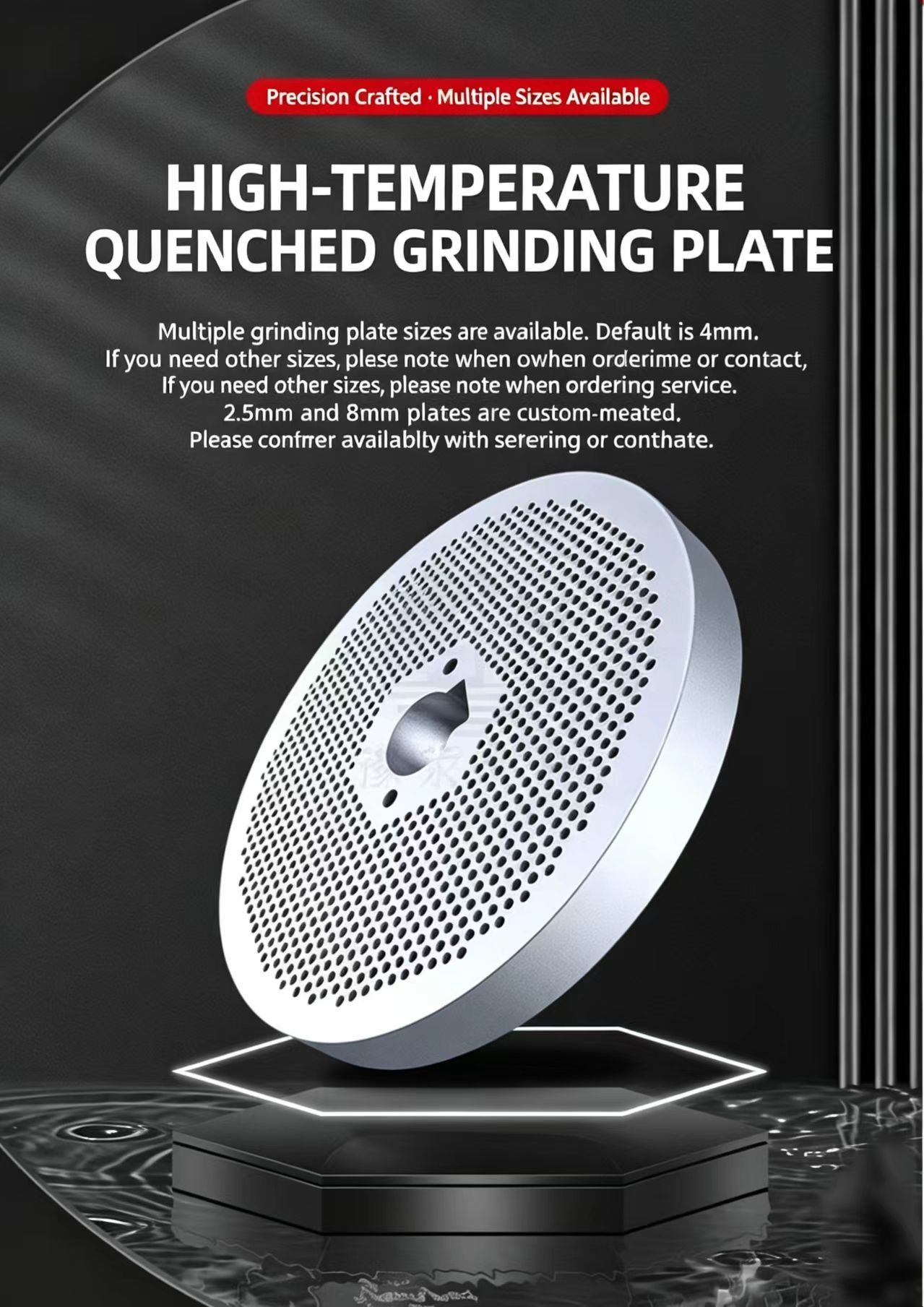
Left: the die plate with uniform pressed holes. Right: the quenched grinding plate — 4 mm default, with 2.5 mm and 8 mm options for different stock.
What vacuum-quenched 20CrMnti buys you
- Longer die life. A hardened die resists abrasive wear, so you change it less often — the single biggest running cost on any pellet mill.
- Stable pellet size. Holes stay on tolerance, so pellets stay uniform instead of turning into mush as the die wears.
- Less downtime. Fewer die changes and fewer mid-batch jams mean more finished feed per day.
- Better resale. A machine that still runs tight after two seasons is worth far more on the used market.
3. Body & Frame — Thickened Steel Plate and 45# Steel
The die gets the attention, but the frame takes the punishment. A pellet mill vibrates constantly while a roller pushes tonnes of force into a spinning plate. Sunto uses a thickened steel plate body on a 45# (45-grade carbon) steel frame — a medium-carbon steel with the stiffness to hold alignment under load.
Why this matters in use: a thin, soft frame flexes. Once the frame moves, the roller no longer sits square to the die, pressure becomes uneven, the die wears on one side, bearings load up, and noise climbs. A stiff 45# frame keeps everything where the engineer set it, which protects the bearings and the gearbox — the parts that are expensive to replace.
45# steel frame
Medium-carbon steel for stiffness and alignment under continuous vibration and roller pressure.
Thickened steel plate
Holds the die, motor and gearbox square, protecting bearings and gears from off-axis loads.
4. How Material Choices Affect Your Day-to-Day Use
The spec sheet is silent on this, but it is what you live with. Put a budget unit and a properly built one side by side on the same feed, and the difference shows up fast:
| In daily use | Soft / thin build | Hardened alloy + stiff frame |
|---|---|---|
| Die change interval | Weeks | Months |
| Pellet uniformity over time | Drops as die wears | Stays consistent |
| Unexpected stoppages | Frequent | Rare |
| Bearing / gearbox strain | High (frame flex) | Low (held square) |
| Noise & vibration | Grows | Stable |
| Output per hour | Falls off | Holds rated capacity |
Extension and feed-technology guides such as Recursos agrícolas de la FAO y Extensión de la Universidad de Minnesota consistently tie feed-conversion gains to pellet consistency — which, in turn, comes back to die and roller quality.
5. The Real Cost Is Total Cost of Ownership, Not the Tag Price
Buy the cheap machine and you usually buy it twice. A soft die wears out, output falls, you order a replacement die (if one even fits), the gearbox complains, and a season of feed planning turns into a repair project. Spread that over three years and the "expensive" machine is often the cheaper one.
What to add up before you buy
- Purchase price — the small number.
- Spare dies & rollers — how often, and do they actually fit your model?
- Motor / gearbox repairs — the big risk with a weak frame.
- Downtime cost — a stopped mill means hand-feeding or skipped rations.
- Resale value — a worn-out soft machine is scrap; a tight one sells.
6. Sunto's Material Spec at a Glance
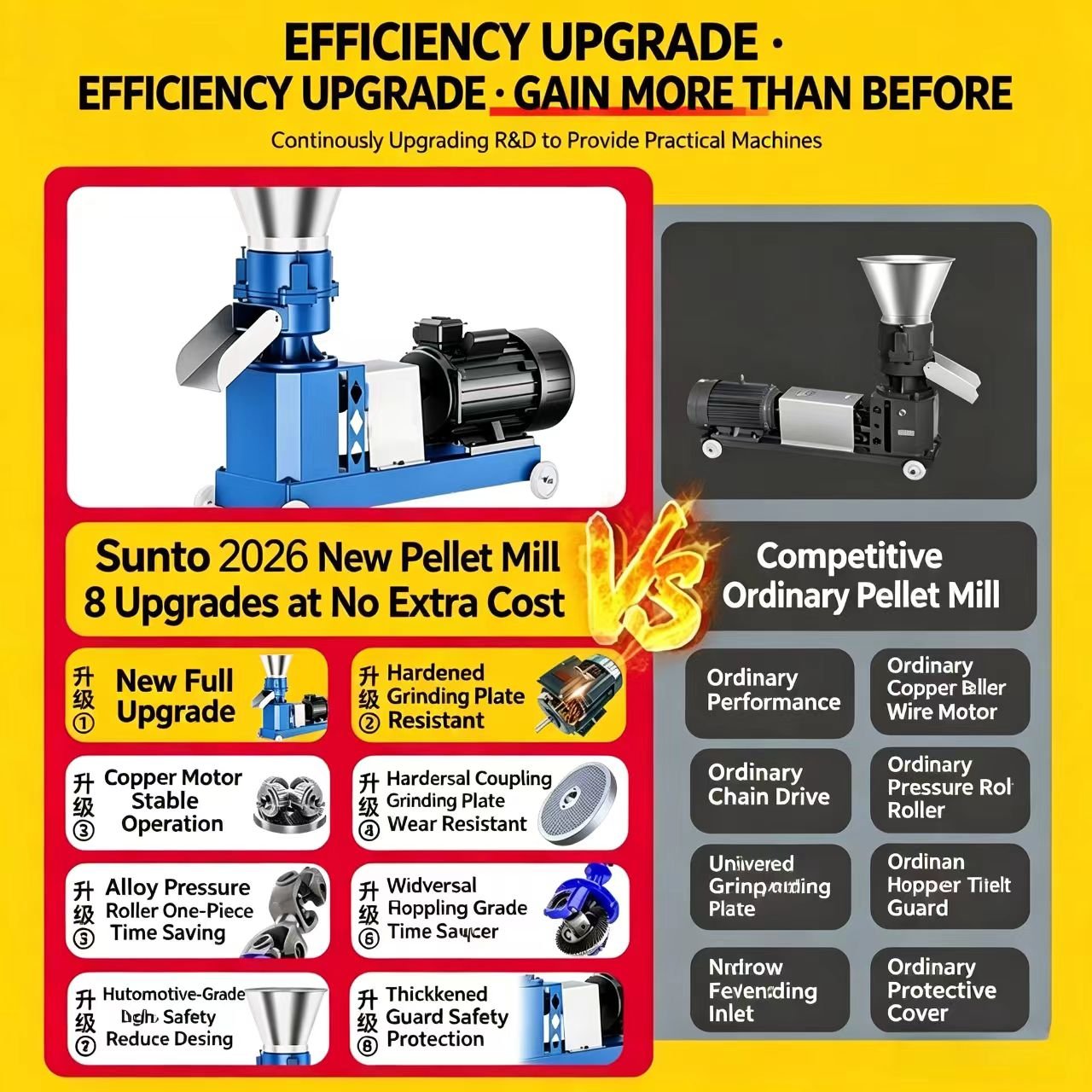
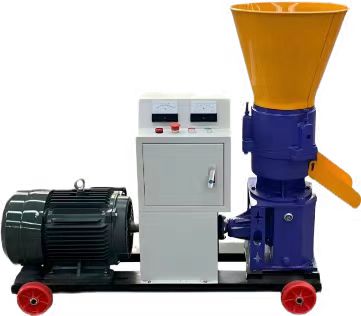
This is the build standard behind every Sunto KLJ-series flat die pellet mill — the reason the price sits above the cheapest listings and below the brand-name tier:
20CrMnti alloy steel
Vacuum quenched for deep, even hardness and long wear life.
45# steel
Stiff medium-carbon frame holds alignment under load.
Thickened steel plate
Protects bearings and gearbox from off-axis stress.
2.5 / 4 / 8 mm options
Match pellet size to chicks, rabbits, cattle or fish.
7. FAQ — Feed Pellet Mill Price & Material
What material is best for a feed pellet mill flat die?
Hardened alloy steel such as 20CrMnti, vacuum quenched, is the practical standard for small and medium flat-die mills. It holds hole tolerance and resists abrasive wear far better than plain carbon steel, which means fewer die changes and steadier pellets.
Why is a 20CrMnti die better than a normal steel die?
20CrMnti carries more carbon and chromium, so after quenching its surface is much harder while the core stays tough. Vacuum quenching avoids the surface cracks of open-flame hardening. The die stays round and the holes stay on size, so output and pellet quality hold up.
Is a more expensive pellet mill worth the extra money?
For daily use it usually is. A cheaper soft-die, thin-plate machine wears fast, needs frequent spares, and risks gearbox or bearing failure. Over three years the "expensive" unit is often cheaper once you count dies, repairs and downtime.
How long does a flat die last?
It depends on the feed and the steel. A soft carbon-steel die on abrasive mash may need changing in weeks; a vacuum-quenched 20CrMnti die on the same feed typically runs months. Keep die holes clean and avoid metal contamination to extend life.
Does the frame steel matter if the die is good?
Yes. A thin or soft frame flexes under vibration, the roller loses square alignment to the die, wear becomes uneven and bearings load up. A stiff 45# steel frame protects the die, rollers, bearings and gearbox together.
Specifying a Pellet Mill for Your Farm?
Tell us your animals, daily volume and power supply — we will match the right KLJ model and explain the build standard behind the quote.
Contáctenos