


35HP Crawler Tractor: How the Chassis, Gearbox Housing, Tracks and Engine Decide What the Machine Can Do
Two machines can both be rated 35HP, both take a rotary tiller, and both look similar in a quotation. One floats across a wet field and still runs cleanly years later; the other sinks, overheats and starts leaking oil after a season. The difference is not in the horsepower number. It is in four parts.
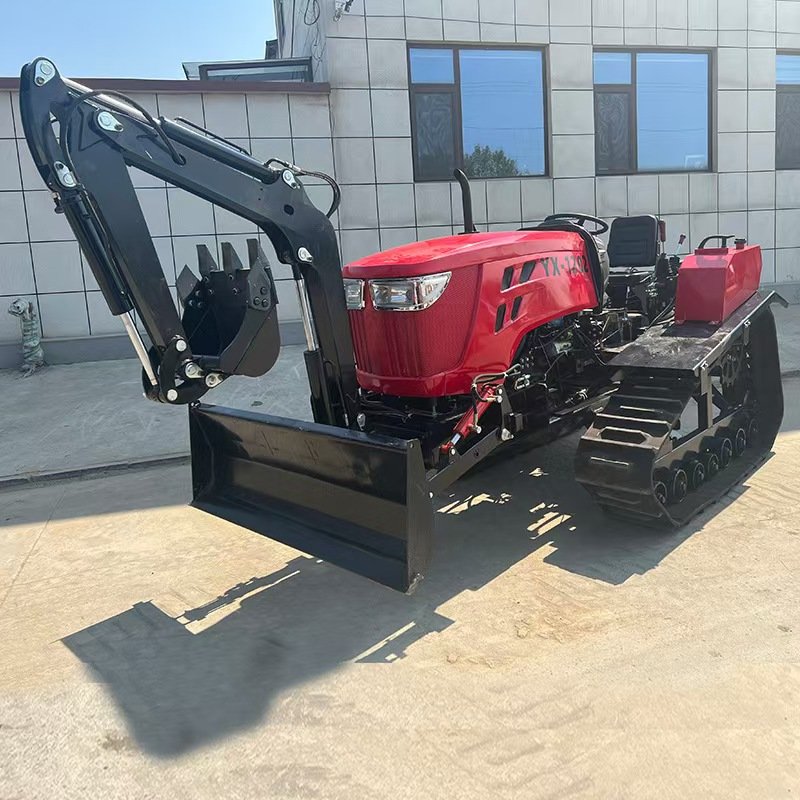
Horsepower tells you how much power the engine can produce. It does not tell you whether that power reaches the soil. A small crawler tractor works in low-speed, high-resistance conditions - pulling a rotary tiller through clay, pushing a blade, lifting with a front loader - and all of that load travels through the chassis, the transmission case, the tracks and the engine in series. The weakest one decides the machine.
That is why buyers who compare only power, price and the number of free attachments often get a surprise in year two. This guide takes the four parts one by one: what each one actually controls, what goes wrong when it is underspecified, and the question to ask a supplier before you pay.
Where this fits: if you are choosing between the dry-land and paddy versions, read Tractor de orugas para tierra seca frente a tractor de arroz (35 HP) - that article covers terrain and gearbox differences. This one is only about the four components and what they do to the machine. Full specifications are on the tractor de orugas para secano y tractor de orugas para arrozales product pages.
1. Chassis - The Frame That Takes the Hit
The chassis is not just a frame to bolt parts onto. It carries every shock the machine sees: the tiller hitting a stone, the loader lifting a wet load, the twist of crossing a sloping orchard row. On a compact crawler tractor the same frame also holds the engine, the gearbox and the track rollers in alignment. If it flexes or cracks, everything bolted to it slowly goes out of line.
What a weak chassis costs you
- Weld cracks at high-load points - loader mounts, implement hitch and roller brackets are the usual first failures.
- Misalignment. A twisted frame changes the line between engine, gearbox and drive sprockets, so belts wear, seals leak and tracks start running off to one side.
- Poor attachment fit. A loader or backfill blade puts a bending load into the frame; the machine may lift it, but not for many seasons.
- More vibration and fatigue for the operator and for every bolted joint.
Sunto publishes a heavy-duty crawler chassis on its 25-35HP paddy machines, but the word "heavy-duty" is not a measurement. Ask for the actual construction: box section or flat plate, continuous welds at the loader and hitch mounts, how many support rollers per side, and whether the frame is reinforced where the loader attaches.
2. Gearbox Housing - Where the Power Is Delivered
First, a definition: by "housing" or "box" we mean the transmission case that holds the gears, shafts and bearings - not the sheet-metal engine cover. It is the part that turns engine speed into the slow, high-torque wheel speed a tiller needs.
Why the case itself matters
Gears only mesh correctly while their shafts stay parallel. A stiff, well-machined housing keeps the bearing seats in line under load; a thin or distorted one lets the shafts move, and then you get noisy gears, hard shifting, worn bearings and oil seals that never stay tight. In wet paddy work the case also has to keep muddy water out - the breather, the filler plug and the output seals matter as much as the metal.
The gear set inside decides how usable the power is. Sunto's published 25-35HP line uses 3 forward + 1 reverse with high/low range on the dry-land version and 3 forward + 2 reverse on the paddy version, rated around 1-3 mu per hour (roughly 0.07-0.2 hectares per hour) for rotary tillage. More gears is not automatically better: what matters is whether there is a low enough gear to pull a full-width tiller through heavy soil without riding the clutch or stalling.
Shock loads are the real test
When a tiller blade hits a buried stone, the impact travels backwards. A belt drive or a slipping clutch can absorb part of that shock; a fully rigid direct connection sends it straight into the gear teeth. Ask what overload protection is fitted and whether the belts, seals and bearings are stocked as spare parts with part numbers.
3. Tracks - Whether You Get Into the Field at All
Ground pressure is simply machine weight divided by the track area touching the soil. A wider, longer contact patch spreads the same 35HP machine over more ground, so it sinks less, compacts the soil less and wastes less power churning mud. This is the single biggest reason a crawler tractor can work where a wheeled tractor of the same power cannot.
Sunto machines use engineering rubber tracks, with reinforced versions on the paddy models. Rubber tracks run quieter, absorb vibration and do not cut up yard surfaces or paddy bunds the way steel shoes do. The trade-off is that sharp rock, gravel and long hard-road travel cut and wear rubber quickly. General background on the rubber-versus-steel trade-off: ThinkerAgri track comparison.
Three things buyers forget to check
- Track tension. Too tight and you load the roller, idler and sprocket bearings for no reason; too loose and the track can climb off on uneven ground. Check it on the schedule in the manual, not only when something looks wrong.
- Roller and sprocket serviceability. Rollers, idlers and drive sprockets are wear items. Ask for part numbers and whether a single roller can be replaced.
- Matching the track to the ground. A narrow, aggressive tread suits firm dry soil and slopes; a wider, lower-pressure track suits wet paddy. This is the same decision explained in the dry-land vs paddy comparison.
4. Motor - More Than 35 Horsepower
Two diesel engines can both carry a 35HP rating and behave very differently in a field. Horsepower is a peak figure; field work is low-speed, high-resistance pulling. What you feel through the tiller is low-end torque and torque reserve - the ability to keep pulling as the engine speed drops when the load suddenly rises. Good reserve means the machine lugs down and keeps going instead of stalling when the tiller bites into clay.
Cooling is the second half of the story. Rotary tillage in hot weather is a long, steady load. A water-cooled engine with a clean radiator holds a stable temperature; blocked fins, a clogged radiator or low coolant push the engine into high-temperature protection, where it loses power and burns more fuel for the same work. Ask what cooling system is fitted and how the radiator is accessed for cleaning.
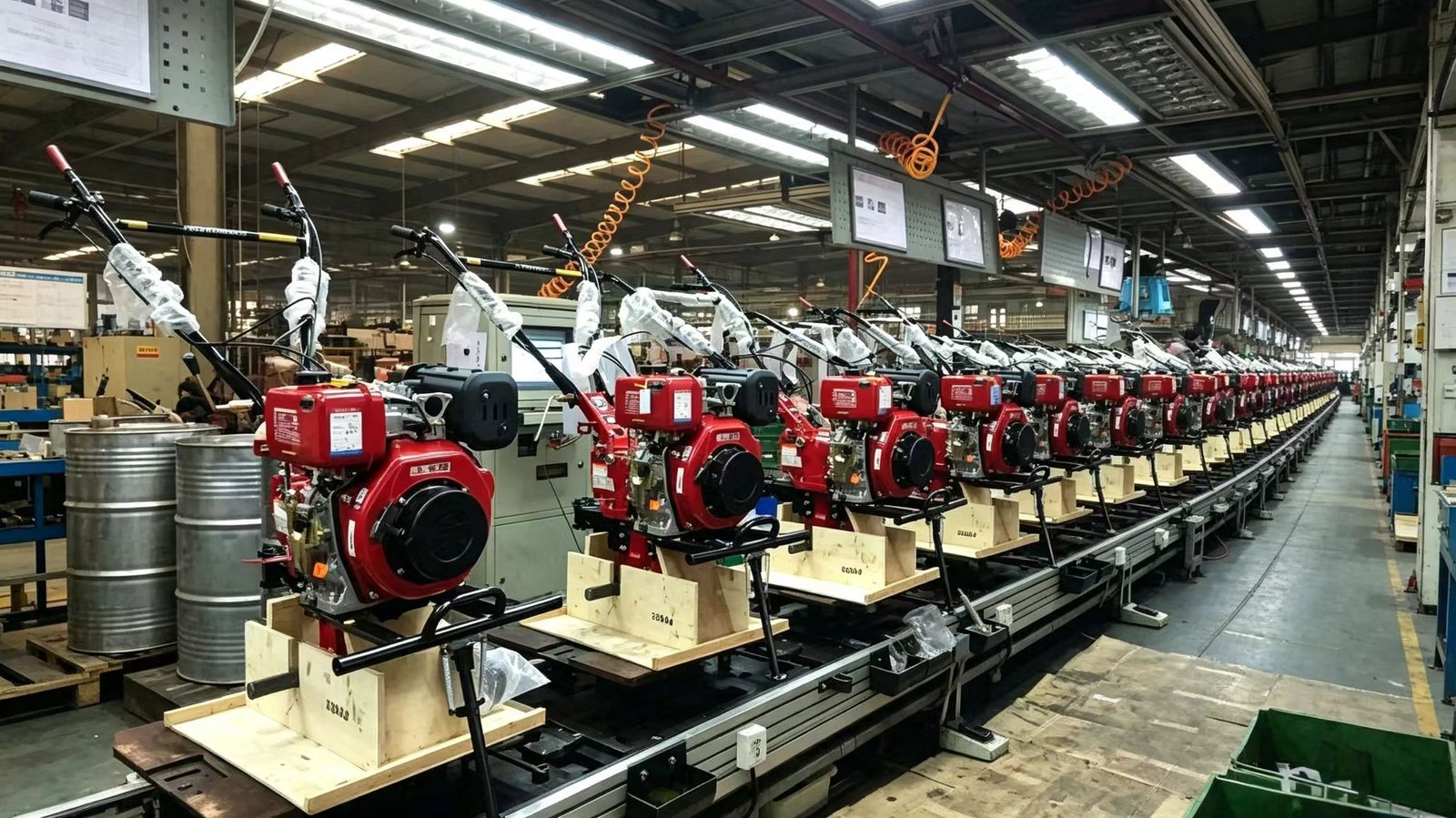
Sunto's published configuration lists Quanchai or Changchai diesel engines on the 25-35HP crawler tractors; confirm the exact model on your quotation, because filters and wear parts are model-specific. Also check that the engine, gearbox ratios, track width and implement width were specified as one package. An oversized engine on a light chassis simply transfers more shock into the transmission and the tracks.
Our Servicio Sunto team can supply the engine wear-parts list and maintenance schedule for the model quoted to you. The Preguntas Frecuentes covers the questions importers ask most often.
El 4-Part Scorecard
Put every supplier on the same table. Score them on answers you can put in writing, not on adjectives in a brochure.
| Part | What it really decides | What to ask | Red flag |
|---|---|---|---|
| Chassis | Alignment, loader capacity, crack-free service life | Frame section, reinforced mounts, continuous welds, replaceable rollers | "Heavy-duty frame" with no drawing or detail photo |
| Gearbox housing | Gear life, sealing, usable working speeds | Case material, ratios, oil intervals, seal and bearing part numbers, jam protection | Gear count quoted but no ratio, no spare seals |
| Rubber tracks | Flotation, traction, soil compaction, undercarriage wear | Width, pitch, reinforced layer, tension method, roller part numbers | One vague "rubber track" spec for wet and dry use alike |
| Motor | Pulling power under load, all-day temperature, parts availability | Exact model, cooling type, torque behaviour, filter and belt part numbers | "35HP brand engine" with no model and no parts list |
How the four work together
Think of them as one chain. Put a strong 35HP engine on a light chassis with narrow tracks and the machine simply spins in wet soil: the power never reaches the ground, the engine stays at full load, coolant temperature climbs and fuel use rises. Widen the track, stiffen the frame and match the gear ratio, and the same engine pulls the same tiller in a lower gear with less strain. No single part wins on its own - the weakest one sets the limit.
Preguntas Frecuentes
Does a 35HP crawler tractor need a reinforced chassis?
If you plan to run a front loader, a dozer blade or a rotary tiller in heavy soil, yes - those are exactly the jobs that put bending and shock loads into the frame. Ask which mounts are reinforced, whether the welds are continuous at the loader and hitch points, and whether individual track rollers can be replaced. A chassis that flexes eventually puts the engine, gearbox and sprockets out of alignment.
What is the gearbox housing and why does it matter?
It is the transmission case holding the gears, shafts and bearings - not the engine cover. Its stiffness keeps shafts aligned, so gears mesh cleanly, shifting stays easy and seals keep oil in and muddy water out. Sunto's published 25-35HP line uses 3 forward + 1 reverse with high/low range on dry-land models and 3 forward + 2 reverse on paddy models. Ask for the case material, oil change intervals, seal part numbers and what protects the driveline on a sudden jam.
Are rubber tracks better than steel tracks for a 35HP tractor?
For most farm work, yes. Rubber tracks spread weight over a larger contact area, run quieter, absorb vibration and are less likely to damage yard surfaces or paddy bunds. Steel tracks resist cuts and abrasion better on sharp rock but are noisier and harder on soil and paved surfaces. Rubber tracks dislike sharp stones and long hard-road travel, so match the track to your ground and check the tension on the schedule in the manual.
Why do two 35HP tractors perform differently in the same field?
Because horsepower is a peak engine figure, not a measure of what reaches the soil. Low-end torque and torque reserve decide whether the engine keeps pulling when a tiller bites into clay. Track width and ground pressure decide whether the machine grips or spins. Gearbox ratios, chassis stiffness and cooling decide how much of that power survives a full working day. Compare the four parts together, not the HP number alone.
What should I check before importing a 35HP crawler tractor?
Ask for the frame construction and reinforced mounts, the transmission case material and spare seal part numbers, the track width and tension method with roller part numbers, and the exact engine model with its filter and belt part numbers. Add a written wear-parts list, a realistic spare-parts lead time, and manuals in a language your operators use. Keep the answers with the contract.
Más lecturas relacionadas
Want the Four Answers for Your Field?
Tell us your soil, crop and the implements you plan to run. We will send the frame, gearbox, track and engine details for the model quoted to you, plus the wear-parts list and maintenance schedule.
Ask for the Specs Ver todos los modelos